



Russian tanker loaded with oil struck in Black Sea in underwater attack
- In Reports
- 04:37 PM, Mar 26, 2026
- Myind Staff
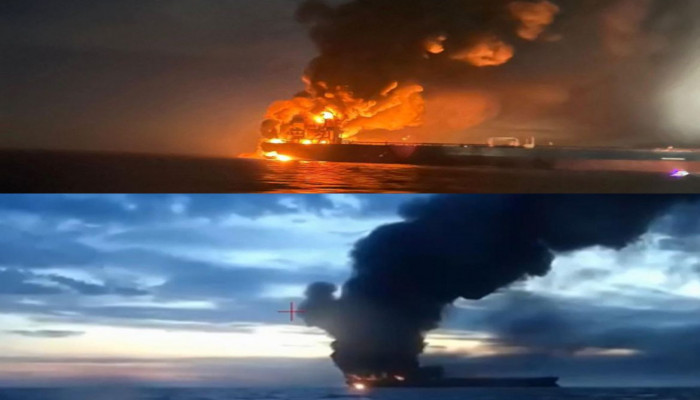
A sanctioned oil tanker related to Russian trade was struck by a drone in the Black Sea near Istanbul, marking another serious escalation affecting commercial shipping in the region. The incident highlights the growing risks faced by vessels operating along key maritime routes linked to Russia’s oil exports.
The tanker, identified as the Altura, has a deadweight tonnage of 163,800 and was attacked roughly 15 nautical miles from the Bosphorus Strait. The vessel had recently departed from Russia’s Novorossiysk port and was carrying approximately 140,000 tonnes of crude oil at the time of the strike. Turkish media were among the first to report the incident, given its proximity to one of the world’s busiest maritime chokepoints.
Initial reports suggest that the drone strike caused significant damage to the ship’s bridge and engine room. Water began entering the vessel, creating a dangerous situation on board. The damage has paralysed the tanker’s movement, leaving it drifting northeast of the Turkish Straits. The situation raised immediate concerns about both environmental risks and navigational safety in the area.
A distress call was issued by the ship’s captain, who described the situation as critical. According to the message, essential systems had failed, and flooding in the engine room was worsening the condition of the vessel. Despite the severity of the damage, all 27 crew members onboard were reported to be safe, with no injuries recorded.
Turkish authorities responded promptly to the emergency. Coast guard teams, along with patrol boats and specialised rescue vessels, were dispatched to assist the stranded tanker. Efforts focused on stabilising the vessel and preventing further damage. Transport and Infrastructure Minister Abdulkadir Uraloğlu confirmed the response measures and reassured the public about the safety of the crew. He stated that “there were no injuries” and confirmed that technical teams had been sent to the scene to manage the situation and assess the damage.
The exact cause of the attack has not been officially confirmed. However, early assessments indicate that unmanned systems were likely used. Authorities suggested that the strike may have involved either an aerial drone or an unmanned maritime vehicle. Investigations are ongoing to determine the source and method of the attack.
The Altura has a complex ownership and operational history. Built in 2005, the tanker sails under the Sierra Leone flag and has been sanctioned by both the European Union and the United Kingdom. It has been associated with Russia’s so-called “shadow fleet,” a network of vessels used to transport oil outside of international regulatory frameworks. The tanker is managed by Pergamon Denizcilik Isletmeleri, a Turkish company, while ownership is linked to Sea Grace Shipping, registered in St Kitts and Nevis.
The vessel has changed ownership multiple times in recent years. It was previously known as Besiktas Dardanelles before being sold in 2024. After its acquisition by Istanbul-based interests, it was renamed Altura. These frequent ownership changes are common among ships involved in sanctioned trade, often making tracking and regulation more difficult.
Attacks on tankers in the Black Sea have increasingly been linked to Ukrainian operations involving drone boats and unmanned aerial vehicles. However, Ukraine has not claimed responsibility for this specific incident. The lack of official confirmation leaves uncertainty about the origin of the attack, though the pattern is consistent with previous strikes in the region.
This incident follows a series of reported Ukrainian attacks on Russian oil export infrastructure. Previous targets have included the Ust-Luga terminal and the Baltic port of Primorsk, both of which are key hubs for crude oil shipments. These attacks indicate a broader strategy aimed at disrupting Russia’s oil logistics network.
The strike on the Altura suggests that this campaign may now be expanding beyond fixed infrastructure to include moving vessels. This shift could significantly increase risks for commercial shipping in the Black Sea, especially for tankers involved in Russian trade. As tensions continue to rise, the safety of maritime operations in the region remains a growing concern.



 Loading...please wait
Comments