



Russian intelligence takes control of Wagner’s influence network in Africa after Prigozhin’s death
- In Reports
- 03:25 PM, Feb 21, 2026
- Myind Staff
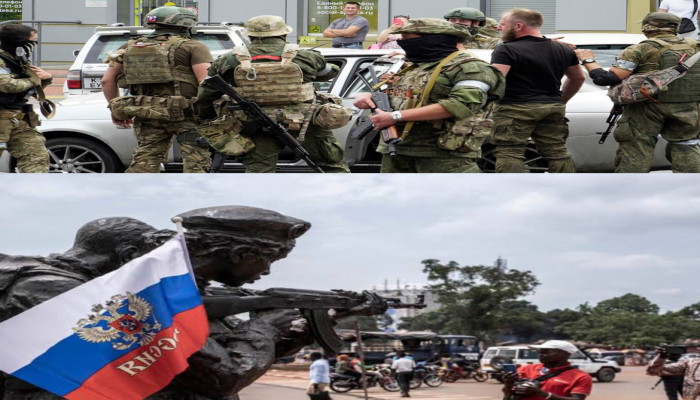
Russia’s foreign intelligence agency, the SVR, has taken over the influence operations of the Wagner mercenary group in Africa following the death of its founder, Yevgeny Prigozhin, according to a new investigation by international media organisations.
Wagner, widely known as Russia’s most prominent mercenary group, had built a strong presence across several African countries. The group was often criticised by human rights organisations for its brutal methods. It deployed fighters to support national armies in countries such as Libya and Mali. Apart from military involvement, Wagner also carried out large-scale disinformation campaigns and worked to destabilise political systems in different regions.
Prigozhin died in a plane crash in 2023 after he led a brief mutiny against Moscow. After his death, Russia’s defence ministry moved to replace Wagner’s operations in Africa. It began coordinating security activities through a new umbrella structure called the Africa Corps. However, the recent investigation reveals that while the defence ministry took control of some military operations, it is the SVR Russia’s foreign intelligence service that has assumed control of Wagner’s influence and propaganda network.
The findings come from a joint investigation by several investigative outlets, including Forbidden Stories, All Eyes On Wagner, Dossier Center, openDemocracy, and iStories. According to the report, “The SVR has now taken over the most effective tool of the Wagner Group.”
Nearly 100 consultants are said to work for Wagner’s influence division, known as Africa Politology or simply “The Company.” This branch focuses on shaping political narratives, promoting Moscow’s economic and political interests, spreading disinformation, and limiting competition in African countries and elsewhere.
Between 2024 and 2025, teams linked to this network were deployed in several countries. These include Angola, Argentina, Bolivia, Burkina Faso, Chad, Ghana, Libya, Mali, Niger and Sudan. The investigation also found that teams were active in Madagascar, Zimbabwe, Egypt, Cameroon, Benin and Namibia.
Under the new arrangement, the SVR plays a central role in guiding these operations. According to the investigation, “The SVR provides a layer of intelligence with information on specific topics, recruits sources, opens access and places key agents of influence in strategic roles.” This suggests that the intelligence agency is deeply involved in planning and executing political influence campaigns.
The investigation began after more than 1,400 pages of internal documents were anonymously sent to the editor-in-chief of The Continent, an award-winning pan-African media outlet. The documents were written in Russian and included strategic plans, biographies of staff members, operational reports, financial records, and summaries of disinformation campaigns conducted between January and November 2024.
Journalists involved in the probe confirmed the authenticity of 76 key documents and verified their contents. The report states, “The documents show that these operations combine political influence, disinformation and close ties to security services, going far beyond the usual practices in the sector.”
The investigation also highlights tensions and coordination issues within Russia’s own system. At times, the SVR competes with the Russian defence ministry, which oversees the GRU military intelligence agency. In some situations, both agencies must coordinate their actions.
For example, while the defence ministry took direct control of Wagner’s operations in Mali, it did not fully bring private military contractors under its authority in the Central African Republic. The investigators noted, “In the Central African Republic, the SVR is called upon to help the defence ministry avoid hindering the activities of Wagner.”
The report points to what it describes as the almost systematic involvement of the SVR across Africa. In Mali, for instance, “the SVR is tasked to provide intelligence to Africa Politology regarding the military and political plans of France and the United States in the Sahel,” the consortium said. “It is also missioned to provide diplomatic support for the creation of a new military-political union to Mali, Burkina Faso, Niger and the Republic of Guinea.”
The political situation in the Sahel region has changed significantly in recent years. Mali, Burkina Faso and Niger have experienced coups in 2021, 2022 and 2023. After these military takeovers, the new junta-led governments distanced themselves from former colonial power France and moved closer to Russia. These countries cut ties with the West African regional bloc ECOWAS and created a new alliance in 2023 called the Alliance of Sahel States (AES).
According to the investigation, “Russia's strategy manifested with the creation of the Alliance of Sahel States.” Lou Osborn, co-author of the investigation, described this development as important. “That's a significant political win,” she told AFP. She added that Russian influence efforts have been particularly effective in the “unstable, vulnerable” countries of the Sahel.
Osborn also commented on the methods used by the network. She said she found the group’s lobbying activities in Africa “fascinating.” She noted, “They have so many lawyers, and they really try to influence laws.”
The investigation also uncovered a network of companies used to transfer funds from the SVR to Africa Politology. Financial records reviewed by journalists show that between January and October 2024, the budget for these influence operations was nearly $7.3 million. This amounts to roughly $750,000 per month.
Despite the funding and coordinated efforts, investigators believe that Russia’s results have been limited so far. The report concludes, “Russia is playing the long game but the results are not always quick to materialise.” It adds, “On the African continent, Russia is signing a lot of memorandums of understanding but fails to convert these non-binding agreements into money-making businesses.”
The findings suggest that while Wagner’s military presence may have shifted to new structures like the Africa Corps, itspolitical and influence machinery remains active — now directly guided by Russia’s intelligence services.



 Loading...please wait
Comments