




Russia rejects Trump’s 20-point peace plan for Ukraine, calls it a ‘true Axis of War’
- In Reports
- 06:15 PM, Jan 09, 2026
- Myind Staff
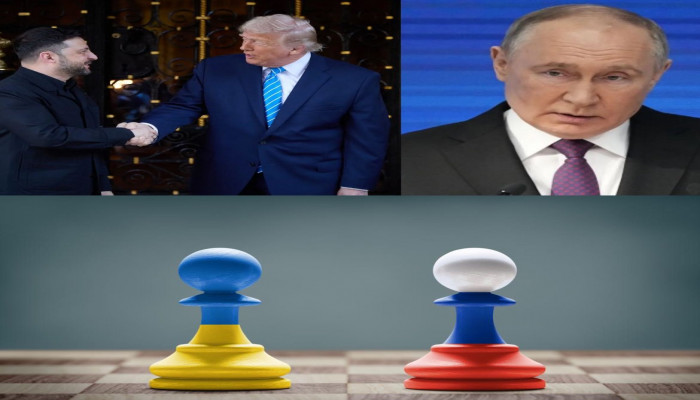
Russia has strongly rejected a new US-backed proposal aimed at ending the war in Ukraine, dealing a major setback to former US President Donald Trump’s efforts to broker peace. In a sharp response issued on Thursday, Russia’s Foreign Ministry criticised the plan and warned that it could further escalate the conflict instead of resolving it.
In a brief but forceful statement, the Russian Foreign Ministry dismissed the US-European proposal for providing security assurances to Ukraine. It described the plan as dangerous and confrontational, saying it amounts to forming “a true axis of war.”
“The document turned out to be extremely far from a peace settlement. The declaration is not aimed at achieving a lasting peace and security but rather at continuing the militarisation, escalation and further conflict aggravation,” the ministry said.
According to Moscow, the proposal does not focus on ending hostilities in a meaningful way. Instead, it claims the plan would deepen military involvement in Ukraine and worsen tensions across Europe.
Russia specifically objected to the idea of deploying foreign forces on Ukrainian soil. The ministry pointed to what it called the core element of the proposal, which includes the stationing of international troops in Ukraine.
“Its core element is the deployment of ‘a multinational force’ on Ukrainian territory that the coalition will have to form to contribute to the ‘rebuilding’ of the Ukrainian armed forces and ‘support deterrence’ following the cessation of the hostilities,” the statement added.
The rejection follows a meeting held in Paris earlier this week, where Trump’s peace envoys, Steve Witkoff and Jared Kushner, joined European leaders to agree on a five-point security plan for Ukraine. This plan is meant to complement a broader 20-point peace proposal intended to bring an end to Russia’s nearly four-year-long invasion of Ukraine.
The five-point plan includes commitments to provide Ukraine with “critical long-term military assistance,” the creation of a “European-led” multinational peacekeeping force, and further military aid. It also outlines the possibility of new sanctions and military support “in the case of a future armed attack by Russia,” along with “mutually beneficial defence cooperation with Ukraine.”
However, Ukraine has made it clear that it requires these security guarantees as a condition for accepting any peace deal. If the additional five-point security plan is rejected, the entire 20-point peace framework could collapse.
Russia also rejected the continuation of Trump’s Prioritised Ukraine Requirements List (PURL) initiative. This program allows European countries to purchase US-made weapons and supply them to Ukraine as a way to deter future Russian aggression.
“The document also includes clauses on further consolidation of Ukraine’s and NATO’s military industrial sectors,” the Russian Foreign Ministry said, expressing concern over deeper military ties between Ukraine and NATO countries.
Moscow argued that the overall plan effectively offers Ukraine, a NATO-style protection, even though Ukraine would remain officially outside the alliance. Russia claimed this would leave it strategically vulnerable while strengthening Western influence in the region.
“The new militarist declarations of the so-called Coalition of the Willing and the Kyiv regime are forming a true axis of war,” the ministry said. “It’s participants’ plans are becoming increasingly more dangerous and destructive for the future of the European continent and its residents, who are also forced by Western politicians to pay for such ambitions out of their own pockets.”
In addition to rejecting the peace and security proposals, Russia also criticised recent US actions at sea. The ministry condemned the US seizure of the oil tanker Bella 1, which was later renamed Marinera and sailed under a Russian flag.
According to Moscow, the seizure violated international law and threatened freedom of navigation. The Foreign Ministry said the move breached the 1982 United Nations Convention on the Law of the Sea.
“The use of force in international waters against a civilian vessel can only be interpreted as a gross violation of fundamental principles and norms,” the ministry said. “… This constitutes a material infringement of the legitimate rights and interests of the vessel owner.”
Russia further warned that such actions could trigger serious international crises and weaken global maritime rules.
“The use of force in international waters against a civilian vessel can only be interpreted as a gross violation of fundamental principles and norms,” Moscow repeated, adding that Trump’s orders risked “sparking acute international crises” and undermining established global maritime norms.
The United States, however, maintains that it acted within its legal rights. Washington is not a signatory to the UN Convention on the Law of the Sea and argues that the tanker was seized for violating a US blockade on Venezuelan oil ports.
Russia’s strong response highlights the deep divisions between Moscow and the West and raises fresh doubts about the future of any negotiated settlement to the Ukraine war. With both sides standing firm, Trump’s proposed peace plan now faces serious uncertainty.



 Loading...please wait
Comments