




Russia proposes bilateral trade in Indian rupees with Bangladesh to evade US sanctions
- In Reports
- 05:44 PM, Jul 31, 2026
- Myind Staff
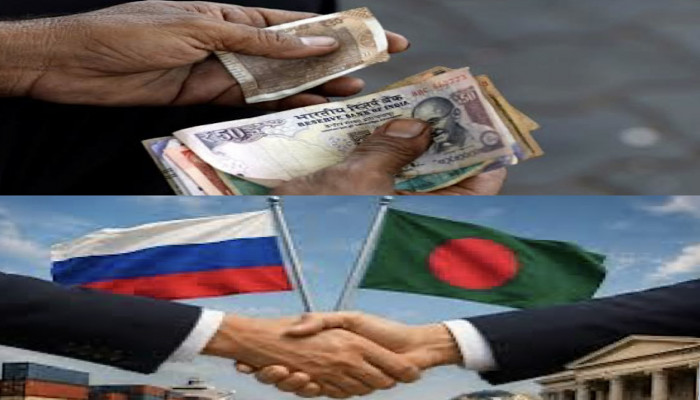
Russia has proposed a new framework to conduct bilateral trade with Bangladesh in Indian rupees as both countries look for alternative payment methods amid restrictions on Russian banks. Moscow has also suggested creating a dedicated payment system and opening a branch of a Russian bank in Dhaka to make financial transactions smoother. The proposals aim to address payment difficulties that emerged after US sanctions affected several Russian banks following the Russia-Ukraine war.
Officials at Bangladesh's Economic Relations Division (ERD) said both sides are expected to discuss these proposals during the next meeting of the Bangladesh-Russia Intergovernmental Commission on Trade, Economic, Scientific and Technical Cooperation. The meeting is likely to take place in September or October this year.
The ERD is also scheduled to hold a preparatory meeting to finalise Bangladesh's agenda before the bilateral discussions. Officials said Russia has suggested settling trade payments in Indian rupees after sanctions disrupted conventional banking channels used for financial transactions between the two countries.
Along with the rupee-based payment proposal, Russia has again proposed establishing a bilateral payment infrastructure to support trade. Moscow has also renewed its earlier proposal to open a branch of a Russian bank in Bangladesh. The move could help both countries carry out financial transactions more efficiently under the present restrictions.
Russia had submitted a similar proposal during the previous Awami League government. The plan, however, did not move forward after Bangladesh Bank sought the opinion of the Ministry of Foreign Affairs. As a result, the proposal remained pending and no final decision was taken.
One of the biggest challenges between the two countries involves repayments for the Russian-funded Rooppur Nuclear Power Plant project. Bangladesh has not been able to transfer loan repayments to Russia due to sanctions affecting Russian banks. The restrictions have made international fund transfers difficult through the usual banking system.
Russia had earlier suggested receiving the repayments in Chinese yuan. However, banks in both China and Bangladesh reportedly declined to participate over concerns about possible exposure to US sanctions. That proposal also failed to provide a workable solution.
At present, Bangladesh deposits the loan instalments into a Russian account maintained at Sonali Bank as a temporary arrangement. However, the funds remain there and cannot be transferred to Russian banks due to the sanctions. The issue continues to affect financial cooperation linked to the Rooppur project.
Russia's latest proposal comes at a time when India and Russia already conduct part of their bilateral trade in Indian rupees despite not having a currency swap agreement. Bangladesh also carries out trade with India in Indian rupees along with the US dollar and several other foreign currencies. Officials believe this existing practice could support similar arrangements with Russia.
According to ERD officials, Bangladesh had earlier suggested that Russia invest the accumulated loan repayment funds held in the Sonali Bank account within Bangladesh. Moscow did not accept that proposal, leaving the payment issue unresolved.
Apart from financial matters, Russia has proposed expanding bilateral trade and increasing investment cooperation. Moscow has suggested setting up a Russia-Bangladesh Business Council to strengthen business relations between companies from both countries. It has also proposed creating a registry of reliable Bangladeshi textile suppliers to help Russian importers identify trusted exporters.
Russia has further proposed expanding cooperation between small and medium-sized enterprises. It has also expressed interest in assisting Bangladesh in developing special economic zones to encourage investment and industrial growth.
Although Russia supported Bangladesh during the Liberation War, Bangladesh's exports to the Russian market remain relatively limited despite strong potential for growth. Before the Russia-Ukraine conflict, Bangladesh exported more than $500 million worth of goods to Russia every year. Export volumes have declined since the conflict began.
Data from the Export Promotion Bureau shows Bangladesh exported goods worth $245 million to Russia during the July-May period of the current fiscal year. Despite the decline in exports, Bangladesh continues to import fertiliser, wheat and several other commodities from Russia.
Bangladesh has also prepared its priorities for the upcoming commission meeting. ERD officials said the country will place its highest importance on securing Russian technology transfer. Dhaka wants stronger cooperation in renewable energy, power generation and the wider energy sector.
Bangladesh will also seek collaboration in e-commerce, the digital economy and innovation. It plans to discuss joint initiatives in agriculture, food security and agro-processing industries. The government also wants greater cooperation in technical and vocational education, skills development, connectivity and logistics.
The Bangladesh-Russia Intergovernmental Commission on Trade, Economic, Scientific and Technical Cooperation serves as the main platform for strengthening bilateral economic relations. The commission was established in 2017 to promote trade, energy cooperation and economic projects between the two countries.
The most recent formal meeting of the commission took place virtually on 15 March 2023. Earlier meetings were held in Moscow in 2018, Dhaka in 2019 and another virtual session in December 2021.
In a separate development, Russia reaffirmed its commitment to strengthening Bangladesh's food security and expanding bilateral trade. Bangladesh, on its part, expressed interest in importing urea fertiliser and other essential food commodities at competitive prices.
According to a press release issued by the commerce ministry, the matter came up during a meeting between Commerce Minister Khandakar Abdul Muqtadir and a Russian delegation led by Chargé d'Affaires Vyacheslav Sentyurin at the Secretariat.
The Bangladeshi side appreciated Russia's continued supply of wheat and muriate of potash fertiliser. Officials described these supplies as important for maintaining the country's food security.
During the meeting, the Russian delegation expressed interest in supplying around 2.8 lakh tonnes of urea fertiliser to Bangladesh Chemical Industries Corporation under a government-to-government arrangement. The delegation also proposed offering the fertiliser at $10 per tonne below prevailing international market prices.
Both sides also discussed expanding cooperation under the existing memorandum of understanding between the Trading Corporation of Bangladesh and JSC FEC Prodintorg for supplying essential commodities.
Russia also expressed interest in supplying sunflower oil, yellow peas, chickpeas, red lentils and green lentils to Bangladesh. The proposal reflects Moscow's broader plan to expand its presence in Bangladesh's commodity market.
Muqtadir welcomed Russia's interest in strengthening bilateral trade. He said Bangladesh remains committed to increasing trade, investment and economic cooperation with Russia on the basis of mutual benefit. The upcoming commission meeting is expected to play an important role in advancing these proposals and finding practical solutions to existing financial and trade challenges between the two countries.



 Loading...please wait
Comments