



Russia expels British diplomat over espionage activities
- In Reports
- 05:55 PM, Jan 15, 2026
- Myind Staff
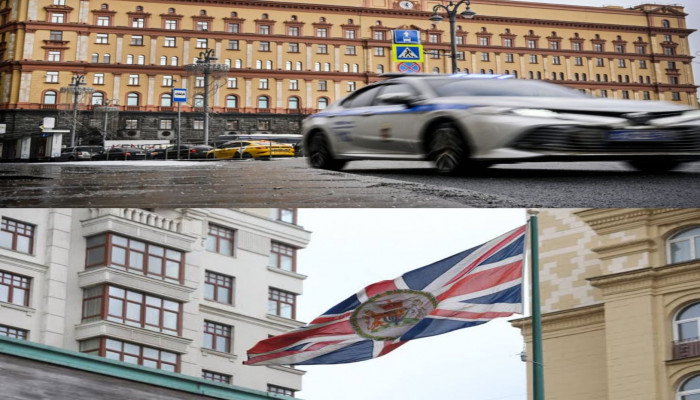
Russia on Thursday expelled a British diplomat after accusing him of working as an undeclared intelligence officer for the United Kingdom. Russian authorities said the diplomat was secretly involved in spying activities and warned London that such actions would not be tolerated on Russian soil.
Russia’s Federal Security Service (FSB), the main successor to the Soviet-era KGB, identified the diplomat as a second secretary at the British embassy in Moscow. According to the FSB, the official was operating under diplomatic cover while carrying out tasks for Britain’s intelligence services. Russian media later published photographs of the diplomat as part of the announcement.
The Russian side stated that the diplomat has been given two weeks to leave the country. The expulsion was presented as a direct response to what Moscow described as intelligence activities carried out under the guise of diplomatic work. Britain’s Foreign Office did not immediately respond to requests for comment following the announcement.
In a further escalation, Russia’s foreign ministry summoned Britain’s charge d’affaires in Moscow, Danae Dholakia, to formally protest the incident. During the meeting, Russian officials conveyed their strong opposition to what they described as espionage actions by British representatives.
“It was again stressed that Moscow would not tolerate the activities of undeclared British intelligence officers in Russia,” the foreign ministry said in a statement. The ministry also issued a warning to London, making clear that further actions could follow if the situation worsens. “A warning was also issued that if London escalates the situation, the Russian side will give a decisive ‘mirror’ response,” the statement added.
The tense diplomatic exchange was accompanied by public demonstrations. Protesters gathered outside the foreign ministry building in Moscow and shouted anti-British slogans as the British diplomatic car carrying the charge d’affaires arrived and departed. The protest highlighted the heightened emotions surrounding the incident and the broader deterioration in relations between Russia and Western countries.
The expulsion comes amid the ongoing war in Ukraine, during which Russia and Western nations have repeatedly accused each other of conducting espionage operations. Both sides have said that intelligence activities have intensified to levels not seen since the Cold War era.
Russia has claimed that Western intelligence agencies, including the United States’ Central Intelligence Agency (CIA), Britain’s Secret Intelligence Service, known as MI6, and France’s Directorate-General for External Security (DGSE), have stepped up efforts to gather sensitive information. Moscow has alleged that these agencies are attempting to steal state secrets, recruit Russian citizens, and create internal divisions within the country.
Western officials, however, have made similar accusations against Russia. Spy chiefs in Western Europe have stated that Russian intelligence agencies — including the FSB, the SVR foreign intelligence service, and the GRU military intelligence service — have been involved in major cyber-attacks and acts of sabotage across the Western world. According to these officials, such activities form part of a broader campaign targeting Western states.
Russia has denied these Western allegations. Moscow has consistently rejected claims that its intelligence services are carrying out cyber-attacks or sabotage abroad, arguing instead that such accusations are politically motivated.
The latest diplomatic row reflects the fragile and confrontational state of relations between Russia and the United Kingdom. With mutual distrust deepening, both sides continue to exchange accusations and warnings, raising concerns about further diplomatic expulsions or retaliatory measures in the future.



 Loading...please wait
Comments