




Russia assures India of stable oil supplies amid global energy tensions
- In Reports
- 06:10 PM, May 13, 2026
- Myind Staff
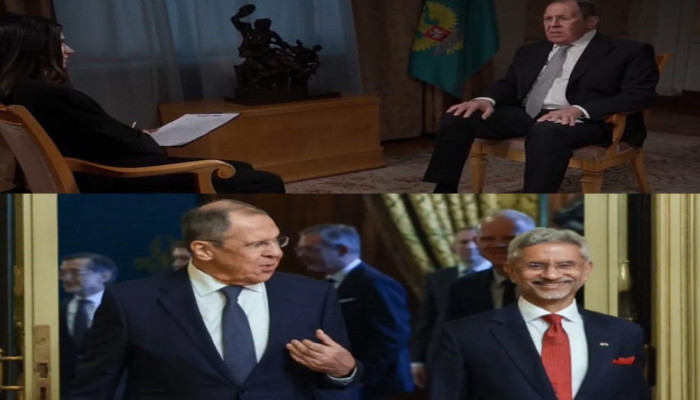
Russia has assured India that its energy supplies will remain stable despite rising geopolitical tensions and growing competition over global energy routes. Russian Foreign Minister Sergei Lavrov said Moscow would continue to protect its energy arrangements with India and ensure that the country’s interests are not harmed.
Speaking to RT India ahead of his visit to India for the BRICS Foreign Ministers' Meeting, Lavrov accused the United States of trying to control important global energy routes and putting pressure on countries that continue to maintain energy ties with Russia. He suggested that Washington was attempting to dominate international energy markets through political and economic influence.
“Their [US] goal is to seize everything, to seize all energy routes that are important. This goal is pretty clear and I'm confident that India understands what is happening,” Lavrov said.
He further added, “I can assure you that India's interests when it comes to Russian supplies will not be affected and we will do our utmost to ensure that this unfair play, unfair competition, could not affect our arrangements.”
Lavrov claimed that the US was engaging in “unfair competition” against Russia by targeting countries and regions connected to Russian energy exports. According to him, Moscow remains committed to fulfilling all agreements signed with its international partners, including India, despite the ongoing global tensions.
The Russian foreign minister also criticised European countries for reducing their dependence on Russian oil and gas. He said the move was politically motivated and not driven by unavoidable circumstances. Lavrov argued that Europe’s decision to distance itself from Russian energy had pushed the region into economic and energy-related difficulties.
“And it's not a force majeure, an act of God, that the Europeans recall when they strongly refuse to have contracts on energy supplies from Russia. Now they try to ban our gas and oil simply because Russia needs to be punished,” he stated.
Lavrov further said Russia has continued to honour its commitments even during periods of conflict and pressure from Western nations. He stressed that Moscow does not use energy supplies as a tool for retaliation and treats all agreements seriously, regardless of political relations with a country.
“We do not punish anyone and we treat our commitments in good faith. The commitments that we have in our relations with our partners. It doesn't matter whether we're talking about friendly or non-friendly countries. If we reached an agreement, it's in the Russian tradition to live up to the arrangements,” Lavrov added.
The Russian minister also warned that Europe could face a deeper crisis because of restrictions on Russian energy imports and the ongoing tensions around the Strait of Hormuz. He said disruptions in the region could impact global energy supplies and food security, with European countries likely to suffer the most.
“They put Europe into a dire crisis. Energy-wise and food-wise, probably Europe will be the one to be affected the most from the crisis in the Strait of Hormuz,” he said.
Lavrov also pointed out that Europe’s decision to reduce purchases of Russian oil and gas would force countries there to rely more heavily on liquefied natural gas supplied by the United States. According to him, American LNG is more expensive and could increase economic pressure on European economies already dealing with inflation and slowing growth.
“The ban to buy Russian oil and gas means that they will need to switch to the US supplies of LNG, which come at a higher price,” Lavrov added.
His remarks come at a time when global energy markets continue to face uncertainty because of the Russia-Ukraine conflict and rising tensions in West Asia. Concerns over supply disruptions and energy security have remained high across many countries dependent on imported fuel.
India has repeatedly maintained that its energy decisions are guided by national interest and the need for stable and affordable supplies. New Delhi has continued to engage with multiple international partners to ensure energy security while balancing diplomatic and economic interests. India has also defended its purchase of discounted Russian oil in recent years, saying it is necessary to meet the country’s growing energy demands and protect consumers from rising global fuel prices.



 Loading...please wait
Comments