




Rule of Law Must Not Be Hindered: Why FIRs Must Take Their Legal Course Without Any Interventions
- In Current Affairs
- 11:17 AM, Jul 29, 2026
- Rudra Dubey
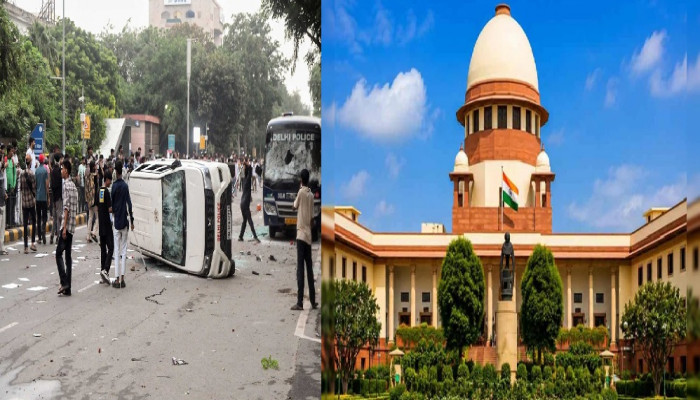
The events of July 20, 2026 at Jantar Mantar, Connaught Place and Parliament Street have tested Delhi's public order framework. What began as a protest march by the Cockroach Janta Party (CJP), demanding accountability for exam paper leaks, escalated, according to Delhi Police and media reports, into stone-pelting, attacks on police personnel, vandalism of vehicles including police vehicles, and damage to shops and public property.
Delhi Police registered FIRs at Parliament Street and Connaught Place against unidentified persons for rioting, vandalism, damage to public property, obstruction of public servants and snatching of police gear. Police reported that more than 100 personnel were injured, with reports of head injuries to officers, and around 70 detentions based on CCTV, drone and mobile footage. The matter is now sub judice.
In this context, any move by the executive to withdraw cases or pressure investigation agencies under political pressure would be a grave mistake. Here is why.
1. The Charges Are Not Political - They Are About Violence
Peaceful protest is protected under Article 19(1)(a) and (b) of the Constitution. That protection ends where violence begins.
The FIRs in the CJP case, as per police sources, are not for sloganeering or dissent. They are for specific criminal acts. Based on Bharatiya Nyaya Sanhita (BNS) 2023, which replaced the IPC, and other laws, the typical provisions invoked are:
- Unlawful Assembly - BNS 189: Assembly of 5+ persons with a common object to overawe public servants or commit offences.
- Rioting - BNS 191: Use of force/violence by an unlawful assembly. Every member sharing the common object can be liable. Up to 2 years for basic, up to 5 years if armed with deadly weapons - stones can qualify depending on use.
- Assault on Public Servants - BNS 132 / 195 / 221: Assault, obstruction or criminal force on police suppressing a riot.
- Attempt to Murder / Grievous Hurt - BNS 109 and hurt sections: When stone-pelting endangers life or causes head injuries.
- Mischief and Property Damage - BNS 324 + PDPP Act Sec 3: For vandalism of police buses, vehicles, shops and fuel stations. PDPP Act provides up to 5 years + fine, with a minimum imprisonment for certain public property damage.
- Disobedience of Order - BNS 223: For violation of prohibitory orders under BNSS 163 (old Sec 144). Police stated no permission was given for the Parliament march and prohibitory orders were in force.
- Conspiracy - BNS 61(2): If there is evidence of planning or incitement.
These are cognisable, serious offences. They cannot be treated as routine protest cases to be withdrawn for political reconciliation.
2. Investigation Is Evidence-Based, Not Political
Delhi Police has said it used body-worn cameras, CCTV, drones, handheld videographers, and open-source videos to identify offenders. This is standard procedure under BNSS and CCTNS - Crime and Criminal Tracking Network & Systems.
The process includes:
- Video analytics for specific acts like stone-throwing or vehicle damage
- Facial Recognition Technology matching against criminal records with legal safeguards
- Eyewitness and injured officer statements, medical reports
- Mobile tower and CDR analysis with court authorisation
- Dossier creation for repeat offenders with role-specific notes like "identified pelting stones at police bus near Regal Cinema"
This is painstaking, evidence-linked work. When the government announces withdrawal "as per law" after an agreement with protestors, it undermines officers who were injured on duty and demoralises the force. It also sends a message that violence has no cost if you have political leverage.
Investigation Status So Far
According to Delhi Police's public statements and subsequent media reporting, the investigation has expanded considerably since the events of July 20.
Police have publicly stated that:
- 15 FIRs have been registered arising from incidents during and immediately after the July 20 demonstrations.
- At least one FIR includes allegations of attempt to murder, based on the investigating officer's account of the violence and injuries allegedly sustained by police personnel. These remain allegations to be tested during investigation and trial.
- Investigators are examining multiple categories of digital evidence, including CCTV footage, drone recordings, body-worn camera footage, media recordings, and publicly available videos.
- Police have indicated that additional accused may be identified through ongoing forensic analysis and witness statements, meaning supplementary charge sheets may follow as the investigation progresses.
3. The Law Already Has a Check - The Court, Not the Government
Indian law does not allow automatic withdrawal by executive fiat.
Under BNSS Sec 360 [old CrPC 321]:
1. The Public Prosecutor must apply an independent mind - he is not a post office of the government.
2. The Court must give consent, after evaluating public interest and justice.
3. Victims - including injured police personnel and property owners - have a right to be heard.
Supreme Court in the Sheonandan Paswan and Rajender Kumar Jain case has held that withdrawal cannot be for political expediency or to thwart justice.
Governments have withdrawn farm law and other protest cases in the past, but courts have been far stricter when offences involve grievous hurt to police, rioting with weapons, and major damage to public property - exactly what is alleged in the CJP case.
If the government pressures the prosecutor or police to not file charge sheets, delay, or dilute sections, that is interference in the separation of powers.
4. Why Non-Intervention Is in Public Interest & Government Must NOT Interfere
a) Precedent: If stone-pelting that injures over 100 police personnel is forgiven under pressure, every future protest will believe violence is negotiable.
b) Rule of Law vs. Rule of Crowd: The state cannot have two standards - one for ordinary citizens who damage property and one for organised groups who can mobilise crowds to the streets.
c) Justice for Victims: Over 100 injured personnel are not statistics. They have a right to see the investigation completed. Shopkeepers whose property was damaged have a right to compensation under the PDPP Act.
d) Deterrence: BNS punishments for rioting, assault on public servants and PDPP violations exist specifically to deter such acts.
5. What Should the Government Consider Doing Instead?
The correct course is non-interference:
If police have already registered 15 criminal cases or more and are continuing to identify alleged offenders through forensic and digital evidence, the appropriate constitutional course is to permit the investigative and judicial processes to proceed independently. Whether the evidence ultimately supports conviction, discharge, acquittal, or withdrawal in any individual case is a matter for the criminal justice system, not public opinion or executive direction.
- Let police complete investigation and file charge sheets based on CCTV, drone and medical evidence
- Let the Public Prosecutor independently decide on prosecution
- Let Courts decide on bail, trial and any withdrawal application after hearing victims
- If the government wants reconciliation, it can address the underlying demand - exam reform, fast-track courts for paper leaks, accountability of officials - without trading away criminal justice
- Ensure transparency via RTI on status of cases and via court records, not via political deals
The government announced fast-track courts for paper leak cases. That is the right response to the CJP's substantive demand. Withdrawing violence cases is not.
Peaceful dissent must be protected, and any excess force by police must also be probed - Delhi High Court has already sought responses on allegations of pellet gun injuries and lathi charge beyond permitted time. Both must be judged by courts.
But pressuring law enforcement to bury FIRs for stone-pelting, vandalism and attacks on police would be a failure of constitutional duty. The best way to respect both democracy and dissent is to let the law take its own course.
6. The Judiciary: Guardian of the Rule of Law
In a constitutional democracy, criminal cases must be decided by independent courts—not by governments, political parties, protest groups, media campaigns, or public opinion. Once an FIR is registered, the judiciary becomes the ultimate guardian of both constitutional freedoms and legal accountability.
Courts ensure that investigations are fair, impartial, and free from political interference. Where necessary, they may direct further investigation, seek status reports, or order appropriate corrective measures to preserve the integrity of the criminal justice process. At the same time, courts protect the rights of the accused by examining the legality of arrests, deciding bail applications, ensuring compliance with the BNSS, and upholding the fundamental principle that every accused is presumed innocent until proven guilty beyond reasonable doubt.
The judiciary also safeguards the rights of victims, including injured police personnel, members of the public, and property owners, by ensuring that evidence is properly examined and prosecution decisions are guided by law rather than political expediency.
Most importantly, criminal prosecutions cannot be withdrawn merely because of a political settlement. Under Section 360 of the BNSS, any withdrawal requires an independent decision by the Public Prosecutor and the consent of the competent court, which must be satisfied that the withdrawal serves the interests of justice and not political convenience.
Equally, if allegations arise of excessive use of force, unlawful arrests, or other violations by law enforcement, the courts can order appropriate relief, including bail, compensation, independent inquiry, or other constitutional remedies.
An independent judiciary therefore protects both democracy and the rule of law. It ensures that peaceful protest remains protected, allegations of violence are decided through evidence and due process, and justice is determined by law—not by political pressure or the size of a crowd.
The criminal justice system is designed to distinguish between peaceful participants exercising their constitutional rights and individuals who may have committed cognisable offences during the same event. Investigators must identify responsibility through admissible evidence rather than assumptions based on group membership or political affiliation. Equally, every person against whom an FIR has been registered or who is subsequently identified during investigation is entitled to the full protection of due process, including legal representation, judicial scrutiny of the evidence, and the presumption of innocence. Maintaining both accountability and constitutional safeguards is essential to preserving public confidence in the rule of law.
Disclaimer: The opinions expressed within this article are the personal opinions of the author. MyIndMakers is not responsible for the accuracy, completeness, suitability, or validity of any information on this article. All information is provided on an as-is basis. The information, facts or opinions appearing in the article do not reflect the views of MyindMakers and it does not assume any responsibility or liability for the same.



 Loading...please wait
Comments