




Rubio warns Iran’s Hormuz toll could spread like a contagion to other waterways
- In Reports
- 05:57 PM, Jun 25, 2026
- Myind Staff
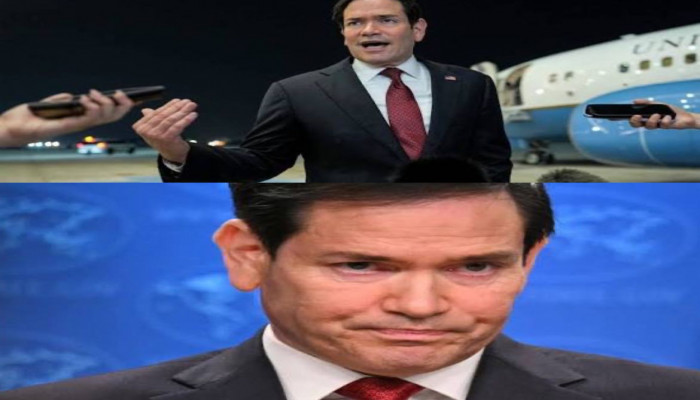
Iran’s plan to impose maritime service fees on ships passing through the Strait of Hormuz has drawn strong criticism from the United States. US Secretary of State Marco Rubio warned on Thursday, June 25, that allowing such charges on international waterways could create serious problems across the world. He said other countries might follow the same approach and disrupt global shipping routes.
Speaking at a Gulf Cooperation Council (GCC) meeting in Bahrain, Rubio stressed that international waterways should remain open to all nations without charges levied by countries located near them. He said, "International waterways do not belong to any nation-state. This is a foundational principle in the world today, without which the world would be in total chaos." He further warned, "If in fact we accepted that you can charge money to use an international waterway because it happens to be near your territorial space, well then this will spread throughout the world like a contagion."
The disagreement comes after Tehran announced plans to introduce maritime service fees for vessels passing the Strait of Hormuz. Iranian authorities maintain that these charges are service-related and not tolls. However, the United States argues that the strait is an international waterway and should remain free from such fees.
Rubio addressed the issue during his first visit to the Gulf region since the United States and Iran signed a memorandum of understanding aimed at ending the conflict in the Middle East. During his remarks, he reiterated Washington’s interest in reaching a peace agreement with Tehran. At the same time, he made it clear that the United States would not support an agreement that failed to meet key requirements.
"While we want a deal, we don't want a deal at any price," Rubio said. "We want a deal that's good, we want a deal that's real, we want a deal that's verifiable, and we want a deal that's adhered to."
Rubio also sought to reassure Gulf nations that the United States would protect their interests during any future negotiations with Iran. He said Washington would ensure that any agreement would not affect the security, stability, or prosperity of its regional partners.
"We want to ensure ... that there is no part of this deal that's undertaken that in any way undermines the security, the stability, or the prosperity of any of our partners in the Gulf region," he said.
Meanwhile, tensions in the Strait of Hormuz increased after Iran’s Revolutionary Guards issued a warning regarding vessel movements in the area. The Guards stated that ships must obtain authorisation before crossing the strategic waterway. They warned that authorities would take action against vessels that failed to comply with the rules announced by Iran.
"The only authorised route for passage through the Strait of Hormuz is the route announced by the Islamic Republic of Iran," the Revolutionary Guards said in a statement.
The Guards also described any crossing without approval as "unacceptable and extremely dangerous." They warned that vessels not following the designated route "will be dealt with."
In addition, the Revolutionary Guards criticised what they called a newly announced route through the Strait of Hormuz. According to their statement, "certain authorities" had introduced an alternative passage through the waterway.
The criticism followed an announcement by Omani authorities, who released a map showing a shipping route running close to Oman’s coastline. Oman said it had coordinated the route with the International Maritime Organisation, the United Nations agency responsible for maritime safety and navigation standards.
The Strait of Hormuz remains one of the world's most important shipping corridors. Any dispute over access, navigation rules, or service charges in the waterway carries significant implications for international trade and regional security. The latest exchange of warnings highlights continuing tensions over control and access in the strategically important passage.



 Loading...please wait
Comments