




Rs 52,000 Crore Defence Push: Army to get advanced anti-drone systems, Kamikaze drones
- In Reports
- 06:40 PM, Jul 03, 2026
- Myind Staff
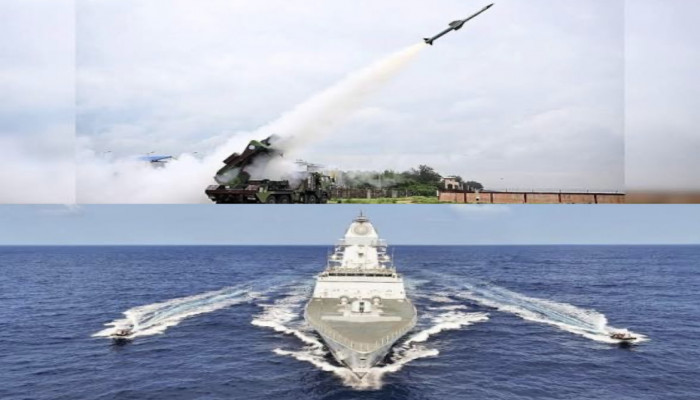
India has taken another major step to strengthen its defence preparedness after the Defence Acquisition Council (DAC) approved military procurement proposals worth around Rs 52,000 crore. Defence Minister Rajnath Singh chaired the meeting on Friday. The council granted the Acceptance of Necessity (AoN), which is the in-principle administrative approval required before the procurement process moves forward.
The approval covers several important systems for the Indian Army, Navy and Air Force. These acquisitions aim to improve protection against drones, strengthen air defence, increase anti-tank capability and enhance the overall combat readiness of the armed forces. The government also plans to procure most of these systems from Indian defence companies under the ‘Make in India’ initiative. This approach will strengthen domestic defence manufacturing while improving the operational capabilities of all three services.
“The Defence Acquisition Council (DAC), under the chairmanship of Defence Minister Rajnath Singh, on July 03, 2026, accorded Acceptance of Necessity (AoN), i.e., in-principle administrative approval to various acquisition proposals for the Defence Forces at an estimated cost of about Rs 52,000 crore,” said ANI in an X post.
The DAC held this meeting after a gap of several months. It also marked the first meeting attended by Army Chief General Raja Subramani, Air Chief Marshal Dhiraj Seth and Navy Vice Chief Admiral Krishna Swaminathan in their current roles.
The Indian Army received approval for several important systems that will improve its battlefield capabilities. One of the key acquisitions is the ‘Akash Tarang’ Anti-UAV Electronic Warfare System. This system will provide strong protection to Army formations against unmanned aerial threats. The growing use of drones in modern warfare has increased the need for such advanced counter-drone systems.
The Army will also procure the Man Portable Anti-Tank Guided Missile (MPATGM) System. Soldiers can carry and fire these shoulder-launched missiles. The system will strengthen the infantry’s ability to destroy enemy armoured vehicles during combat operations.
Another major approval covers the Medium Range Surface-to-Air Missile (MRSAM) Weapon System. This system will help the Army counter different types of aerial threats at medium ranges. The Army will also receive the Very Short Range Air Defence System (V-SHORADS). The system uses multi-spectral sensors and provides highly effective close-range air defence against hostile aerial targets.
The council also cleared the procurement of an Active Protection System for tanks. This advanced technology will improve the survivability of armoured vehicles by intercepting incoming threats before they strike the tanks. The Army will further strengthen its offensive capability with the Jet-Based Kamikaze Drone System. These loitering munitions offer greater lethality, improved resistance to electronic warfare and better cost-effectiveness during military operations.
The Indian Navy also secured approvals for several important projects. The council cleared the procurement of the Multi-Influence Ground Mine (MIGM). These smart naval mines will help restrict enemy naval movement in strategically important waters. The Navy will also procure the Naval Shipborne Unmanned Aerial System (NSUAS). These advanced drones carry modern sensors and will improve maritime surveillance and situational awareness during naval operations.
The DAC also approved the establishment of a Land-Based Testing Facility (LBTF) for Electric Propulsion Systems. This facility will support the testing and development of electric motors and propulsion systems for future naval platforms. The project will help the Navy develop advanced technologies for next-generation warships.
The Indian Air Force also received approval for several proposals. One of the major clearances covers the procurement of the Fixed-Wing Based High Altitude Pseudo Satellite (FW-HAPS). These platforms can remain at high altitudes for long durations and perform several critical missions. They will provide persistent Intelligence, Surveillance and Reconnaissance (ISR) capabilities. They will also support communication relay and remote sensing operations. These capabilities will improve the Air Force’s ability to monitor large areas and maintain continuous surveillance.
The latest approvals highlight the government's continued focus on modernising India's armed forces. The acquisitions will strengthen defence preparedness across land, sea and air. They will also support the country's efforts to develop advanced military technology within India through the ‘Make in India’ initiative. The government expects these procurements to improve the operational strength of the Army, Navy and Air Force while giving a major boost to the domestic defence industry.



 Loading...please wait
Comments