




Romania performs controlled blast on Danube River to reroute waters for cooling nuclear reactors
- In Reports
- 02:46 PM, Aug 04, 2026
- Myind Staff
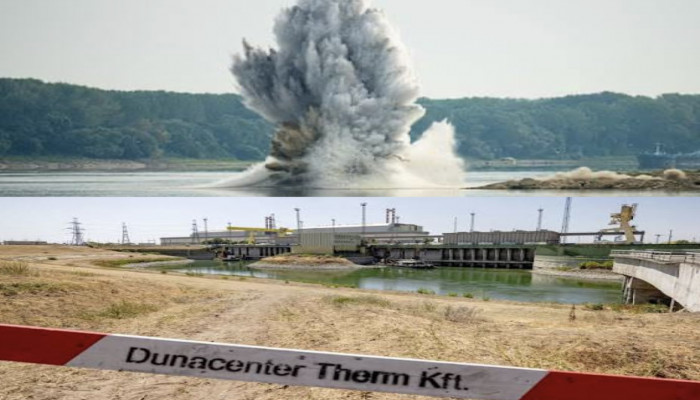
Romania carried out a controlled explosion on Monday to remove a rocky outcrop from the Danube River. The move aims to redirect more cooling water to the country's only operating nuclear reactor at the Cernavoda nuclear power plant. It marks an unprecedented step to deal with the severe drought that has sharply reduced water levels in the river and put electricity generation under pressure.
The situation has also affected neighbouring Hungary, where authorities warned that the country's only nuclear power plant at Paks could soon face a complete shutdown if water levels continue to fall. The Danube supplies cooling water to both nuclear facilities. Lower river levels have created major challenges for power production across the region.
Europe is facing an intense heatwave and prolonged drought, which have pushed river levels to unusually low levels. The situation has raised concerns over drinking water supplies, river transport, and electricity generation. Nuclear power plants that depend on river water for cooling are among the worst affected.
Romania and Hungary have both appealed to households and businesses to reduce electricity consumption to ease pressure on their power grids. In Romania, Renault-owned Dacia and Ford agreed to stop production at their car manufacturing plants until August 19. The voluntary decision is expected to reduce electricity demand by around 200 megawatts.
Prime Minister Ilie Bolojan said Romania is also dealing with limited electricity imports from neighbouring countries. "Drought-related difficulties are amplified by limited trans-border connections with central and western Europe," Bolojan said. "There is limited import capacity."
Romanian state-owned nuclear power producer Nuclearelectrica usually supplies around one-fifth of the country's electricity. However, one of its two reactors at the Cernavoda plant was shut down early last week after the Danube's water level dropped significantly. The remaining reactor is now the country's only working nuclear unit.
Monday's controlled blast sent a large column of water and rock into the air. Officials said the operation will help clear the area for the construction of a temporary dam. The dam will redirect more water into the river channel that supplies cooling water to the remaining reactor at Cernavoda. According to the Romanian navy, the work is expected to finish on Wednesday.
Defence Minister Radu Miruta stressed the importance of keeping the reactor operational for as long as possible. "Any day past Wednesday or Thursday that the nuclear power plant functions is a gain," Defence Minister Radu Miruta said. "A day of it functioning is three times more efficient than the costs of this operation."
The crisis has also intensified in Hungary. Earlier, officials warned that the Paks nuclear power plant could be forced to shut down as early as Sunday if river conditions worsened. However, updated forecasts have provided a short reprieve. Authorities now believe the plant can continue operating at its reduced capacity until Monday or Tuesday.
The 2-gigawatt Paks nuclear power plant normally generates around half of Hungary's electricity. On Monday, it was operating at just over 10 per cent of its full capacity after the Danube fell to a record low level.
Hungarian Prime Minister Peter Magyar said the plant could continue producing a limited amount of electricity for another day or two. "Today, and maybe tomorrow the last turbine producing 240 megawatts can keep working," Hungarian Prime Minister Peter Magyar said.
He added, "This is very good news, as the complete shutdown of the plant can be avoided on one of the days with the highest consumption."
Later, Magyar said weather forecasts had slightly improved, offering some hope for the coming days. He said forecasts of Danube water levels had become "slightly more optimistic".
Hungary has also asked people and businesses to voluntarily reduce electricity use. The government's appeal appears to have had a significant impact. According to the prime minister, lower electricity consumption on Sunday reduced demand by around 700 megawatts, easing pressure on the national power grid.
Several companies have also joined the effort. Pharmaceutical company Richter announced that it will cut its electricity consumption by more than half over the next three weeks. The company also offered to supply 4 megawatts of electricity each day from its solar energy park to support the country's power needs.
The situation highlights the growing impact of extreme weather on Europe's energy infrastructure. Falling river levels have disrupted the operation of nuclear power plants that rely on steady water supplies for cooling. Romania's decision to use explosives to redirect river water reflects the extraordinary measures governments are now taking to keep electricity flowing during one of the region's most severe droughts in recent years.



 Loading...please wait
Comments