



Reversing earlier decision US extends Russian oil waiver to stabilise global energy prices
- In Reports
- 01:50 PM, Apr 18, 2026
- Myind Staff
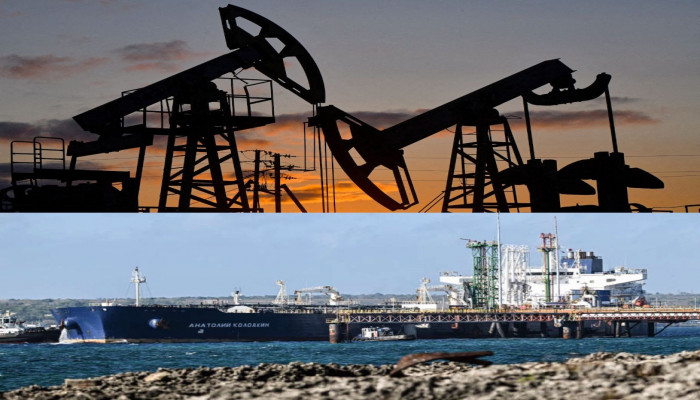
The United States has decided to extend a waiver that allows countries to continue buying sanctioned Russian oil at sea for another month. This decision comes as global energy prices remain unstable due to the ongoing conflict involving Iran. The waiver, renewed by the Trump administration on Friday, permits the purchase of Russian oil and petroleum products loaded onto vessels until May 16. It replaces an earlier 30-day waiver that expired on April 11. However, the current extension does not include any transactions linked to Iran, Cuba, or North Korea.
This move reflects Washington’s effort to manage rising global oil prices, which have surged during the ongoing U.S.-Israeli war involving Iran. Several countries, particularly in Asia, have been struggling with the sudden rise in energy costs. These nations had urged the United States to allow alternative oil supplies into the market to ease the pressure. The waiver provides temporary relief by ensuring continued access to Russian oil despite sanctions.
The decision marks a shift in stance by the U.S. Treasury Department. Just two days before the renewal, Treasury Secretary Scott Bessent had stated that the administration would not extend the waiver for Russian oil. He also mentioned that a separate waiver for Iranian oil was expected to expire soon. The administration reversed its earlier decision due to mounting global pressure and worsening energy conditions.
Explaining the move, a Treasury Department spokesperson said, "As negotiations (with Iran) accelerate, Treasury wants to ensure oil is available to those who need it." This highlights the administration’s attempt to balance diplomatic efforts with practical economic needs. The availability of oil in global markets has become critical as the conflict continues to disrupt supply chains.
Oil prices showed some relief on Friday, dropping by 9% to around $90 per barrel. This decline followed Iran’s temporary reopening of the Strait of Hormuz, a key route for global oil shipments. However, the broader impact of the conflict remains severe. The International Energy Agency has described the situation as the worst disruption to global energy supply in history. The war, now entering its eighth week, has already damaged more than 80 oil and gas facilities across the Middle East.
Tensions remain high in the region. Iran has warned that it could shut the Strait of Hormuz again if the U.S. Navy continues its blockade of Iranian ports. Such a move would further strain global oil supply and push prices even higher. The uncertainty has made energy markets highly volatile, affecting economies worldwide.
Rising oil prices have also created political challenges within the United States. High energy costs are seen as a potential risk for President Donald Trump’s Republican allies ahead of the upcoming November midterm elections. Controlling fuel prices has therefore become both an economic and political priority for the administration.
The decision to extend the waiver is also influenced by international pressures. A U.S. source revealed that partner countries raised the issue during meetings held alongside the Group of 20, World Bank, and International Monetary Fund gatherings in Washington. These countries requested U.S. to extend the waiver to prevent further disruptions. President Trump also discussed oil supply concerns during a call with Indian Prime Minister Narendra Modi, as India remains a major buyer of Russian oil.
Earlier, a separate waiver issued on March 20 allowed around 140 million barrels of Iranian oil to enter global markets. According to Bessent, this helped reduce pressure on supply chains. However, such measures have faced criticism from lawmakers in the United States. Members from both political parties have argued that these waivers could benefit the economies of countries like Iran and Russia, both of which are involved in ongoing conflicts.
Critics believe that allowing the continued oil trade may weaken Western efforts to cut off financial resources for Russia’s war in Ukraine. It could also create tensions between the United States and its allies. European Commission President Ursula von der Leyen has clearly stated that this is not the right time to ease sanctions on Russia.
Meanwhile, Russia has responded positively to the waiver extension. Kirill Dmitriev, a presidential envoy, said in a social media post: "US-Russian economic and energy cooperation will continue." He had earlier noted that the initial waiver could release 100 million barrels of crude oil into the market, which is nearly equal to one day of global oil production.
Experts suggest that such waivers may continue in the future. Brett Erickson, a sanctions specialist at Obsidian Risk Advisors, believes that this is not the last step of its kind. He said, "The conflict has done lasting damage to global energy markets, and the tools available to stabilise them are nearly exhausted." His statement reflects the growing concern that traditional methods may not be enough to control the ongoing crisis.
The extension of the Russian oil waiver shows how geopolitical conflicts are directly shaping global energy policies. While the move offers short-term stability, it also raises questions about long-term strategies. As the conflict continues and energy markets remain uncertain, governments around the world may have to make more such difficult decisions.



 Loading...please wait
Comments