




Restoring Balance: Addressing the Injustices of India’s Constitution
- In Current Affairs
- 10:32 AM, Aug 15, 2024
- Dr Ryan Baidya
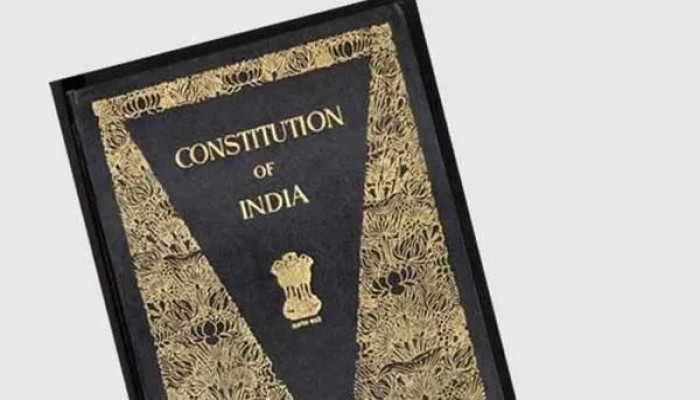
Since its adoption in 1950, the Indian Constitution has been hailed as a beacon of democracy, secularism, and justice. However, a closer examination of its amendments, particularly those made under Congress administrations from 1950 to 2014, reveals a troubling pattern: a systematic marginalisation of the majority Hindu population, coupled with the disproportionate empowerment of minority communities, particularly Muslims and Christians. This imbalance calls for a reassessment and reform of the Constitution to ensure true equality and justice for all Indian citizens.
Historical Imbalance and the Marginalisation of Hindus
The Constitution, in its original form and through subsequent amendments, has created legal and social disparities that have disproportionately affected Hindus. Article 25, for instance, guarantees the right to freely profess, practice, and propagate religion. While this ostensibly ensures religious freedom, in practice, it has facilitated conversions, particularly from Hinduism to other religions, raising concerns about the protection of Hindu religious and cultural integrity.
Moreover, Article 28 prohibits religious instruction in state-funded institutions, effectively denying Hindus the right to impart religious education to their children in these settings. In contrast, Article 30 grants minorities the right to establish and administer their educational institutions, enabling them to preserve and propagate their religious beliefs. This discrepancy highlights a fundamental inequality in how religious freedoms are distributed among different communities.
The Hindu Religious and Charitable Endowments (HRCE) Act of 1951 further exemplifies this imbalance by placing Hindu temples and their finances under government control, while no similar control is exercised over mosques or churches. This has not only stripped Hindus of their religious autonomy but has also led to the mismanagement of temple resources, depriving the community of its cultural heritage.
Secularism Misapplied: The 42nd Amendment and Beyond
The insertion of the word "secular" into the Preamble of the Constitution during the Emergency in 1975 was a turning point in India’s constitutional history. While secularism is a noble ideal, its implementation has been skewed, often favouring minority communities at the expense of the Hindu majority. The forced sterilisations and demographic changes during this period disproportionately targeted Hindus, leaving long-lasting effects that are still visible today.
Legislative actions like the Minority Commission Act of 1992 and the Places of Worship Act of 1991 further institutionalised this imbalance. The Minority Commission Act entrenched certain privileges and protections for minorities while the Places of Worship Act restricted Hindus’ ability to reclaim religious sites that were altered or destroyed during historical invasions.
These laws, rather than promoting equality, have deepened divisions and created a sense of injustice among Hindus.
The Need for Constitutional and Legal Reforms
To correct these historical wrongs and ensure a truly equitable society, we must revisit and reform the Constitution and related laws. The concept of secularism must be redefined to ensure that it applies equally to all communities, without favouring one over the other. Hindus, as the majority community, must be allowed the same religious freedoms and protections that are currently extended to minorities.
Reforms should include the removal of discriminatory laws such as the HRCE Act, allowing Hindu temples to regain their autonomy. The right to religious education should be equally available to Hindus, just as it is to Muslims and Christians under Articles 28 and 30.
Furthermore, the Wakf Act of 1995, which grants Muslims extensive rights over land, should be reexamined to ensure that it does not infringe on the property rights of others, particularly Hindus.
Cultural Preservation and Legal Parity
India’s rich cultural and religious heritage, particularly that of the Hindu majority, must be preserved and respected. This includes ensuring that Hindu religious institutions are free from undue government interference and that Hindu cultural practices and traditions are protected. The legal framework must reflect a commitment to equality, where all religious communities are subject to the same laws and regulations, preventing any group from being unfairly advantaged or disadvantaged.
A Constitution for All Indians
The current Constitution, as it stands, has created a system where the majority Hindu community is often at a disadvantage compared to minority communities. This is not in line with the principles of justice, equality, and fairness that are the foundation of any true democracy. Therefore, it is essential to reform the Constitution to reflect the needs and rights of all citizens, ensuring that Hindus, along with all other religious communities, are treated with fairness and respect.
India’s future depends on a Constitution, that is truly for the people, by the people, and to the people—where every citizen, regardless of their religion, has equal rights and opportunities. It is time to address these historical imbalances and create a legal framework that truly embodies the spirit of equality and justice for all.
For further readings:
Articles 25, 28, and 30: Religious Freedom and Education
Source: “The Constitution of India,” Government of India.https://www.india.gov.in/my-government/constitution-india
HRCE Act (1951): Control of Hindu Temples
Source: “Hindu Religious and Charitable Endowments Act,” Government of India. https://legislative.gov.in/sites/default/files/A1951-19.pdf
Hindu Code Bill and Special Marriage Act (1954)
Source: Agnes, Flavia. “Law and Gender Inequality: The Politics of Women’s Rights in India,” Oxford University Press, 1999.
Source: “Special Marriage Act, 1954,” Government of India. https://indiacode.nic.in/handle/123456789/1568
Secularism (1975)
Source: “The 42nd Amendment of the Indian Constitution,” Government of India. https://legislative.gov.in/sites/default/files/COI_42.pdf
Minority Act (1992) and Places of Worship Act (1991)
Source: “National Commission for Minorities Act, 1992,” Government of India. https://legislative.gov.in/sites/default/files/A1992-19.pdf
Source: “Places of Worship Act, 1991,” Government of India. https://legislative.gov.in/sites/default/files/A1991-42.pdf
Wakf Act (1995)
Source: “The Wakf Act, 1995,” Government of India. https://legislative.gov.in/sites/default/files/A1995-43.pdf
Ram Setu Affidavit (2007) and Saffron Extremism (2009)
Source: “Ram Setu Affidavit Controversy,” The Hindu. https://www.thehindu.com/news/national/ram-setu-affidavit/article21737038.ece
Source: “Saffron Terror Remarks and Political Discourse,” Indian Express. https://indianexpress.com/article/india/saffron-terror-remark-brought-a-storm-cong- may-now-change-tack/
Image source: Mint
Disclaimer: The opinions expressed within this article are the personal opinions of the author. MyIndMakers is not responsible for the accuracy, completeness, suitability, or validity of any information on this article. All information is provided on an as-is basis. The information, facts or opinions appearing in the article do not reflect the views of MyindMakers and it does not assume any responsibility or liability for the same.



 Loading...please wait
Comments