




Renewed hostilities between US and Iran flare up tensions in the region
- In Reports
- 01:40 PM, May 08, 2026
- Myind Staff
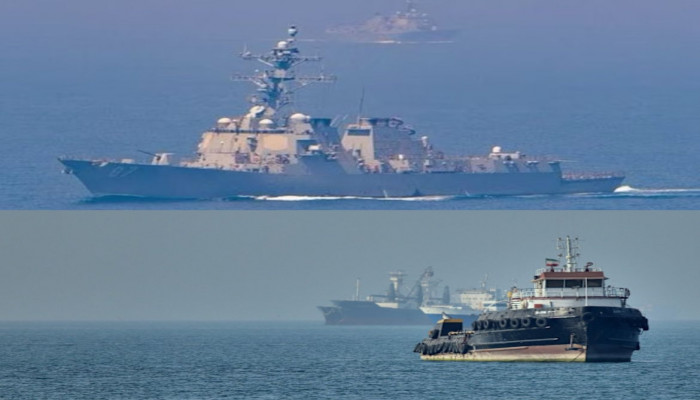
The United States and Iran exchanged fire near the Strait of Hormuz in the most serious escalation since the ceasefire between the two sides came into effect on April 7. The confrontation has increased tensions in the region at a time when Tehran is still considering a proposal aimed at ending the conflict permanently.
The latest military exchange began after the US accused Iran of launching attacks on warships moving through the strategic waterway. On Thursday, the United States Central Command said American forces carried out strikes on Iranian military facilities that were allegedly being used to target ships in the area.
The US military described the strikes as defensive and insisted that Washington was not looking to intensify the conflict. Officials said the operation was a direct response to Iranian actions near the Strait of Hormuz. The US maintained that its military response was necessary to protect ships passing through the waterway, which remains one of the world’s most important trade and energy routes.
Iran, however, strongly rejected the American version of events. Iranian authorities accused the US of carrying out attacks on civilian areas during the airstrikes. A spokesperson for Iran’s armed forces claimed that the strikes not only hit Iranian territory but also targeted two ships entering the Strait of Hormuz.
Following the escalation, Iranian state-linked media reported that air defence systems were activated in Tehran. The move raised concerns about the possibility of a broader military confrontation in the region. The situation also increased fears among international observers who worry that any conflict near the Strait of Hormuz could quickly impact global trade and energy markets.
Speaking to reporters, Donald Trump said American forces had destroyed the Iranian attackers and warned Tehran against carrying out more provocations. “We’ll knock them out a lot harder, and a lot more violently” if Iran does not agree to a deal soon, Trump said. He also insisted that the ceasefire was still in place and accused Iran of having “trifled with us.”
Despite the military exchange and strong statements from both sides, Washington and Tehran later signalled that they were not seeking a wider conflict. Iranian officials stated that the situation had returned to normal after the incident. The US also repeated that it did not want further escalation in the region.
Trump later appeared to reduce the seriousness of the confrontation during a conversation with an ABC reporter. “It’s just a love tap,” he said. His remarks came even as concerns continued to grow over the fragile situation in the Gulf region.
The latest violence took place while the US was waiting for Iran’s response to a proposed framework intended to formally end the conflict and stabilise the region. According to reports, the proposal includes a three-stage process aimed at reducing tensions between the two countries.
The reported framework includes a formal ceasefire agreement, steps to ease tensions around the Strait of Hormuz, and a 30-day negotiation period that would focus on reaching a broader long-term agreement between the two sides. The proposal is seen as an effort to prevent further military action and create space for diplomatic discussions.
However, reports also suggest that the proposal avoids some of the most sensitive issues between Washington and Tehran. It reportedly does not directly address key US demands related to Iran’s nuclear activities. It also avoids firm guarantees regarding unrestricted navigation through the Strait of Hormuz, which remains a major concern for the US and its allies.
The Strait of Hormuz is one of the world’s most critical energy routes and previously handled nearly one-fifth of global oil and gas supplies. Any instability in the area creates concerns for international markets, shipping routes, and energy security. The latest confrontation has once again highlighted how tensions in the Gulf region can affect economies across the world.
Meanwhile, Iran’s foreign ministry said Tehran had not yet made a final decision on the proposed framework. The statement reflected the continued uncertainty surrounding the diplomatic process and raised further questions about whether negotiations can successfully prevent another round of conflict between the two countries.



 Loading...please wait
Comments