




Reclaiming Somnath: Nehru unsupportive, Patel and Rajendra Prasad stood firm
- In Reports
- 07:48 PM, Jan 05, 2026
- Myind Staff
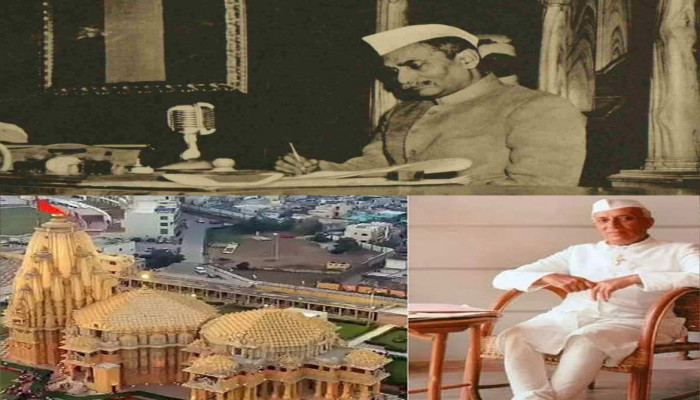
The year 2026 holds deep historical and emotional significance for the Somnath Temple, one of India’s most revered religious and cultural landmarks. It marks 1,000 years since January 1026, when the temple was attacked by Mahmud of Ghazni, an event remembered as an assault not only on a place of worship but also on a powerful symbol of Indian civilisation and faith. In a moving note, Prime Minister Narendra Modi wrote in his blog about the thousand years of the Somnath Temple’s destruction and India’s civilisational resilience.
Despite repeated destruction over centuries, the Somnath Temple stands today as strong and majestic as ever. Its survival is a testament to the unwavering faith of the people and the continuous efforts made across generations to rebuild and restore it to its original glory. Along with the millennium of the 1026 attack, the year 2026 also marks 75 years of another historic milestone in the temple’s journey.
On May 11, 1951, the restored Somnath Temple was formally opened to devotees. The reopening ceremony was held in the presence of India’s first President, Dr Rajendra Prasad, symbolising the revival of a sacred heritage in independent India. This moment marked not just the physical rebuilding of the temple, but also the reclaiming of cultural pride after centuries of adversity.
The attack in 1026 became the beginning of a series of repeated assaults on the Somnath Temple by later invaders. These attacks were aimed at breaking the spirit of the people and erasing cultural identity. However, history shows that every attempt to destroy the temple was met with resistance, sacrifice, and eventual rebuilding. Time and again, brave men and women stood up to defend the shrine, even at the cost of their lives.
Each generation refused to surrender. Instead, they rebuilt the temple, rejuvenated it, and ensured that the flame of faith continued to burn. Among the many contributors to this effort was Ahilyabai Holkar, who made a noble attempt to restore the temple and ensure that devotees could continue offering prayers at Somnath.
In the 1890s, Swami Vivekananda visited Somnath, an experience that deeply moved him. Later, while speaking in Chennai, he reflected on the strength and resilience symbolised by temples like Somnath. He said, “Some of these old temples of southern India and those like Somnath of Gujarat will teach you volumes of wisdom, will give you a keener insight into the history of the race than any amount of books. Mark how these temples bear the marks of a hundred attacks and a hundred regenerations, continually destroyed and continually springing up out of the ruins, rejuvenated and strong as ever!”
This quote remains one of the most powerful descriptions of the temple’s enduring legacy.
After India gained Independence, the responsibility of rebuilding the Somnath Temple fell into the hands of Sardar Vallabhbhai Patel. During a visit to the temple site on Diwali in 1947, Sardar Patel was deeply moved by its condition. It was during this visit that he announced the decision to rebuild the temple at the same sacred place.
Sadly, Sardar Patel did not live to witness the completion of this historic task. The temple doors were finally reopened on May 11, 1951, but the leader who initiated the rebuilding effort had passed away before that day arrived.
At the time, Prime Minister Jawaharlal Nehru was not fully supportive of the event. He expressed reservations and did not want the Honourable President or Union ministers to associate themselves officially with the ceremony. Nehru believed that such an event could create a negative impression of India on the global stage.
However, Dr Rajendra Prasad chose to stand firm. He attended the ceremony and formally inaugurated the restored temple, a decision that later came to be seen as a defining moment in India’s cultural history. His presence sent a strong message about respecting faith while upholding constitutional values.
No account of Somnath’s revival is complete without mentioning Kanhaiyalal Maneklal Munshi (KM Munshi). He played a crucial role in supporting Sardar Patel and was deeply involved in the rebuilding effort. Munshi also documented the temple’s history and significance through his writings, including the book “Somanatha: The Shrine Eternal”, which remains an important source of information and education.
Today, as India approaches the twin milestones of 1,000 years since the 1026 attack and 75 years since the temple’s reopening, Somnath stands not just as a place of worship but as a powerful symbol of resilience, regeneration, and unbroken civilizational spirit.



 Loading...please wait
Comments