




Rajya Sabha polls 2026: NDA makes significant gains across multiple states
- In Reports
- 12:00 PM, Mar 17, 2026
- Myind Staff
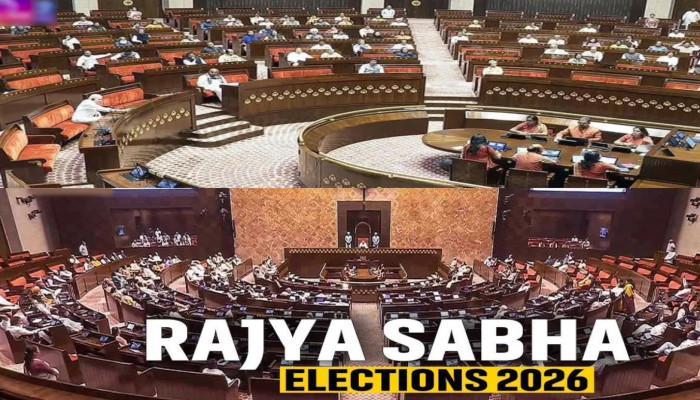
The biennial elections to the Rajya Sabha were conducted on Monday to fill 37 seats across 10 states, making it a significant political event. While many candidates were elected without facing any contest, voting was required for 11 seats. These included five seats in Bihar, four in Odisha, and two in Haryana. The outcomes in these states became crucial in understanding the current political balance between the ruling alliance and the Opposition.
In Bihar, one of the most prominent winners was Nitish Kumar, the state’s longest-serving chief minister. His victory added to the strength of the National Democratic Alliance (NDA) in the Upper House. Opposition faced a setback in both Bihar and Odisha, as NDA-backed candidates managed to perform better than expected. This was largely due to cross-voting by some legislators and the absence of certain Opposition members during the voting process, which shifted the balance in favour of the ruling alliance.
The Haryana results also played an important role in the overall outcome of these elections. The two seats in the state saw a contest between three candidates. Eventually, Sanjay Bhatia from the Bharatiya Janata Party (BJP) and Karamveer Singh Boudh from the Congress emerged as winners, while Independent candidate Satish Nandal was defeated. The result reflected a balanced outcome in the state, with both BJP and Congress securing one seat each.
Apart from the contested states, several candidates across the country were elected unopposed, showing either political consensus or a lack of competition. Among them was M. Thambidurai, a former Deputy Speaker of the Lok Sabha representing the Dravida Munnetra Kazhagam (DMK). Senior Congress leader Abhishek Singhvi also secured a Rajya Sabha seat without facing any opposition.
In West Bengal, which is heading towards elections, four nominees from the Trinamool Congress (TMC) were elected unopposed. These included Babul Supriyo, former Director General of Police Rajeev Kumar, senior Supreme Court lawyer Menaka Guruswamy, and actor Koel Mallick. Along with them, former BJP state president Rahul Sinha was also elected unopposed. A historic highlight of these elections was the victory of Menaka Guruswamy, who has become India’s first openly queer Member of Parliament, marking a significant step towards inclusivity in Indian politics.
In Maharashtra, all seven candidates were elected without contest. This included six nominees from the ruling Mahayuti alliance as well as Nationalist Congress Party (SP) chief Sharad Pawar, indicating a smooth electoral process in the state.
Similarly, in Telangana, Congress candidates Abhishek Singhvi and Vem Narender Reddy were elected unopposed. In Tamil Nadu, all six candidates also secured victory without any contest. These included AIADMK’s M. Thambidurai, PMK leader Anbumani Ramadoss, and DMK leaders Tiruchi Siva and J Constantine Ravindran. Congress nominee M Christopher Tilak and DMDK treasurer LK Sudeesh were also elected unopposed.
In the hill state of Himachal Pradesh, Congress candidate Anurag Sharma won the election. He is known to be a close associate of Chief Minister Sukhwinder Singh Sukhu, and his victory added to the party’s representation in the Rajya Sabha.
Overall, the Rajya Sabha elections reflected a mix of direct contests and uncontested victories across states. While the NDA gained an advantage in states like Bihar and Odisha due to favourable circumstances such as cross-voting and absenteeism, states like Haryana showed a more balanced result. The outcomes highlight evolving political strategies and alliances, offering insight into the current power dynamics in the Upper House.



 Loading...please wait
Comments