




Rajasthan HC steps in after judges’ houses, temples, schools listed as Waqf properties
- In Reports
- 06:17 PM, Aug 04, 2026
- Myind Staff
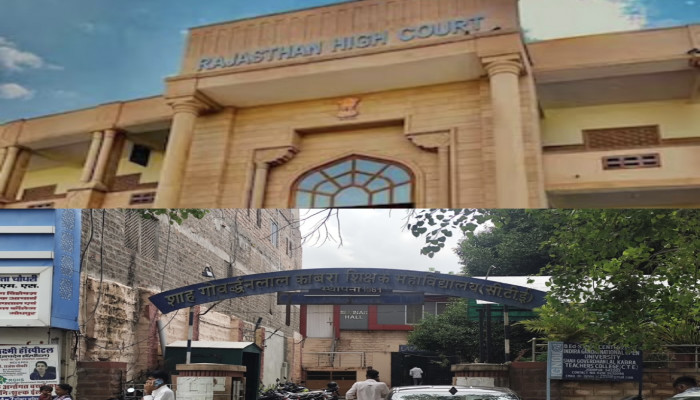
The Rajasthan High Court took suo motu cognisance of reports claiming that judges' official residences, schools, colleges, temples and several other public and private properties in Jodhpur were recorded as Waqf properties in official records. The Court acted after reports suggested that these properties had been entered as Waqf assets despite revenue records showing a different status.
A Division Bench of Justice Pushpendra Singh Bhati and Justice Praveer Bhatnagar registered a public interest litigation (PIL) after examining a report published by Dainik Bhaskar. The report alleged that several large properties had been included in the Waqf Gazette and uploaded on the Umeed Portal as Waqf properties even though the revenue records did not support those entries.
The Bench observed that the issue was not limited to disputes over ownership or possession. It noted that the matter involved educational institutions, places of worship, judicial residences and many residential and commercial properties. The Court said, “The prima facie inclusion of educational institutions, places of worship, judicial residences and numerous residential and commercial properties within the Waqf records, despite the apparent position emerging from the revenue records, raises concerns extending beyond individual disputes concerning title or possession.”
In an interim order passed on July 27, the High Court directed authorities to maintain status quo regarding the ownership and legal status of properties falling under Khasra Nos. 482, 485 and 490. The order also covered all the properties mentioned in the newspaper report.
The Court restrained authorities from carrying out any mutation, transfer, lease, licence, construction, demolition or any other activity that could change the physical or legal status of these properties on the basis of the disputed entries. This direction will remain in force until further orders.
The Bench also directed the District Collector of Jodhpur to preserve all revenue records related to the disputed land. It asked the Collector to conduct a physical verification of the properties and submit photographs along with GPS details.
The Court directed the Chief Executive Officer of the Rajasthan Board of Muslim Waqf to produce the complete original records related to the inclusion of these properties in the Waqf Gazette and on the Umeed Portal. It also asked the District Minority Welfare Officer to explain the alleged data-entry exercise carried out for the Umeed Portal.
According to the Court, Dainik Bhaskar published a report on June 27 referring to Khasra Nos. 482, 485 and 490 in Jodhpur (Rural). The report stated that these lands were recorded in the name of the concerned revenue authority in official records. Despite this, they were allegedly shown as Waqf properties in the Waqf Gazette and on the Umeed Portal.
The Bench noted that the list of properties allegedly recorded as Waqf assets included Sohanlal Manihar School, Shah Govardhanlal Kabra College, Kabra Matrushri Kala Mandir, Agarwal Bagichi, Agarwal Mahavir Temple, Satguru Kabir Ashram, Goureshwar Mahadev Temple, Maru Lohar Sikligar Temple, Joonagar Nyati Bagichi, two Nyati Bhawans, Geeta Bhawan and several residential and commercial properties.
The Court also took note of the claim that the official residence of sitting Rajasthan High Court judge Justice Vinit Kumar Mathur and the residence of former Jharkhand Chief Justice Prakash Tatia were among the properties shown as Waqf assets.
The Bench stressed that public records such as revenue records, statutory registers and digital databases carry important legal value. It said conflicting entries regarding the same property cannot continue without proper examination.
The Court observed, “Where properties standing recorded in such records in favour of a public authority or other persons are subsequently reflected in the Waqf Gazette or on the Umeed Portal as Waqf properties, any such entry must necessarily trace its foundation to authority of law and to due observance of the procedure prescribed under the Waqf Act, 1995 and other applicable laws.”
It further said that any unilateral change affecting the legal status of a property without following the procedure laid down under the Waqf Act and without informing the affected parties raises serious legal concerns. The Bench stated that such actions could amount to arbitrary exercise of power and deprivation of property without following due process.
The Court also referred to the constitutional protection available to religious rights. It clarified that such protection does not automatically give ownership rights over a property. The Bench said, "Article 25 protects freedom of conscience and the free profession, practice and propagation of religion, while the constitutional scheme neither permits the State to confer a proprietary character upon property merely on account of a religious claim nor allows an otherwise lawful religious endowment to be disturbed except in accordance with law."
Considering the large number of properties involved and the seriousness of the issue, the High Court issued notices to the Union government, the Rajasthan government and the local authorities in Jodhpur. It also appointed advocates Moti Singh and Abhishek Mehta as amici curiae to assist the Court during the proceedings.
The matter is now scheduled for its next hearing on August 11. The Court is expected to examine the original records, verify the disputed entries and determine whether the properties were included in the Waqf records after following the legal procedure prescribed under the law.



 Loading...please wait
Comments