



Rahul Gandhi holds meeting with farmer leaders on India-US trade deal; BJP calls it ‘stage-managed’
- In Reports
- 06:26 PM, Feb 14, 2026
- Myind Staff
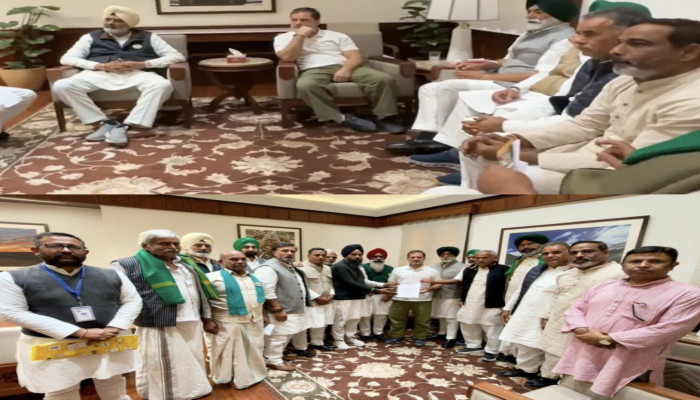
Rahul Gandhi, the Leader of the Opposition in the Lok Sabha, met with leaders of several farmer unions at Parliament on Saturday to discuss their concerns over the proposed India–US framework trade agreement. The meeting came amid growing debate in political and agricultural circles about the potential impact of the trade deal on Indian farmers, especially those producing commodities such as corn, soyabean, cotton, fruits and nuts.
Gandhi invited representatives from 17 major farmer organisations from across India to share their views on the ongoing trade negotiations between India and the United States. According to those present, farmers fear that reducing tariffs and opening up markets under the agreement could expose Indian agriculture to increased competition from cheaper American imports, which many argue are backed by substantial subsidies.
During the meeting, the farm union leaders stressed that Indian farmers already face significant challenges, including high input costs, rising debts, and unstable market prices. They expressed worry that a further opening of agricultural markets without adequate safeguards could worsen their economic situation. The leaders said they want clear and stronger guarantees from the government to protect farmers’ interests before any final deal is signed.
Some union representatives suggested that if their concerns are not properly addressed, they may consider organising a nationwide movement in protest. They urged Rahul Gandhi to raise these issues not only inside Parliament but also across the country to ensure widespread public awareness and support.
Rahul Gandhi, in response, reiterated that Indian farmers’ voices must be heard and respected in the process of framing the trade agreement. He said that any deal that could affect the livelihoods of millions of farmers must include their direct input and must prioritise their long-term welfare. Gandhi emphasised the need for transparency and accountability in how the final terms of the trade pact are decided, stressing that farmers’ well-being should not be undermined.
However, the meeting attracted sharp criticism from the ruling Bharatiya Janata Party (BJP). Union Minister Piyush Goyal described the interaction as “stage-managed, artificial, and fake”, accusing Rahul Gandhi of creating a misleading narrative. In a video posted on the social media platform X, Goyal claimed that the event was orchestrated and that the farmers present did not represent the wider farming community’s views.
Goyal said that instead of genuinely raising farmers’ concerns, the meeting was an attempt by the Congress leader to misinform the public and create confusion about the government’s agricultural policies. He challenged Gandhi’s statements, insisting that the concerns aired at the meeting were based on incorrect or incomplete information.
The minister also defended the government’s negotiation strategy on the India–US trade deal, saying that Indian agricultural interests are being protected in the framework. He pointed out that a large number of Indian farm products are excluded from tariff cuts in the proposed pact, and that measures are in place to ensure that Indian farmers are not put at a disadvantage. Goyal added that the government has been careful to balance India’s domestic needs with the opportunities presented by expanded trade.
Supporters of the trade agreement argue that it could open up new export opportunities for India, especially in sectors such as textiles, leather goods, and pharmaceuticals. They highlight that by securing greater access to the US market, these industries could benefit from reduced tariffs, which may support overall economic growth.
Despite these assurances, many farmers remain unconvinced. They argue that without stronger protections and price safeguards, cheaper imports could flood the Indian market and drive down domestic prices, making it harder for farmers to sustain their incomes. These concerns have been echoed by several opposition leaders, who call for a more inclusive consultation process that involves genuine farmer representatives at every step.
The disagreement between Rahul Gandhi and the BJP reflects a broader political divide over the India–US trade talks. While the government maintains that it is working to protect national interests, critics say that farmers’ voices need to be given greater weight in the decision-making process. This debate is likely to continue as the negotiations progress and the final terms of the deal take shape.



 Loading...please wait
Comments