




QpiAI launches Kaveri superconducting quantum processor chip
- In Reports
- 06:30 PM, Jan 23, 2026
- Myind Staff
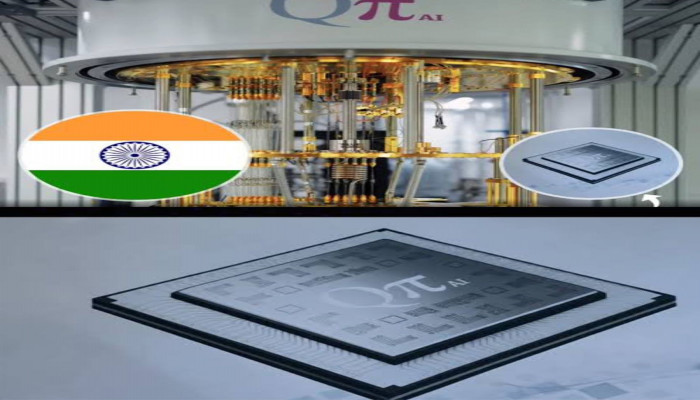
QpiAI has introduced its new Kaveri superconducting quantum processor chip, marking an important development in the field of quantum computing. The company described this launch as a significant advancement that strengthens the future of scalable quantum systems and hybrid computing technologies.
The Kaveri chip is a 64-qubit quantum processor built using QpiAI’s proprietary superconducting flip-chip integrated technology. This technology has been developed specifically to support scalable quantum systems. By using wafer-scale fabrication, the chip achieves high qubit density, which plays a crucial role in improving quantum performance and pushing technological limits.
The flip-chip architecture used in Kaveri includes low-loss interconnects that reduce signal degradation during quantum operations. This design helps ensure more reliable and stable quantum computing processes. Additionally, the chip separates the qubit layer from the interconnect layer, allowing each layer to be optimised independently. This structural innovation helps address key challenges in quantum hardware design and enables the processor to maintain coherence and fidelity even under demanding computational workloads.
QpiAI’s approach goes beyond hardware development. The company has created an integrated system that combines AI, software, quantum computing, and classical high-performance computing (HPC) into a hybrid quantum-classical stack. This stack is supported by co-located data centre integration and cloud accessibility, making it easier for users to deploy quantum solutions across various applications. Through this integration, organisations can solve complex problems that classical computing systems alone cannot efficiently handle.
At the core of QpiAI’s quantum offerings is the QpiAI Gen-1 quantum system, which features 25 qubits and can scale up to 300 qubits. Built with superconducting qubits, the system demonstrates long coherence times, low error rates, and strong scalability. These features make it suitable for real-world deployment and establish a foundation for future generations of quantum computers developed by QpiAI.
The Gen-1 system supports both single and multi-QPU integrated quantum computing configurations. It also includes advanced QPU virtualisation capabilities that allow flexible allocation and efficient management of quantum processing resources. This virtualisation works in a way similar to virtual machines in classical computing, making it easier to manage complex workloads that require distributed quantum resources.
QpiAI’s quantum computers are designed to combine the strengths of quantum computing and artificial intelligence. By integrating these technologies, the systems help enterprises tackle complex computational challenges that require exponential processing power. This combination enables organisations to explore solutions that were previously considered impossible with traditional computing methods.
Another key feature of QpiAI’s design is its seamless integration with existing high-performance computing systems. This compatibility allows organisations to enhance their current infrastructure rather than replacing it entirely. As a result, businesses and research institutions can adopt quantum technology with fewer barriers and accelerate their computing capabilities according to their needs.
In addition to quantum computing, QpiAI also offers enterprise Gen-AI solutions. These solutions include enterprise-grade AI and generative AI tools that support predictive analytics, computer vision, large language models (LLMs), and AI agents. Such tools help organisations improve decision-making, automate processes, and increase operational efficiency across different industries.
QpiAI also focuses on quantum-enabled solutions for complex tasks in optimisation, simulation, and machine learning. These capabilities support innovation in areas such as scientific research, finance, healthcare, and manufacturing. For example, quantum simulations can help model molecular interactions at large scales, which could transform drug discovery and other scientific processes.
The company emphasises full-stack vertical integration by embedding quantum computing into the AI stack from software to hardware. This end-to-end approach optimises modelling processes, speeds up computations, and opens new possibilities in next-generation high-performance computing. By controlling the entire technology chain, QpiAI aims to deliver better coherence and performance than fragmented systems.
With the launch of the Kaveri chip and the Gen-1 system, QpiAI positions itself as a key player in hybrid quantum-AI ecosystems. Enterprises can benefit from large-scale problem-solving capabilities where quantum computing enhances AI-driven insights. As quantum technology continues to evolve, QpiAI’s scalable architecture is expected to reshape computational approaches across multiple sectors.



 Loading...please wait
Comments