



Qatar warns prolonged Middle East war could push oil prices to $150
- In Reports
- 05:50 PM, Mar 06, 2026
- Myind Staff
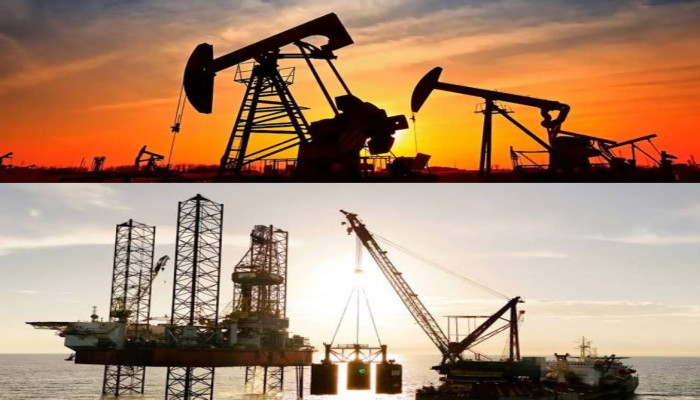
The ongoing conflict in the Middle East could lead to a major shock for the global economy if it continues for several weeks, Qatar’s energy minister Saad al-Kaabi has warned. According to him, the war could disrupt energy production and exports across the Gulf region, potentially pushing global oil prices to as high as $150 per barrel.
Speaking to the Financial Times, Kaabi said energy exporters in the Gulf may soon be forced to declare “force majeure,” a legal step that allows companies to suspend contractual obligations due to extraordinary circumstances. He warned that continuing hostilities could make it impossible for energy producers to maintain their supply commitments.
“Everybody that has not called for force majeure we expect will do so in the next few days that this continues. All exporters in the Gulf region will have to call force majeure,” Kaabi told the Financial Times. He added that if companies fail to take this step, they may face legal consequences. “If they don’t, they are at some point going to pay the liability for that legally, and that’s their choice.”
The warning comes after a drone strike hit Qatar’s Ras Laffan industrial city, the country’s largest liquefied natural gas (LNG) facility. Following the attack, Qatar — the world’s second-largest LNG producer — declared force majeure and halted operations at the plant.
Kaabi said authorities are still assessing the damage caused by the strike. “We don’t yet know the extent of the damage, as it is currently still being assessed. It is not clear yet how long it will take to repair,” he said.
Even if the conflict were to stop immediately, restoring normal export operations would take time. Kaabi explained that logistical challenges have already disrupted Qatar’s shipping operations. “Our ships are all over the place,” he said, noting that only six or seven ships from Qatar’s fleet of 128 LNG carriers are currently available to load cargo.
The situation could become much more serious if maritime traffic through the Strait of Hormuz continues to be disrupted. The narrow waterway is one of the world’s most important energy shipping routes, with about one-fifth of global oil and gas supplies passing through it.
Kaabi warned that if tankers and cargo ships remain unable to pass through the strait, oil prices could rise sharply within a short period. He predicted that crude oil prices might reach $150 per barrel within two to three weeks under such circumstances.
Natural gas prices could also rise dramatically if supply disruptions continue. Kaabi said gas prices might climb to $40 per MMBtu, which would be nearly four times the levels seen before the conflict began.
Shipping activity through the Strait of Hormuz has already slowed since the United States and Israel launched military strikes on Iran. According to reports, at least ten ships have been hit in the region. As a result, insurance costs for vessels have increased significantly, and many shipping companies are reluctant to send ships through the area.
The conflict could also affect Qatar’s long-term plans to expand its gas production capacity. The country is currently working on a major $30 billion expansion project at the North Field gas field, which aims to increase LNG production capacity from 77 million tonnes per year to 126 million tonnes by 2027.
Kaabi said the ongoing war will certainly delay this project. “It will delay all our expansion plans for sure,” he said, adding that the extent of the delay will depend on how long the conflict continues. The first new production from the expansion was expected to begin in the third quarter of this year.
Beyond the energy sector, Kaabi warned that continued disruption in Gulf energy exports could have serious consequences for the global economy. Higher energy prices could slow economic growth worldwide.
“This will bring down the economies of the world,” he said. “If this war continues for a few weeks, GDP growth around the world will be impacted. Everybody’s energy price is going to go higher.”
He also explained that Gulf producers supply large quantities of petrochemicals and fertiliser feedstocks that are essential for manufacturing industries. Disruptions in these supplies could create wider industrial problems.
“There will be shortages of some products, and there will be a chain reaction of factories that cannot supply,” Kaabi said.
QatarEnergy halted production mainly due to safety concerns after warnings about possible attacks on offshore facilities. Kaabi said the decision was taken after the military informed them of a potential threat.
“We were actually informed by our military that there is an imminent threat to the facilities offshore,” he said.
Following the drone strike, the company evacuated around 9,000 workers from its operations within 24 hours to ensure their safety.
“When we have our people in danger and we’re actually being hit in a military zone and we can’t work anymore, and we can’t put our people in harm’s way, we have to declare force majeure,” Kaabi said.
He made it clear that production will not restart until the military confirms that the situation is safe. “So the signal is when our military says there is a complete stop of hostilities and we are not being attacked anymore. We are not going to put our people in harm’s way,” he said.
The conflict has also led to rising tensions around energy infrastructure in the Gulf. Iran has launched several waves of missiles and drones targeting energy facilities, airports, US military bases, and embassies across the region.
Due to these security risks, shipping companies remain hesitant to send vessels through the Strait of Hormuz. Kaabi explained that the narrow waterway has become too dangerous for normal shipping operations.
“The way that we are seeing the attacks, bringing ships into the strait… it’s too dangerous,” he said. “It’s too close to the shore to bring ships in.”
Despite declaring force majeure, Kaabi rejected concerns that Qatar’s reputation as a reliable LNG supplier could suffer.
“We don’t think anybody would dare to come to us and say we are not reliable because you were being bombed and you did not deliver,” he said.
He also noted that it would be impossible for Qatar to purchase replacement LNG from the global market even if it wanted to meet delivery commitments.
“Let’s assume you want to buy 77 million tonnes and deliver it to customers. There is no 77 million tonnes lying around for you to buy,” Kaabi said.



 Loading...please wait
Comments