




Putin proposes SCO Development Bank to reduce dependence on Western financial systems
- In Reports
- 08:52 PM, Sep 01, 2026
- Myind Staff
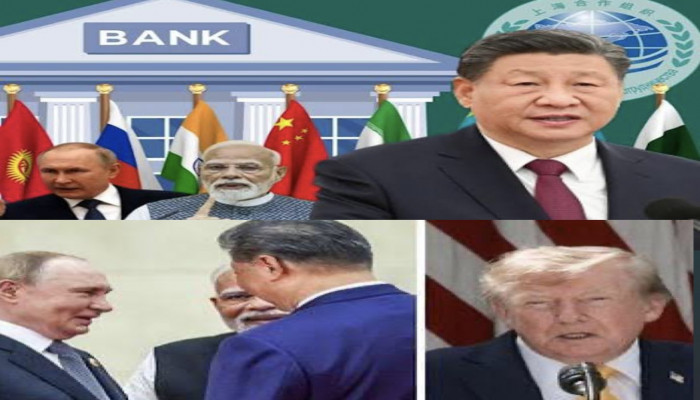
Russian President Vladimir Putin has proposed the creation of an independent development bank for members of the Shanghai Cooperation Organisation (SCO). The proposed institution would aim to finance projects among member countries while reducing their dependence on Western financial systems. The idea comes as Russia and other SCO members face Western sanctions and seek new ways to conduct trade without relying heavily on the US dollar or systems such as SWIFT.
Speaking at the 2026 SCO Summit in Bishkek, Kyrgyzstan, Putin called for the proposed SCO Development Bank to operate as independently as possible from financial systems controlled by countries that use economic tools to gain unilateral advantages in international affairs. He said the bank could help SCO members strengthen their financial cooperation and support economic projects across the grouping.
The proposal comes at a time when Russia and Iran remain under extensive Western sanctions. Moscow has also been working to reduce its dependence on the US dollar and Western-controlled financial infrastructure. Russia has faced growing pressure to find alternative ways to conduct international trade and settle payments since Western sanctions were imposed following its invasion of Ukraine.
A development bank is a financial institution that provides funding for long-term projects. These can include infrastructure, energy, transport and other investments that involve more than one country. Within the SCO, such a bank could provide a common source of funding for projects involving member states. It could also help deepen economic ties among the countries.
Putin said the proposed institution could play an important role in supporting joint economic projects. He linked the idea to existing SCO mechanisms, including the SCO Business Council and the Interbank Association. He said the bank could help members carry out "joint, mutually beneficial economic projects".
The proposal is part of a wider effort by SCO countries to strengthen financial and commercial links. Russia has been especially vocal about reducing its dependence on Western financial systems and the US dollar. Moscow has increasingly promoted the use of national currencies in trade with SCO members.
Putin said Russia's trade turnover with SCO countries exceeded $400 billion last year. He also highlighted the growing use of national currencies in trade settlements between Russia and other members of the grouping. "National currencies are being used more and more in transactions between our countries. In Russia's transactions with SCO members, national currencies account for over 98 per cent", Putin said.
The proposed bank could become part of a broader financial framework within the SCO. This could include alternative payment and settlement systems. Such mechanisms could allow member countries to conduct more trade without depending heavily on Western financial infrastructure. The aim would not necessarily be to replace existing global systems, but to provide SCO members with another channel for trade and investment.
The SCO has grown significantly since its establishment in 2001. Russia, China, Kazakhstan, Kyrgyzstan, Tajikistan and Uzbekistan were the original members. India and Pakistan joined the organisation in 2017, while Iran became a full member in 2023. The grouping now brings together several major economies and energy producers across Eurasia.
Putin described the SCO as an increasingly important centre of the emerging "multipolar world". He called for further efforts to strengthen commercial ties between member countries. He said closer economic cooperation could support growth and improve public welfare across the region.
China has also supported greater financial cooperation within the SCO. However, turning the proposal into a functioning bank could prove difficult. One major challenge will be convincing member countries to use an institution designed to operate outside Western financial systems. Many of their banks and businesses still have deep links with the wider global financial system.
For countries such as India and China, the risk of secondary sanctions remains an important concern. Companies and financial institutions could face pressure if transactions through a new SCO mechanism are seen as helping sanctioned entities avoid Western restrictions. This could limit how widely the proposed bank is used.
India has also maintained that the SCO should not become an explicitly anti-Western grouping. At the same time, New Delhi has continued to expand economic ties with Russia and other countries in the Eurasian region. This creates a balance for India between supporting greater financial cooperation and maintaining its links with Western economies.
The proposed SCO Development Bank, therefore, may not be aimed at completely separating the grouping from Western financial systems. Instead, it could provide an additional financial channel for member countries. Such a mechanism could give them greater flexibility in financing projects and conducting trade among themselves while reducing their exposure to Western-controlled financial infrastructure.



 Loading...please wait
Comments