




Putin faces rising security fears as Kremlin grapples with coup rumours
- In Reports
- 06:57 PM, May 11, 2026
- Myind Staff
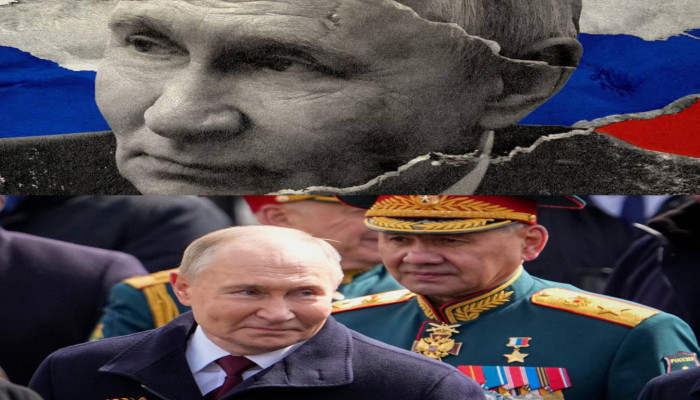
Fresh reports suggesting that the Kremlin fears a possible coup or assassination attempt against Russian President Vladimir Putin have sparked debate among political analysts and global observers. The speculation comes as Russia’s war in Ukraine continues with no clear end in sight, increasing pressure on the country’s political and military system.
The reports first emerged through an independent Russian investigative outlet iStories. They were later picked up by CNN and the Financial Times. According to the reports, an unnamed European intelligence agency claimed that security around Putin had been tightened significantly because of fears of threats coming from within Russia’s own elite circles.
The claims gained attention because they appeared at a time when Moscow had already seen visible increases in security measures. Reports of communication disruptions, electronic warfare systems designed to stop drone attacks, and stronger protection around the Kremlin have surfaced in recent months. Victory Day celebrations on May 9, one of Russia’s most symbolic public events, were also reportedly scaled back due to security concerns.
Political analyst Ekaterina Schulmann said Putin appears deeply concerned about personal safety. “When security is the top priority, the safest thing to do is not to appear anywhere," she said on Telegram.
Former Putin speechwriter Abbas Gallyamov, who now lives outside Russia, also suggested that tensions inside Russia’s military and political circles are growing stronger. He told DW that some factions within the elite are increasingly behaving independently of the Kremlin.
Despite these developments, many experts remain doubtful that Russia is actually close to a coup attempt. Analysts argue that Putin’s political system is specifically designed to stop such threats from emerging.
Unlike political systems built around strong institutions, Russia under Putin is often described as a network of competing power groups. These include security agencies, oligarchs, military structures and political elites. While these groups compete with one another, they still depend heavily on the Kremlin for power, money and influence.
Alexandra Prokopenko, a former adviser at Russia’s Central Bank, described the system as multiple “pyramids" controlled by powerful individuals who oversee state contracts, resources and decision-making. According to analysts, these groups may compete internally, but they do not operate together in a way that could seriously challenge Putin’s rule.
Experts believe that as long as Russia’s elite continues to benefit from the existing system, there is little reason for them to risk instability through rebellion. The structure itself is also meant to prevent the rise of any rival power centre.
Russia expert Mark Galeotti explained this in The Spectator. “The Russian security system is carefully organised to minimise the risk of a coup," he wrote. He noted that different military and paramilitary organisations are designed to monitor and balance each other. The Federal Protection Service, responsible for Putin’s security, is also filled with loyalists.
Russia’s Federal Security Service, military counterintelligence units and surveillance systems continue to play a major role in monitoring not just the public but also Russia’s own elite circles.
One major reason behind the recent speculation is the mention of Sergei Shoigu. Shoigu was one of Putin’s closest allies for many years. Kremlin images often showed the two spending time together in Siberia during fishing trips and holidays. Shoigu served as Russia’s emergencies minister before becoming defence minister in 2012.
However, his public image suffered after Russia’s difficult invasion of Ukraine. Critics from nationalist and military circles blamed him and the defence ministry for failures in military planning, logistics and battlefield strategy. In 2024, Putin removed Shoigu from the defence ministry and appointed economist Andrei Belousov as his replacement.
Since Shoigu’s removal, several officials linked to his old defence ministry network have faced investigations and corruption charges. Former deputy defence minister Timur Ivanov was sentenced to prison in a corruption case. Other senior officials, including Pavel Popov and Dmitry Bulgakov, also came under investigation.
Roman Anin argued that Shoigu still maintains links within Russia’s powerful “siloviki" circles despite losing formal authority. The term “siloviki" refers to influential figures connected to Russia’s military, intelligence and security structures. Many of them have backgrounds in Soviet or post-Soviet security agencies.
The Guardian once described them as “the Russian security men who have surrounded [Putin], many of whom served in the KGB and have maintained conservative, often conspiratorial political views."
These groups form a major part of Russia’s power structure. For years, Putin’s role has been to balance competing factions while making sure none became powerful enough to threaten the system itself.
Analysts believe wartime pressure, sanctions and economic stress are increasing competition within these circles. Prokopenko noted that shrinking state resources are making the rivalry sharper. More funding is now directed towards the military and war-related industries, leaving fewer benefits for other elite groups.
However, experts say this does not necessarily mean these groups want regime change. Instead, the conflict is mainly about influence, access to resources and survival within the current system. Ironically, this rivalry may actually strengthen Putin because it keeps elite factions divided and dependent on Kremlin approval.
Some observers have also connected current fears to the Wagner mutiny of June 2023, led by mercenary chief Yevgeny Prigozhin. Wagner fighters briefly seized military facilities in Rostov-on-Don and moved towards Moscow before stopping after a negotiated settlement.
The event shocked Russia because it revealed weaknesses inside the state system. Still, many analysts insist it was not a real coup attempt.
Galeotti argued that Prigozhin was trying to pressure Putin into abandoning Shoigu and the defence ministry leadership rather than overthrowing the president himself. “In any case, the 2,000 or so men who neared Moscow would have had no chance of taking the city, let alone ousting Putin," he wrote.
Some analysts also believe the recent coup rumours themselves could be part of information warfare. Galeotti suggested that reports based on unnamed intelligence sources may be intended to create suspicion inside Russia’s elite rather than reflect a genuine threat.
According to this theory, such narratives could increase mistrust between Putin and senior officials while making elite groups fear they are being watched. “This would hardly be the first time we have seen such misdirection in the covert shadow wars waged by the spooks," Galeotti wrote.
Most analysts agree on one point. Putin is now more focused on security than at almost any other time during his presidency. Ukrainian drone attacks, wartime tensions, targeted killings of Russian military figures and growing elite rivalries have all increased concerns inside the Kremlin. But experts continue to argue that these fears do not automatically mean Russia is facing an immediate or realistic coup threat.



 Loading...please wait
Comments