




Protests at Jantar Mantar: An Analysis
- In Current Affairs
- 08:13 PM, Jul 26, 2026
- Major General Harsha Kakar
Any major protest needs an incident to ignite it. The next step is building on it imaginatively to attract supporters. The Shaheen Bagh protest, which lasted from Dec 2019 to Mar 2020, was a fallout of the passage of the Citizenship Amendment Act (CAA) by Parliament. The farmers’ agitation from Aug 2020 to Dec 2021 flowed from farm laws passed by the government. In both cases, the primary demand was the repeal of laws. While the Shaheen Bagh protest died down slowly, the government was compelled to repeal the farm laws to end the long-drawn farmers’ protest.
In the current protest at Jantar Mantar, there were two incidents, both unrelated but close enough to be merged effectively. The first was the NEET (National Eligibility cum Entrance Test). The exam was held on 02 May and the detection of the paper leak led to its cancellation on 12th May. The second were comments by the Chief Justice of India (CJI) on ‘cockroaches’ on 15th May. He had verbally stated, while hearing an application relating to designation of senior advocates, that ‘there are youngsters like cockroaches’ and that some advocates were ‘parasites of society.’
The comment was clarified the next day with the CJI mentioning his criticism was aimed at individuals using ‘fake or fraudulent degrees to infiltrate professions like law and media,’ rather than the general unemployed youth of the nation. However, the term ‘cockroaches’ caught the imagination of a few.
It led to the creation of the Cockroach Janata Party (CJP) on 16 May. The party was promoted by an imaginative team using memes, videos and jokes, targeting youth across all social media networks, such that within 72 hours it gained over 3 million followers on Instagram, ultimately ending with 20-22 million. Initially, most followers were not from India.
The CJP exploited frustration amongst youth by linking the cancellation of the NEET exam and resultant suicide by about 20 candidates, highlighting it as government callousness. It began its protests on 06 June at Jantar Mantar, with its chief organiser, Abhijeet Dipke, flying in from Boston, while Sonam Wangchuk, an environmentalist from Ladakh, began his hunger strike on 28th June in solidarity with the agitation.
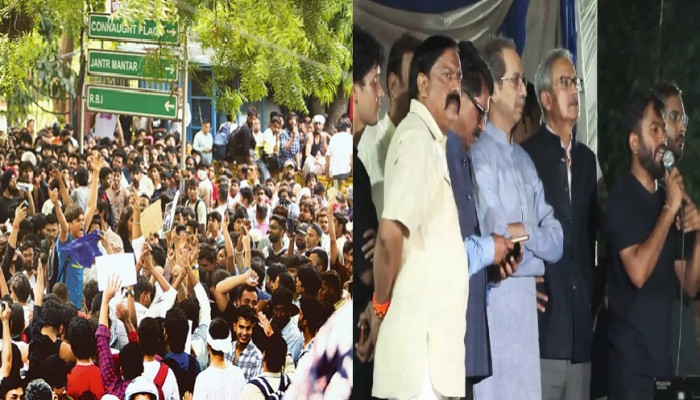
Initially it appeared that the CJP protest would collapse as there was hardly any attendance, most arriving only to partake in free meals, but the surge on the day of the march to parliament, 20th July, gave it a new lease of life. Since then, crowds have been present at Jantar Mantar. The atmosphere has been more like a rave party with singing, dancing, eating free food and abusive sloganeering.
Some protestors at the Janata Mantar were influencers seeking to promote their own social media handles. What caught the eye of any Indian observing the protest from a distance was language and gestures used by protestors against the national leadership, summed up simply as ‘disgusting.’
The agitation was initially meant to seek accountability from the government on the leak of major exam papers, in this case, NEET. However, with the passage of time, calls from the stage drifted to different domains. Those spearheading the agitation were willing to bring any celebrity or politician on stage, solely to draw an audience. Most who came pushed their own agenda, which had nothing to do with NEET.
A peaceful march towards parliament would have conveyed the right message, but some agitators were brought in to intentionally create violence. They attacked police and withdrew, leaving innocent students to face the backlash. This was probably intended to garner sympathy from student bodies across the nation, and it did succeed.
The organisers lost control as the crowd swelled. When the march to parliament took place, not a single CJP leader was at the forefront managing crowd behaviour. They were safely behind, secure from police reactions, waiting to reap benefits. It is possible they were briefed on the plan for initiating violence. The police would never have acted unless provoked, and they were provoked.
As crowds grew and violence increased, political parties, which were on the sidelines and had ignored the protests, rushed in to exploit the situation. They realised that this was an opportunity to enhance their political base and draw in future voters. All opposition political leaders protested in sympathy with the CJP. They wanted to be the ones whom the government should negotiate with, rather than the CJP. Most of them had never visited the protest site nor interacted with protesting students.
Funds to feed thousands could possibly have only come from abroad. Details of the same would shortly emerge. The protest gained sympathy across the nation as social media influencers projected youths’ views, highlighting anti-government sloganeering and criticising police action, ignoring clarifications of security agencies and the government.
More important were those behind the scenes handling inflow and management of funds, social media projection, legal support, ensuring an unending supply of food, etc. They would be identified with the passage of time. Those removed from the organising team would bear a grudge, seek revenge, releasing little-known facts about the organisation, its funding and true intent.
Sonam Wangchuk breaking his fast in the presence of central ministers and not members of the CJP was an indicator of a rift within the team. The protestors, who at one time had begged support of the public on his fast, subsequently claimed the movement was beyond him.
There were solidarity protests in many cities as well as outside a few Indian embassies abroad. The government, realising that it needed to act before it blew out of control, reached out to the CJP. The government rightly ignored opposition political parties, desperate to claim credit. Opposition political leaders were compelled to issue statements backing the movement, though they had played no role.
It did not take long for the government to end the protests, once it decided to do so. Official inputs mention that the resignation of the Education Minister, Dharmendra Pradhan, cooled tempers, alongside promises to look into other demands. Unofficially, much more pressure would have been applied.
The CJP, flying high, having pushed the government to a corner, suddenly calling off the protest, with just one resignation, and partial assurances on other demands, is not palatable. The truth of what pressures were applied would flow with time. While students may not be charged with violence, professional agitators and history sheeters would be. Those who abused the national leadership are being identified and shamed. Their few seconds of Instagram fame are proving to be costly.
This protest is an indicator of anger at grassroots levels against the government, which is a matter of concern. Youth participating would be eligible voters in future elections, something which would have guided the government’s decision to bend. It would now begin working to change this mindset. It is possible that the BJP may draw some CJP leaders into their fold to regain youth confidence.
The protests may have ended, but those whose videos of abusive sloganeering have been recorded on social media would be haunted through life. The government managed to end a crisis, leaving opposition parties, hoping to exploit the protest, red-faced. Hopefully now the parliament would function as it was expected to.
An important message which flowed to all political parties is that governance at national and state levels will remain under scrutiny and could be challenged in the future too. This scrutiny at grassroots levels is good for the nation in the long term, though violent protests to display disagreements could become a stumbling block.


 Loading...please wait
Comments