




Progressive Masks, Radical Reality: Bangladeshi Awami League Elite who persecuted Hindu minorities found safe haven in India
- In Current Affairs
- 07:08 PM, Dec 16, 2025
- Vladimir Adityanaath
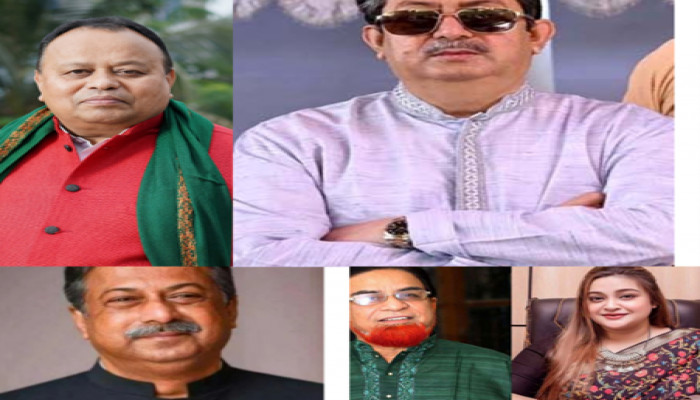
Ever since the fall of the Awami League–led coalition government headed by Sheikh Hasina on 05 August 2024, a deliberate effort has taken shape among certain politicians, journalists and intellectual circles to repaint Hasina and her senior lieutenants as “secular reformers” and “progressive modernists.” This attempt at historical revisionism collapses under even the faintest scrutiny. The persecution of Bangladeshi Hindus did not begin with the fall of Hasina — nor did it pause during her 15-year reign. It continued relentlessly, often with perpetrators sitting at the highest rungs of her party.
The horrors that erupted after 03 August 2025 mark a drastic escalation, but they are part of a long, relentless process driven by religious intolerance and hate. Under the Awami League itself, Hindu homes were burned, temples desecrated, families dispossessed, and young women abducted. Pogroms such as Nasirnagar in 2016 and the wide-scale targeted violence during Durga Puja in 2021 did not spring from the fringes of society; they were shaped, sanctioned or brazenly accommodated by the very political machinery now trying to recast itself as a “progressive alternative” to the current unelected regime of Dr Muhammad Yunus.
When the Hasina administration fell, the spotlight turned inward. Many Awami League operatives with long histories of violence against minorities suddenly found themselves cornered by the new power structure in Dhaka. Taking advantage of longstanding diplomatic networks cultivated over decades, an alarming number of these very individuals crossed into India. They entered not as fugitives escaping the consequences of their actions, but as “victims of political persecution.” They were shielded by the Government and quietly absorbed into the folds of our national security apparatus.
The Secret Deals and the Hidden Costs
A series of clandestine agreements, little understood even within the departments that supposedly endorsed them, allowed these leaders and their enforcers to enter India with virtual impunity. Many arrived with staggering quantities of unmonitored cash. Government insiders quietly admit that several of these figures, including those implicated in major anti-Hindu atrocities, now live comfortably at the expense of the Indian taxpayer.
By early 2025, the social media landscape was flooded with photos of Awami League strongmen celebrating Eid in Kolkata’s elite neighbourhoods, strolling through the manicured streets of New Town and indulging in decadent parties complete with wine, wealth and women. Their victims, meanwhile, remain scattered across the borderlands of Bangladesh and India, living fractured lives defined by loss. Providing unconditional protection to the following accused would be a proverbial slap in the face of the Hindu victims who had cried out to India for protection since 1971.
The Accused Living Safely in India
1) Sheikh Salahuddin Jewel

He is a former Jatiya Sangsad member from Khulna-2 constituency, a nephew of Sheikh Mujibur Rahman and cousin of Sheikh Hasina.
Displaced Hindu families from Batiaghata and Dumuria allege that Islamists operating under his protection seized at least 300 acres of Hindu-owned land. Victim Shibapada Biswas recalls, “Goons and local politicians under Sheikh Jewel threatened us to sell our lands at throwaway prices, saying Malauns had no right to live in Bangladesh. They assaulted us, vandalised our homes and abducted women and children.”
One of Jewel’s closest enforcers, Mahmud Hossain, had allegedly grabbed over 100 bighas of properties belonging to Hindus across the Mathbaria region of Koyra Upazila and another 200 bighas of Hindu ancestral properties in the Choramukha village of South Bedkashi Union. Families were forced out at gunpoint. Their temples were demolished, new ownership signboards were erected overnight and every scrap of documentation that could prove their ancestral rights was systematically altered or erased. [4][5].
2) Sheikh Helaluddin is another cousin of Sheikh Hasina, long-time MP from Bagerhat-1 (1996–2024), and a man whose name is spoken with dread by the Hindu residents of Khulna division.

Sheikh Helal has long been regarded as the principal suspect in the assassination of Advocate Kalidas Baral, the widely respected Hindu community leader from Bagerhat. The Baral family’s ordeal did not end with his death. Kalidas Baral’s elder son, Aditas, survived four separate assassination attempts — on 16 December 2017, 3 July 2018, 9 November 2018, and 25 July 2019.
His younger son, Amitabha Baral, speaks with a calm resolve forged in years of fear and grief, “I do not believe in vengeance or revenge politics. But Sheikh Hasina and her brother Sheikh Helal have pushed us repeatedly. I will continue this struggle till I can bring Sheikh Helal to justice [6].”
The notorious Islamist strongman Akhteruzzaman Babu, a close confidant of Sheikh Salahuddin Jewel and Sheikh Helaluddin, served as the Member of Parliament for Khulna-6 from 2018 to 2024. Hindu families across Koyra and Paikgacha accuse him of orchestrating land seizures, extortion and targeted harassment of Hindu intellectuals.
Gopal Nandi, once a resident of Lokkhikhola village in Maharajpur Union, recalls the suffocating terror that became part of daily life, “Every atrocity against Hindus in Khulna happened under the patronage of Sheikh Helal Uddin and Sheikh Jewel. Babu’s men seized our village temple land — we were left without even a place to pray.”
In the Hodda village of Maheswaripur Union, the memories still break survivors. Through trembling words, Bhanjan Lahiri recounts, “They pressured us constantly. Armed Islamists under Babu assaulted Hindu men and women. They threatened to kill our children if we didn’t abandon our ancestral homes. After 2021, survival meant fleeing. The men who evicted a Hindu family in Masjidkud often boasted that they were Babu’s enforcers.”
Government officials at Khulna Medical College Hospital privately confirm that Babu attempted to take over 8 acres of Hindu-owned land in Laskar Union of Paikgacha. After being forced to back off, facing strong protests from local Hindu organisers, he filed a fake case against the owners and continued to harass them for years. After being compelled to retreat in the face of strong protests from local Hindu organisers, he retaliated by filing a fabricated case against the property owners and continued to harass them for years.

3) A. K. M. Bahauddin Bahar, a long-time Awami League heavyweight, represented Cumilla-6 in the Jatiya Sangsad for over 15 years. His political career is marred with grave allegations of persecuting the minority Hindu residents of Cumilla. He and his daughter Tahseen Bahar fled to Bharat after the collapse of the coalition Government headed by Sheikh Hasina. The Bangladesh Financial Intelligence Unit froze the bank accounts of Bahar, his wife, his daughter, and son-in-law as part of an investigation into financial fraud and large-scale misappropriation of public funds on 26.09.2024 [1].

For many among Bangladesh’s Hindu minority, financial corruption is the least of Bahar’s sins. Rights activists, including the outspoken Asad Noor, have consistently described him as the principal architect behind the orchestrated violence during the Durga Puja riots of 2021 — violence that scorched through Cumilla, Chattagram, Noakhali, Chandpur and Rangpur. In a wave of targeted outrage, at least 150 temples and Puja mandaps were vandalised, seven Hindus were killed, and more than a hundred men, women and children were left injured — many with wounds that altered the course of their lives forever [2].
On 4th October 2023, during a security meeting ahead of Durga Puja, the former MP called for Hindu festivities to be made ‘free of alcohol and dancing.’ The Hindu-Buddhist-Christian Unity Council immediately condemned the remark. They described it as discriminatory and inflammatory, arguing that it further stigmatised an already vulnerable minority. When the Council members organised a peaceful protest on 13th October, demanding accountability and legal action, the response was brutal. Supporters from the Jubo League and Chhatra League — groups long linked to Bahar descended on the unarmed demonstrators, assaulting and injuring at least four activists [3].
Beyond Diplomacy: The Strategic Need to Protect Bangladesh’s Hindus
Geopolitics and national interest must guide the foreign policy of every nation, and India is no exception. Yet strategic pragmatism cannot obscure the uncomfortable truth that the persecution of Hindus in Bangladesh did not begin with any single regime and it did not end under the Awami League’s long rule. According to Ain o Salish Kendra (ASK), there were 3,679 attacks against the minority Hindu sons and daughters of the soil between January 2013 and September 2021 [7]. The hostility directed at Hindus and at Bharat by extension is not merely political. It is woven into a deeper societal mindset that transcends party lines and no amount of diplomatic goodwill alone can significantly reduce it.
As Bangladesh enters a period of internal upheaval, New Delhi must recognise that our eastern and northeastern frontiers grow more vulnerable every time radical Islamist networks expand their influence across the Padma and Meghna. It will do so again, louder and sharper, if Bharat remains passive.
A long-term solution lies not in personalities or parties but in empowering Bangladesh’s Hindu population to reclaim genuine political voice and institutional protection. A confident, secure, and politically represented Hindu community acts as a natural stabiliser, which softens anti-India sentiment, reduces cross-border radicalisation. Their safety is a strategic asset and not just a moral responsibility.
There is also a deeper civilisational stake that Bharat can no longer afford to ignore. Seven Shaktipeethas and dozens of sacred sites, older than most nations, lie within today’s Bangladesh. Many are abandoned, desecrated or slowly crumbling back into the earth. To lose them is to allow the erasure of memory itself. No responsible nation allows its civilisational inheritance to be wiped clean by neglect or hostility.
India must therefore sharpen its policy, combining strategic realism with civilisational responsibility. Protecting the Hindus of Bangladesh is not interference. It is the preservation of regional stability, the defence of shared heritage and a reminder that history does not forgive nations that fail to defend their own civilisation.
References:
2) https://www.youtube.com/watch?v=-JEuGNJFf1E
3) https://bdnews24.com/bangladesh/9snd2s5ziv
4) Victim testimonies
5) Testimony of a Bangladeshi Government official working in Khulna Medical College Hospital
6) https://fpa.org/op-ed-remembering-bangladeshi-hindu-leader-kalidas-baral/
Disclaimer: The opinions expressed within this article are the personal opinions of the author. MyIndMakers is not responsible for the accuracy, completeness, suitability, or validity of any information on this article. All information is provided on an as-is basis. The information, facts or opinions appearing in the article do not reflect the views of MyindMakers and it does not assume any responsibility or liability for the same.



 Loading...please wait
Comments