



President Murmu rejects West Bengal Bill seeking to make Chief Minister Chancellor of State Universities
- In Reports
- 06:38 PM, Dec 16, 2025
- Myind Staff
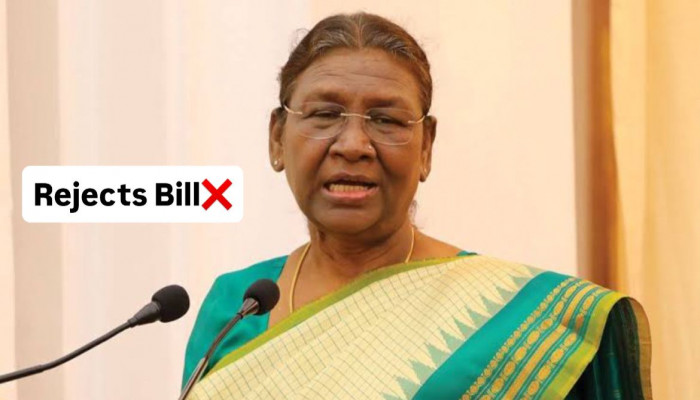
The West Bengal government has suffered a significant setback after President Droupadi Murmu rejected the West Bengal University Laws (Amendment) Bill, 2022, which sought to make the Chief Minister the chancellor of state universities. The decision was communicated on Monday, dealing a blow to the ruling Trinamool Congress (TMC) government’s long-standing attempt to alter the existing university governance structure in the state.
With the President withholding her approval, the proposed change to the appointment of chancellors in government-aided and government-sponsored universities in West Bengal will not come into effect. As a result, the current system will continue, under which the Governor of West Bengal serves as the chancellor of state universities.
According to sources at Lok Bhavan, Governor C. V. Ananda Bose will continue to hold the position of chancellor of state universities, as per the existing arrangement. There will be no immediate or future changes in this regard following the President’s decision.
The West Bengal University Laws (Amendment) Bill was passed by the West Bengal Legislative Assembly in 2022. The Bill proposed a major shift in university administration by replacing the Governor with the Chief Minister as the chancellor of state-run universities.
The Bill was passed during a period of sustained tension between the state government and the Raj Bhavan over the appointment of vice-chancellors in various universities. After being cleared by the Assembly, the Bill was forwarded to the Governor, who later sent it to the President of India in 2024 for her consideration, as required under constitutional provisions.
Following a prolonged period of review, President Murmu has now declined to give her assent, effectively blocking the legislation.
When the proposal was first cleared by the state cabinet in 2022, the West Bengal government had argued that appointing Chief Minister Mamata Banerjee as the chancellor would help improve the functioning of universities.
The state government claimed that if the chief minister were to hold the post of chancellor, it would lead to faster decision-making and bring greater momentum to academic and administrative activities within universities. According to the government, this change was necessary to streamline governance and reduce delays caused by conflicts between the state administration and the Governor.
However, with the President rejecting the Bill, the state government’s argument has now been rendered ineffective. As per the current system, the Governor acts as the chancellor of government universities in West Bengal. This arrangement will remain intact following the President’s decision.
Governor C. V. Ananda Bose, who is the current incumbent, will continue to oversee university affairs in his role as chancellor. Sources from Lok Bhavan have confirmed that there will be no disruption or alteration in the existing administrative framework of universities.
The proposed amendment had drawn strong opposition from political rivals, particularly the Bharatiya Janata Party (BJP) and the Communist Party of India (Marxist).
Both parties had sharply criticised the Trinamool Congress government’s move, accusing it of attempting to gain political control over higher education institutions in the state. The opposition alleged that the Bill was aimed at consolidating power and interfering in the autonomy of universities.
The BJP and CPI-M argued that placing the chief minister in the role of chancellor would blur the line between politics and academia, potentially affecting the independence of educational institutions. The issue of university governance in West Bengal had earlier escalated during the tenure of former Governor Jagdeep Dhankhar, under whose regime the move to amend the law was initiated.
Dhankhar had accused the state government of bypassing the Governor while appointing vice-chancellors in several universities. He had alleged that vice-chancellors of 24 universities were appointed illegally without the approval of the chancellor, who is the Governor.
These allegations had led to a prolonged confrontation between the Raj Bhavan and the state government, with both sides accusing each other of overreach and constitutional violations. The controversy further intensified calls from the state government to change the law governing the appointment of chancellors. The President’s rejection of the Bill is being seen as a major political setback for the Mamata Banerjee-led government, which had made repeated attempts to assert greater control over university administration.
Opposition parties have described the decision as a validation of their concerns, reiterating that the Bill was an attempt to exert political influence over academic institutions. They have maintained that universities should remain free from political interference and function autonomously. The ruling Trinamool Congress, on the other hand, has not issued an immediate official reaction to the President’s decision. However, the rejection closes the door on any immediate legislative effort to replace the Governor as chancellor. With the Bill now rejected, the status quo will continue in West Bengal’s higher education system. Any further attempt to amend university laws would require fresh legislation and constitutional scrutiny.
For now, the Governor will continue as the chancellor of state universities, and appointments and administrative decisions will follow the existing legal framework. The development marks the end of a long-running political and constitutional tussle between the state government and the Raj Bhavan over control of higher education institutions in West Bengal.



 Loading...please wait
Comments