




Poland turns to local defence production, seeks to build largest Army in Europe
- In Reports
- 01:14 PM, Sep 02, 2026
- Myind Staff
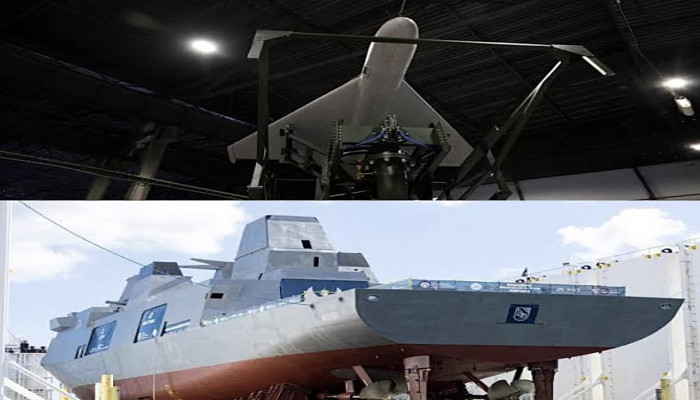
Poland is shifting its defence procurement strategy towards domestic and Central European companies as it builds one of Europe’s largest armies. The move aims to reduce the country’s dependence on distant suppliers that may not be able to increase deliveries quickly during a crisis. Polish officials and defence companies say local production is becoming a key part of Warsaw’s long-term security strategy.
Poland spent 30.4 billion zlotys ($8.15 billion) on defence procurement from domestic companies, including joint ventures with other Central European firms, last year. Data from the Armaments Agency analysed by Reuters showed that the figure has nearly quadrupled since 2022. The rise comes as European countries increase defence spending following the war in Ukraine.
For Poland, defence remains a major priority. The country shares a border with Ukraine and considers Russia an existential threat. "We're building the largest land army in Europe," Deputy State Assets Minister Konrad Golota told Reuters.
He also highlighted the growing importance of producing military equipment inside Poland. "The fact that something is used by our army and the fact that it's manufactured in Poland is becoming increasingly important."
Poland is expected to spend around €53 billion ($61.45 billion) on core defence expenditure this year, according to NATO data. That would make it the fourth-highest spender in the European Union after France, Italy and Germany. The figure is up from €44 billion in 2025 and amounts to around 4.7% of Poland’s gross domestic product.
Warsaw continues to rely on major foreign-made defence systems. These include US-made Patriot missile batteries, Abrams tanks and F-35 fighter jets. At the same time, Polish officials are placing greater emphasis on expanding domestic and regional production of drones, ammunition and other equipment that armies use regularly.
The strategy reflects a wider change in Europe’s defence sector. Governments across the continent are trying to rebuild their military production capacity. The war in Ukraine has shown how quickly modern conflicts can use up ammunition and other military supplies. Poland wants greater control over its supply chains to ensure equipment reaches its forces when needed.
"This is not merely an investment to ensure we have a highly developed defence industry, which serves as a driving force for the Polish economy, but a matter of supply chain independence," Defence Minister and Deputy Prime Minister Wladyslaw Kosiniak-Kamysz said.
"It ensures independent supplies to the front line should the need arise."
Until recently, companies from the Czech Republic, Slovakia and Hungary had a smaller role in Poland’s defence market. Warsaw depended largely on state-owned companies such as PGZ and suppliers from the United States. The new strategy is now creating opportunities for defence companies from across Central Europe.
Czech defence group CSG, which has become a major supplier of ammunition to Ukraine, has signed several agreements to increase production in Poland. One agreement involves transferring propellant production technology to PGZ subsidiary MESKO. CSG has also agreed with PGZ to expand the production of drones, missiles, ammunition and armoured vehicles. Its Polish unit has acquired defence component manufacturer Domar MS.
In August, CSG signed an agreement worth more than €100 million with PGZ unit Dezamet to supply components for 155 mm artillery ammunition. It also signed a separate €150 million contract with Huta Stalowa Wola for equipment used in fighting vehicles.
"Central Europe is undergoing a broader shift in how defence industrial capacity is built," CSG Polska Chief Executive Wojciech Grzonka told Reuters.
"Poland is a strategic market for CSG and one of the key directions for our long-term development and expansion of production capabilities."
Other defence companies are also responding to Poland’s push for local manufacturing. Polish arms maker Grupa Niewiadow, a unit of Niewiadow PGM, is working with KNDS Ammo France to establish production of 155 mm ammunition. The facility is expected to produce 180,000 rounds each year from next year.
PGZ announced in March that it would work with Estonia-based Frankenburg Technologies to manufacture ultra-short-range air defence systems in Poland. Polish officials have also said Warsaw is discussing greater industrial cooperation with Slovakia and Hungary.
Zdenek Rod, a defence expert at CEVRO University in Prague, described Poland as a pioneer in moving military production closer to home within Europe. "For years, supplies from the United States were a priority to ensure NATO interoperability," Rod said. "Now Poland is also trying to ensure resilience against global disruptions by turning more toward regional and European suppliers."
Germany’s Rheinmetall is also expanding its presence in Poland. The company said growing demand from the country was one reason it decided to establish production capacity there. It is also developing a regional maintenance and repair hub for land combat systems.
"The demand generated by Poland's defence modernisation programme justifies establishing full-scale production sites there, which can be integrated into European supply chains and contribute to redundancy and resilience in the European defence industrial system," Rheinmetall said.
Poland’s armed forces crossed 220,000 personnel this year, making them one of the largest military forces in Europe. Poland and Estonia are also among the few NATO members that are close to meeting the alliance’s target of spending 5% of GDP on defence by 2035.
Warsaw is also looking beyond ammunition and conventional equipment. Last month, Poland offered to jointly produce missiles for the Patriot air defence system with Ukraine and the United States. The proposal signals its ambition to become a larger part of the defence supply chain rather than remain only a buyer of foreign military equipment.
Golota said foreign companies seeking access to the Polish market would need to invest locally and share technology. "If you want to sell in Poland, you have to invest in Poland, you have to transfer technology, you have to work on joint projects with us," Deputy State Assets Minister Golota told Reuters.
"The more factories and know-how we have on our side, the better our defence is."



 Loading...please wait
Comments