



Poland bans Chinese cars from military locations to lower security risks
- In Reports
- 12:56 PM, Feb 19, 2026
- Myind Staff
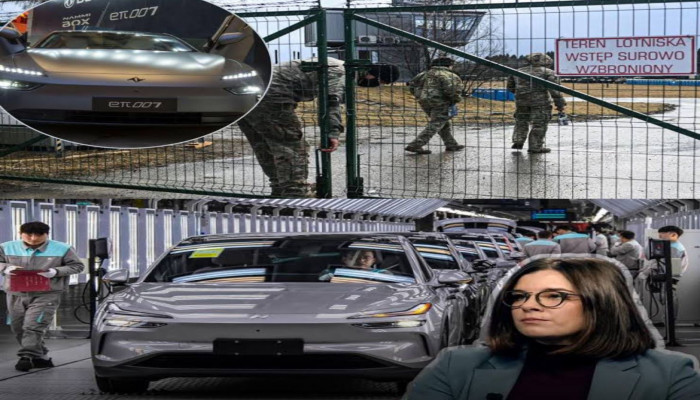
Poland has announced a decision to stop Chinese-made cars from entering its military locations, saying this step is needed to reduce potential security risks linked to modern vehicle technology. The Chief of the General Staff of the Polish Armed Forces explained that this rule is meant to protect sensitive information and infrastructure.
According to the Polish army, vehicles today are equipped with digital systems such as sensors, cameras, GPS, and internet connectivity. These systems can record and transfer data like location, pictures, and even sound. The military fears these functions might be misused or could lead to uncontrolled data collection when such cars are brought into areas that require high security.
Because of this, Chinese-made cars will not be allowed inside military facilities unless specific recording features are completely disabled and other security measures are put in place. The army’s statement explains that the rules also apply to any vehicle with devices capable of recording position, image, or sound, not only to Chinese brands.
The new rule also says that government workers must not connect their official phones to the infotainment systems — the screens and software inside cars that handle music, navigation, calls, and other tech features — of Chinese-made vehicles. The aim is to prevent any chance of sensitive military phones accessing car systems, which could lead to data leaks.
However, this ban does not apply to military locations that are open to the public, like military hospitals, clinics, libraries, prosecutors’ offices, and garrison clubs. These places are considered public-facing and less sensitive, so Chinese cars can still enter them without restrictions.
Poland is careful to point out that its move is not meant to hurt trade relations with China. Poland continues to have normal business ties with Chinese companies, and there are many Chinese car brands — such as MG, Chery, and BYD — selling vehicles in the Polish market. However, the military says that when it comes to protected areas, stricter rules are needed to ensure safety.
The army also noted that commanders and unit leaders should provide separate parking spaces outside military bases for vehicles that are restricted under the new rule. This step helps keep the protected areas secure without fully preventing people from driving their own cars near the military.
In its statement, the Polish army said that these steps are a preventive measure against possible threats, not an accusation against any specific country. The military emphasised that other NATO member countries and allies have also reviewed how digital and connected technology might affect their national security.
The Chief of the General Staff also said that Poland wants to create clear legal and technical procedures that would allow car manufacturers to apply for security approval. If a vehicle meets the safety criteria and can prove it does not pose a risk, it might be allowed into secure areas in the future. This would create a system that is transparent and non-discriminatory, balancing trade and security needs.
Modern vehicles are no longer just metal engines and wheels. Their advanced software, sensors, and connectivity features mean they can collect a lot of data. For high-security locations like army bases, this has raised concerns among officials who want to ensure that defence operations and sensitive information are fully protected.
Overall, Poland’s decision highlights how countries are trying to adapt security rules to changing technology. By restricting certain vehicles from entering military sites, Poland aims to protect its national defence from any risks that could come from unmonitored digital systems inside cars.



 Loading...please wait
Comments