




PM Netanyahu clarifies Iran-US ceasefire not to extend Lebanon
- In Reports
- 01:33 PM, Apr 08, 2026
- Myind Staff
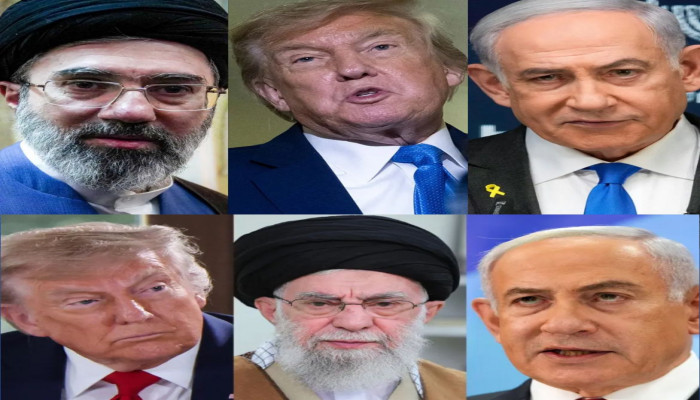
Israeli Prime Minister Benjamin Netanyahu has clarified that the recently announced ceasefire between the United States and Iran does not extend to Lebanon. While welcoming Washington’s decision to pause its attacks on Iran, Netanyahu made it clear that Israel’s military operations in Lebanon will continue despite the broader truce.
In a statement shared on X on Wednesday, Netanyahu expressed support for US President Donald Trump’s diplomatic efforts. He said Israel backed attempts to ensure “Iran no longer poses a nuclear, missile and terror threat to America, Israel, Iran’s Arab neighbours and the world”. However, he firmly added that the two-week ceasefire “does not include Lebanon”.
This statement directly contrasts with earlier remarks made by Pakistani Prime Minister Shehbaz Sharif, who had announced that the United States, Iran, and their allies had agreed to a ceasefire “everywhere, including Lebanon and elsewhere”. Sharif had described the ceasefire as being “effective immediately”, suggesting a broader halt to hostilities across the region.
The situation in Lebanon remains tense and complex. The country was pulled into the ongoing conflict on March 2, when Hezbollah, a group aligned with Iran, launched attacks on Israel. Hezbollah stated that its actions were in response to Israel’s killing of Iran’s Supreme Leader Ayatollah Ali Khamenei on February 28, the first day of the war. The group also cited Israel’s repeated violations of a previous ceasefire agreement in Lebanon as a reason for its involvement.
That earlier ceasefire, reached in November 2024, came after more than a year of cross-border fighting between Israeli forces and Hezbollah. The clashes had intensified following Israel’s military campaign in Gaza, which began in October 2023. Despite the agreement, tensions never fully eased, with frequent accusations of violations from both sides.
Since the renewed conflict began in March, Lebanon has suffered significant damage. According to Lebanese authorities, Israeli strikes have killed more than 1,500 people and forced over one million residents to leave their homes. The Israeli military has also launched a ground invasion in southern Lebanon, stating that its objective is to secure additional territory and create what it describes as a buffer zone for security purposes.
So far, there has been no official response from Hezbollah or the Lebanese government regarding Netanyahu’s latest remarks about the ceasefire. The lack of immediate reaction adds to the uncertainty surrounding how the situation might develop in the coming days.
Reporting from Beirut, Al Jazeera’s Zeina Khodr highlighted that Hezbollah’s decision to join the conflict has widened the scope of the war and placed additional pressure on Israel. She explained that Hezbollah believes its involvement increases its political influence, especially in the context of possible negotiations involving Iran. According to her, the group has also been critical of the Lebanese government for failing to ensure that Israel follows the terms of the 2024 ceasefire.
Khodr noted that Israel has continued near-daily attacks and has not fulfilled key conditions of the previous truce. These include withdrawing troops from southern Lebanon, releasing detainees, and allowing displaced residents to return to their homes. These unresolved issues remain central to the ongoing tensions.
The focus now shifts to upcoming negotiations between the United States and Iran, which are expected to play a crucial role in shaping the next phase of the conflict. Khodr pointed out that decisions regarding the Israel-Hezbollah front may ultimately depend on Iran’s position. She explained that some Lebanese officials believe Iran has been directing Hezbollah’s military actions in southern Lebanon.
“The Lebanese prime minister himself says he believes that Iran has been running the military campaign that Hezbollah has launched in southern Lebanon. So, the decision will be made by Iran. And that’s why the negotiations over the next two weeks will be critical and crucial for Lebanon,” Khodr said.
She further added, “Because at the end of the day, Israel wants security guarantees. And that is something the Lebanese government, the Lebanese state cannot give.”
As the ceasefire between the US and Iran takes effect, the exclusion of Lebanon highlights the fragile and uneven nature of peace efforts in the region. The coming weeks will be crucial in determining whether the conflict expands further or moves toward a more comprehensive resolution.



 Loading...please wait
Comments