




PM Modi visits Indonesia: India to supply BrahMos, Astra missiles and expand defence cooperation
- In Reports
- 04:25 PM, Jul 07, 2026
- Myind Staff
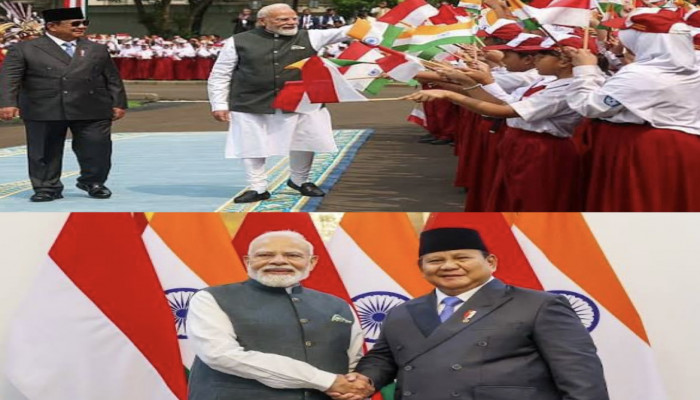
Prime Minister Narendra Modi and Indonesian President Prabowo Subianto announced a series of major decisions to strengthen the India-Indonesia Comprehensive Strategic Partnership during their bilateral meeting in Jakarta on Tuesday. Defence cooperation emerged as the biggest outcome of the visit as Indonesia agreed to procure India's BrahMos supersonic cruise missiles and Astra air-to-air missiles. The proposed defence deals will now move ahead through formal negotiations and contractual procedures.
After the talks, both leaders agreed to expand cooperation in defence, maritime security, technology, healthcare, education, critical minerals, digital connectivity and several other sectors. The discussions reflected the growing strategic trust between the two countries and their shared vision for stronger regional cooperation.
Addressing the media after the meeting, Prime Minister Modi said the India-Indonesia Comprehensive Strategic Partnership, established in 2018, had entered a new phase. He expressed confidence that both countries were beginning a "golden chapter" in bilateral ties.
Defence cooperation received a major boost during the visit. Along with the planned supply of BrahMos and Astra missiles, India and Indonesia agreed to increase defence exchanges, strengthen defence industrial collaboration and improve cooperation in disaster management. The two countries also decided to enhance coordination between their Coast Guards to improve maritime safety and security across the Indian Ocean.
The leaders also agreed to deepen cooperation in the blue economy, maritime trade and port development. As part of this effort, India and Indonesia will jointly develop Sabang Port, which is located near the Strait of Malacca. The port holds strategic importance as it sits close to one of the world's busiest maritime routes in the Indo-Pacific region.
Another important outcome of the meeting was the decision to strengthen cooperation in critical minerals and industrial supply chains. India will invest in Indonesia's steel, nickel and rare-earth magnet manufacturing sectors. These investments aim to improve supply chain resilience while expanding industrial cooperation between the two countries.
Technology also featured prominently in the discussions. India and Indonesia signed agreements covering artificial intelligence (AI), telecommunications, Digital Public Infrastructure (DPI), startup ecosystems and the space sector. Both countries also agreed to promote joint research, technology sharing and capacity building in space-related activities.
Education emerged as another key area of cooperation. Prime Minister Modi announced that the Indian Institute of Management (IIM) Bangalore will establish an overseas campus in Indonesia. The proposed campus will provide quality management education to students in Indonesia and across the ASEAN region. The initiative marks another important step in strengthening educational ties between the two countries.
The leaders also announced the integration of India's Unified Payments Interface (UPI) with Indonesia's payment system. The move will make cross-border digital payments easier for businesses, tourists and travellers. It will also strengthen financial connectivity and support growing economic ties between the two countries.
Healthcare and agriculture also received attention during the discussions. India agreed to improve access to affordable medicines in Indonesia and support the training of healthcare professionals. The two countries also decided to strengthen agricultural cooperation. India will supply wheat seeds developed in the country and share expertise in sustainable farming practices and agricultural technology.
The meeting also highlighted the long-standing cultural relationship between India and Indonesia. Prime Minister Modi and President Prabowo announced the launch of a conservation project for the historic Prambanan Temple in Yogyakarta. The leaders also decided to celebrate the centenary of Rabindranath Tagore's visit to Indonesia as the "Tagore-Dewantara Year of Cultural and Educational Diplomacy." The initiative aims to strengthen cultural and educational exchanges between the two countries.
On regional and international issues, Prime Minister Modi reaffirmed India's support for ASEAN's central role in the Indo-Pacific region. He also reiterated India's support for a two-state solution to achieve lasting peace on the Palestine issue. The Prime Minister said the growing trust between India and Indonesia was creating new opportunities across strategic, economic and cultural sectors. He added that both countries remained committed to taking their partnership to greater heights.
A major highlight of the visit came when Indonesian President Prabowo Subianto conferred the nation's highest civilian honour, the Bintang Adipurna of the Republic of Indonesia, upon Prime Minister Modi. The award recognises exceptional contributions to strengthening Indonesia's friendship and strategic relations with other countries.
The Bintang Republik Indonesia Adipurna, commonly known as the Bintang Adipurna, is Indonesia's highest state honour. It is the highest class of the Star of the Republic of Indonesia, the country's premier order of merit. The President of Indonesia confers the honour on individuals who have rendered extraordinary service to the nation.
Indonesia established the award in 1959. It may be presented to both Indonesian citizens and foreign dignitaries for exceptional contributions. Foreign heads of state and government receive the honour for their outstanding role in strengthening Indonesia's friendship, strategic cooperation and bilateral relations with other nations.
The order consists of five classes, with Adipurna being the highest. This makes it Indonesia's most prestigious state decoration. The honour conferred on Prime Minister Modi reflects the growing strength of India-Indonesia relations and recognises his contribution to advancing cooperation across defence, trade, technology, culture and regional engagement. The visit concluded with both countries expressing confidence that the expanded partnership would create new opportunities and further deepen their strategic relationship in the years ahead.



 Loading...please wait
Comments