




PM Modi tells Putin: Move from ‘endless war’ to ‘end of war’ for humanity
- In Reports
- 01:22 PM, Sep 01, 2026
- Myind Staff
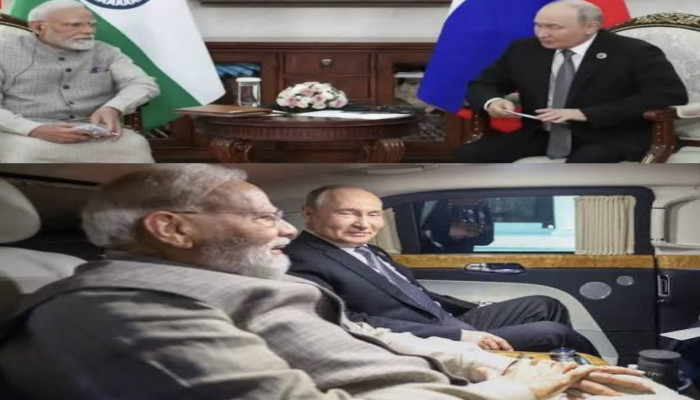
Prime Minister Narendra Modi has once again called for an end to the Russia-Ukraine war, urging Russian President Vladimir Putin to move from an “endless war” towards peace. Modi delivered the message during his opening remarks at a bilateral meeting with Putin on the sidelines of the Shanghai Cooperation Organisation (SCO) summit in Bishkek. He said that ending the conflict early was important for humanity and reiterated India’s support for all efforts to restore peace.
During the meeting, Modi and Putin discussed ways to expand India-Russia cooperation further. Their talks covered several areas, including energy, defence, innovation, space, fertilisers and people-to-people ties. The two leaders also discussed developments in the wider region and issues of mutual interest.
Modi’s latest appeal continues a series of public messages he has delivered to Putin since the Russia-Ukraine war began. In 2022, during an SCO summit in Samarkand, Modi told Putin that “this is not an era of war”. The statement gained international attention and was later included in the G20 Bali Declaration. Western countries also frequently referred to Modi’s message as India pushed for a peaceful solution to the conflict.
Modi repeated a similar message during his visit to Moscow in 2024, and told Putin that no solution could be found on the battlefield. India later maintained its balancing approach towards the conflict. A few months after visiting Russia in 2024, Modi also travelled to Ukraine.
Speaking in Bishkek, Modi again stressed the human cost of the continuing conflict. He said India would continue to support efforts to bring peace and called for a shift from prolonged conflict towards its conclusion.
“Every day spent in the war pushes humanity back. And every step taken towards peace fills humanity with new hope and enthusiasm. We will have to move from an endless war to an end of war, which is very important for humanity's well-being,” said the PM.
Modi also linked India’s position to the teachings associated with Mahatma Gandhi and Gautama Buddha. He said peaceful dialogue remained the way forward for resolving conflicts and described the early end of the war as a global humanitarian need.
“That all issues are resolved peacefully as soon as possible is the call of humanity. This is the message of India. This is the message of the land of Gandhi and the land of Buddha - the path to peace,” said Modi, adding that he was looking forward to welcoming Putin for the BRICS summit.
Foreign Secretary Vikram Misri said Modi had conveyed India’s willingness to take all possible steps to help bring the conflict to an end. He said the war had imposed a high cost on the international community.
According to Misri, Modi told Putin that India was ready to do whatever was feasible and necessary from its side to help bring the conflict to an end. The foreign secretary said the continuing war was “exacting a very heavy toll on the global community at large”.
Modi later shared details of his meeting with Putin in a post on X. “Had extensive discussions with President Putin. Discussed the full range of the India-Russia Special and Privileged Strategic Partnership. It is gladdening to see significant progress across various sectors in recent years,” said Modi in a post on X.
Putin also acknowledged Modi’s personal involvement in strengthening India-Russia relations. In his televised remarks, the Russian president highlighted the importance of the bilateral partnership and spoke about growing ties between the two countries.
Putin said Russia was preparing “seriously” for the BRICS summit that India will host. He also pointed to the rise in the number of Indian students studying in Russia. According to Putin, the number has increased to around 40,000 over the past decade.
The two leaders also discussed India-Russia cooperation in multilateral forums, particularly BRICS, which India is chairing in 2026. An Indian readout said they exchanged views on major regional and global developments.
The discussions also covered conflicts in West Asia and the Black Sea region. These conflicts have affected maritime trade and raised concerns over the safety and security of Indian seafarers. India again stressed the importance of dialogue and diplomacy in resolving conflicts.
The meeting came as India continues to maintain close ties with Russia while also engaging with Ukraine and other global powers. New Delhi has consistently called for dialogue and diplomacy to resolve the Russia-Ukraine conflict. Modi’s latest remarks in Bishkek reinforced that position and placed the humanitarian cost of the war at the centre of India’s message.
The leaders agreed to remain in regular contact and work towards further strengthening the India-Russia partnership. They also acknowledged the resilience and growth of bilateral ties despite continuing geopolitical uncertainties.



 Loading...please wait
Comments