




PM Modi surpasses Nehru, becomes India’s longest-serving elected prime minister
- In Reports
- 12:54 PM, Jun 10, 2026
- Myind Staff
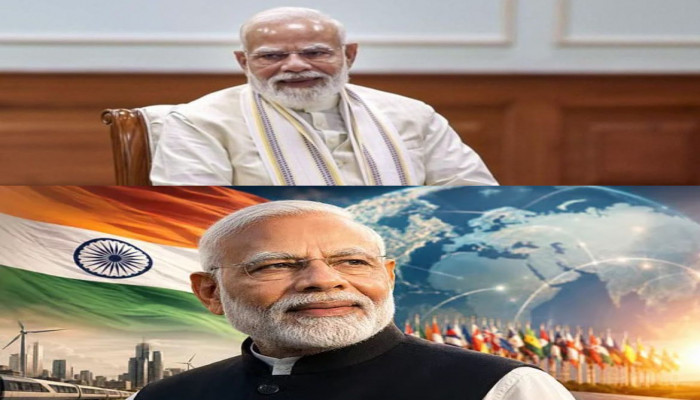
Prime Minister Narendra Modi has become India’s longest-serving democratically elected Prime Minister, surpassing the record held by former Prime Minister Jawaharlal Nehru. On June 10, 2026, Modi completed 4,399 consecutive days in office, overtaking Nehru’s record of 4,398 days as an elected Prime Minister.
The milestone triggered congratulatory messages from leaders across the world, who praised Modi’s leadership and contributions to India’s growth and development over the past twelve years.
US Ambassador to India Sergio Gor congratulated the Prime Minister and described the achievement as a reflection of his long public service. In a post on X, Gor said, "Congratulations to Prime Minister Narendra Modi on becoming India’s longest-serving elected Prime Minister. This achievement is a powerful testament to his decades of dedicated public service and leadership! Wishing him all the best!"
US Senator John Cornyn also extended his wishes and highlighted India's economic progress during Modi’s tenure. In a post on X, Cornyn wrote, "Congratulations to Prime Minister @narendramodi on becoming India's longest-serving elected Prime Minister -- 4,399 days of leadership earned through the trust of 1.4 billion people across three democratic mandates. From lifting 250 million out of poverty to making India the world's fastest-growing major economy, PM Modi's tenure has been nothing short of transformational. The US-India partnership has never been stronger."
Sri Lankan President Anura Kumara Dissanayake sent a letter conveying congratulations on behalf of the Sri Lankan government and its people. According to a statement from the Prime Minister’s Office, Dissanayake said, “This milestone is a testament not only to your years in office but also to the trust and confidence that the people of the world’s largest democracy have repeatedly placed in your leadership.”
Israel’s Ambassador to India, Reuven Azar, also congratulated Prime Minister Modi and praised his role in transforming the Indian economy.
Modi officially crossed Nehru’s record on Wednesday. While Nehru served as India’s Prime Minister from 1947 until his death in 1964, he became an elected Prime Minister only after the country’s first general elections in 1951-52. Therefore, when only the period served as an elected Prime Minister is considered, Modi has now moved ahead of Nehru.
Nehru took oath as Prime Minister after the first Lok Sabha elections on May 13, 1952, and remained in office until May 27, 1964. This period totals 4,398 days. Narendra Modi first took oath as Prime Minister on May 26, 2014. From that date to June 10, 2026, he completed 4,399 days in office.
Political observers say the significance of this achievement becomes clearer when the political environments of the two leaders are compared. During the early decades after Independence, the Congress party dominated Indian politics. Scholars often described that period as a “one-party dominant system.” The central government enjoyed considerable authority, while opposition parties lacked the numbers, resources, and regional strength needed to challenge the ruling establishment effectively.
In contrast, Modi has governed during a period marked by intense political competition. The current political landscape includes strong regional parties, powerful state governments, and organised opposition alliances. Federal policies are constantly scrutinised and challenged. Analysts believe maintaining a continuous tenure under such circumstances reflects a different set of political challenges.
Over the last twelve years, the Modi government has overseen several major initiatives and policy changes. The administration is credited with transforming welfare delivery systems, strengthening digital governance through the JAM trinity and UPI, and expanding infrastructure across railways, roads, and airports. The government has also introduced significant changes in defence and nuclear policy.
The administration has highlighted its actions against terrorism and left-wing extremism. According to supporters of the government, efforts were made to eliminate the long-standing threat of left-wing terrorism in several regions. The government has also pointed to military responses against Pakistan-backed terrorism, including Operation Sindoor following the Pahalgam terror attack.
The Prime Minister has frequently emphasised technology-driven governance and direct benefit transfers as major achievements of his administration. Programmes aimed at financial inclusion, digital payments, rural development, and infrastructure expansion have formed a key part of the government’s agenda during the past three terms.
To mark the occasion, the National Democratic Alliance (NDA) planned to pass a resolution during its meeting on Wednesday. Several reports stated that the Prime Minister would be felicitated by alliance leaders in recognition of his leadership and performance. The meeting, chaired by Modi, was expected to be attended by 72 NDA leaders.
Speaking on the completion of twelve years in office, Prime Minister Modi described the journey as one driven by trust, development, and public welfare. He said, "With the blessings of 1.4 billion fellow citizens and the spirit of nation first, we have spared no effort in empowering our youth, women, and our farmer brothers and sisters. It is the result of these tireless efforts that today, from infrastructure to the digital revolution, the country has gained a new identity on the global stage."
The achievement marks a significant milestone in India’s democratic history. With 4,399 consecutive days in office, Narendra Modi now holds the record as the country’s longest-serving elected Prime Minister, surpassing a benchmark that had stood since the era of Jawaharlal Nehru.



 Loading...please wait
Comments