




PM Modi raises seafarer safety concerns at G7, calls for secure maritime routes
- In Reports
- 12:36 PM, Jun 17, 2026
- Myind Staff
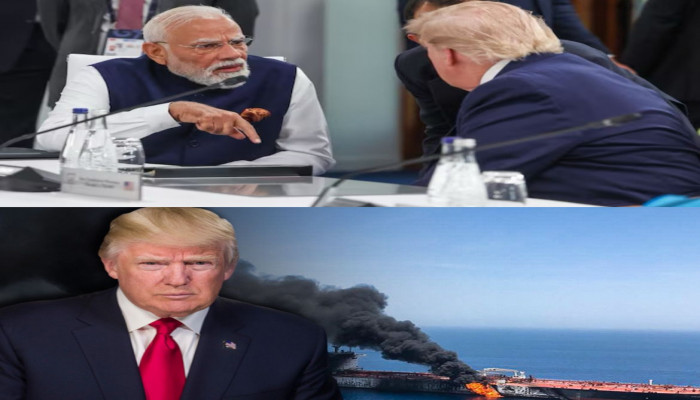
Prime Minister Narendra Modi on Tuesday highlighted concerns over maritime security and the safety of seafarers while addressing leaders at the G7 Summit. He said that the ongoing conflict in West Asia has disrupted global trade, affected the world economy, and led to the loss of lives, including those of Indian citizens.
Speaking during the outreach session titled 'Forging New Partnerships and Rebuilding International Solidarity', Modi stressed that India believes lasting solutions to global conflicts can only be achieved through dialogue, diplomacy, and international cooperation. His remarks came just days after three Indian crew members were killed in a US military strike on a merchant vessel in the Gulf of Oman.
The prime minister said that India welcomed recent progress in peace efforts in West Asia. However, he noted that the conflict had already caused significant damage in the region. Referring to the impact on global trade, he pointed out that disruptions in shipping through the Strait of Hormuz had affected economies across the world.
"We welcome the progress made in peace efforts in West Asia. This conflict has caused loss of life and property in our friendly countries in the region," Modi said while addressing the gathering.
He further added, "Disruptions to maritime trade through the Strait of Hormuz have affected the global economy. Several Indian civilians have also lost their lives."
Emphasising the importance of maritime workers, Modi called on the international community to ensure their protection. He said seafarers play a crucial role in connecting countries through global trade and should be able to work without fear.
"It is our responsibility to ensure the safety of the seafarers who connect all nations through global maritime trade. We must ensure that maritime routes remain secure and that seafarers can perform their duties without fear," he said.
His comments come at a time when concerns have grown in India over the deaths of three Indian mariners in a recent US military operation. The issue has sparked anger and raised questions about the safety of civilians working on commercial vessels in conflict-affected waters.
The remarks also gained significance as they were made a day before Modi's scheduled bilateral meeting with the President of the United States. The deaths of the Indian crew members have become a matter of concern in diplomatic discussions.
According to the US Central Command, action was taken against three vessels — Marivex on June 8, Settebello on June 9, and Jalveer on June 11. The US alleged that the vessels were attempting to violate its blockade of Iranian ports. The military operation resulted in casualties, including the three Indian crew members.
Apart from discussing maritime security, Modi also focused on the importance of trust in international relations. He said that in today's world, trust has become a strategic asset that is even more valuable than technology, minerals, or markets.
The prime minister explained that countries are now more connected and dependent on each other than ever before. He said issues such as energy security, food security, healthcare, cybersecurity, and economic growth are no longer limited by national borders. As a result, stronger partnerships between nations have become essential.
"Today's world is more interconnected and interdependent than ever before. A nation's energy, food, health, and cybersecurity, as well as its economic prosperity, are not determined solely within its own borders. Mobility, data, capital, and technology all connect us," he said.
"In such times, the importance of partnerships naturally grows. However, partnerships succeed only when trust lies at their core," he added.
Modi also warned against the growing trend of using trade and technology to advance narrow national interests. He said such practices have weakened confidence among countries and contributed to a trust deficit in the international system.
He stressed that trust is necessary for ensuring that technological progress and global supply chains are used for the benefit of all nations rather than becoming tools of pressure or conflict. He also said that opportunities for development should be available to every country and not remain concentrated among a few nations.
"The trust that technology and supply chains will be used for the global good, rather than as weapons. The trust that development opportunities will not be limited to just a few countries. The trust that global institutions will be capable of fulfilling the aspirations of all nations," he said.
The prime minister also referred to India's own development experience while explaining the importance of people-centred growth. He said that development becomes more successful when it is aligned with the needs and aspirations of citizens.
"India's experience demonstrates that development is most effective when it is aligned with the aspirations of the people," he added.
Through his address, Modi called for stronger international cooperation, safer maritime routes, and greater protection for seafarers. He also urged countries to rebuild trust in global institutions and partnerships at a time when geopolitical tensions continue to affect trade, security, and economic stability across the world.



 Loading...please wait
Comments