




PM Modi discusses trade and security with Marco Rubio, receives White House invitation
- In Reports
- 07:46 PM, May 23, 2026
- Myind Staff
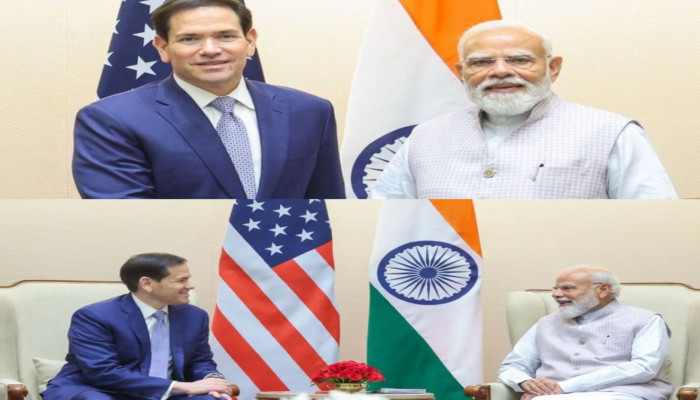
Prime Minister Narendra Modi on Saturday held important discussions on security and trade with US Secretary of State Marco Rubio, who also extended an invitation to the Prime Minister to visit the White House on behalf of US President Donald Trump. The meeting focused on further strengthening the India-US Comprehensive Global Strategic Partnership and covered issues related to regional and global peace and security.
The talks took place at a time when both countries are looking to deepen cooperation in several strategic areas. Security, trade and critical technologies remained at the centre of the discussions. The meeting also highlighted the growing importance of India-US ties in the Indo-Pacific region, where China has been expanding its influence in recent years. The United States has consistently viewed India as a major strategic partner and an important counterbalance to China in the region.
US envoy Sergio Gor, who accompanied Rubio during the meeting, said the talks were productive and focused on strengthening cooperation between the two countries. “We had a productive discussion on ways to deepen U.S.-India cooperation across security, trade, and critical technologies - areas that strengthen both our nations and advance a free and open Indo-Pacific. India is a vital partner to the United States!,” Gor wrote in a post on X.
After the meeting, PM Modi also shared details of the interaction on X. He wrote, “Happy to receive the US Secretary of State, Marco Rubio. We discussed sustained progress in the India-US Comprehensive Global Strategic Partnership and issues related to regional and global peace and security. India and the United States will continue to work closely for the global good.”
The timing of Rubio’s visit is being seen as significant. Reports have suggested that President Trump was considering renewing strikes on Iran after peace negotiations, reportedly mediated by Pakistan, failed to achieve any breakthrough. Against this backdrop, discussions on regional stability and security gained added importance during the India-US talks.
Rubio is scheduled to continue his engagements in India over the next few days. On Sunday, he will hold bilateral talks with External Affairs Minister S. Jaishankar and also attend the US Embassy’s Independence Day celebrations. His visit reflects continued diplomatic engagement between New Delhi and Washington after a period of strain in bilateral relations.
On Monday, Rubio will travel to Agra and Jaipur before returning to Delhi on Tuesday morning for the Quad Foreign Ministers’ Meeting. According to people familiar with the matter, the discussions between Jaishankar and Rubio are expected to focus on expanding India-US cooperation in energy, trade, investment, critical technology and people-to-people ties. Both sides are also expected to discuss the West Asia crisis and its economic impact, especially concerns related to global energy supplies.
Rubio’s India visit comes a little over five weeks after Foreign Secretary Vikram Misri visited Washington DC for a three-day trip aimed at stabilising ties between the two countries. Relations between India and the US had recently faced tensions after Washington imposed punitive tariffs on India. At the same time, President Trump made repeated claims about his role in reducing tensions during the India-Pakistan military conflict last May.
Trump had publicly stated several times that he helped prevent the conflict from escalating into a full-scale war. However, India strongly rejected those claims and maintained that the ceasefire and end of hostilities were achieved through direct talks between New Delhi and Islamabad. India also made it clear that the United States had no role in the process.
Despite recent disagreements, the latest high-level meetings indicate that both countries are keen to maintain strong diplomatic and strategic ties. The ongoing discussions on trade, security and technology show that India and the United States continue to see each other as important long-term partners in a changing global environment.



 Loading...please wait
Comments