




PM Modi calls women’s quota a ‘Right, Not Charity’ as Lok Sabha takes up major electoral reforms
- In Reports
- 06:03 PM, Apr 16, 2026
- Myind Staff
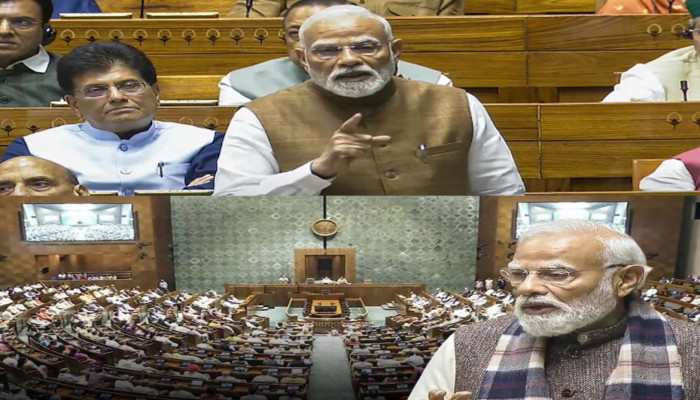
Prime Minister Narendra Modi on Thursday described the proposed 33 per cent reservation for women in legislatures as a “historic and game-changing” step, telling the Lok Sabha that empowering women is central to India’s development and must be treated as a matter of right, not political generosity. His remarks came during a special session convened to discuss a set of key legislative proposals aimed at reshaping the country’s electoral and governance framework.
Speaking in the House, Modi stressed that increasing women’s participation in decision-making is essential for achieving the goal of a “Viksit Bharat.” He framed the Women’s Reservation Bill as a transformative reform that goes beyond numbers and reflects a deeper commitment to democratic values. “This is a historic opportunity to empower our Nari Shakti,” he said, underlining the importance of inclusive governance.
The Prime Minister strongly pushed back against the idea that reservation for women is a favour being granted. “We must not assume we are giving something to the Nari Shakti; this is their right,” he said, highlighting the need for structural changes to ensure equal representation. He added, “Women's participation in our parliamentary democracy is not just about numbers, but a commitment to democratic values,” reinforcing the argument that the reform is necessary for strengthening democracy itself.
The Union Government introduced three major bills in the Lok Sabha as part of this legislative push. These include the Constitution (One Hundred and Thirty-First Amendment) Bill, 2026, which seeks to operationalise the Women’s Reservation framework, the Delimitation Bill, 2026, and the Union Territories Laws (Amendment) Bill, 2026. Together, these proposals are being presented as a comprehensive effort to recalibrate India’s electoral system and governance structure.
Modi described the Women’s Reservation Bill as part of a broader vision of “Nari Shakti-led nation building.” According to him, the legislation is an “honest effort to transform governance” by ensuring that women have a stronger presence at the highest levels of decision-making. He pointed to the increasing participation of women in local governance, particularly in panchayats and urban bodies, as a sign that the country is ready to expand this representation at the state and national levels.
At the same time, the Prime Minister called for political unity on the issue. He urged members across party lines to support the bill and not view it through a narrow political lens. “This should not be viewed through a political lens,” he said, appealing for consensus on what he described as a long-pending reform. His appeal comes at a time when sharp differences remain between the government and opposition parties over the bill’s implementation and its linkage with other electoral changes.
A key point of debate has been the connection between the Women’s Reservation framework and the proposed delimitation exercise. Modi acknowledged this link, noting that delimitation will play a crucial role in redrawing constituency boundaries based on updated population data. The government has argued that such an exercise is necessary to ensure fair representation and to implement the reservation effectively.
However, critics, particularly from opposition parties, have raised concerns about the broader political impact of delimitation. They argue that it could significantly alter the balance of power among states, especially given varying population growth rates across regions. This has led to apprehensions that the exercise might disproportionately benefit some states over others.
The Prime Minister’s address is part of a larger legislative agenda being pursued during the special session of Parliament. Earlier discussions in the session had focused on foreign policy and security issues, including developments in West Asia. Thursday’s proceedings marked a shift toward domestic institutional reforms, with a clear emphasis on representation, federal balance, and governance mechanisms.
As the bills move forward for debate, the Women’s Reservation proposal is expected to remain at the centre of political discussions. The government is positioning it as a landmark step toward deepening democracy and achieving gender justice. On the other hand, the opposition continues to examine the finer details of its implementation and its connection to the delimitation process.
The coming days are likely to see intense debate in Parliament as lawmakers deliberate on the implications of these reforms. While there is broad agreement on the need to enhance women’s representation, differences over the method and timing of implementation remain a key challenge. The outcome of these discussions will play a significant role in shaping India’s political landscape in the years ahead.



 Loading...please wait
Comments