




PM Modi calls Iran President expresses concerns over maritime safety
- In Reports
- 07:45 PM, Mar 21, 2026
- Myind Staff
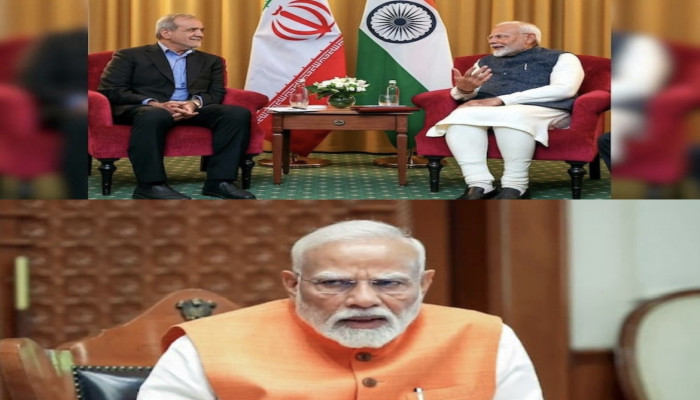
Prime Minister Narendra Modi held a phone conversation on Saturday with Iran’s President Masoud Pezeshkian, where he extended greetings on the occasions of Eid and Nowruz while also discussing the ongoing tensions in West Asia. The interaction reflected both leaders’ willingness to stay engaged during a sensitive period marked by conflict and uncertainty in the region. Along with festive wishes, the Indian Prime Minister expressed hope that the season would bring peace, stability, and prosperity to the countries affected by the unrest.
During the conversation, Modi voiced serious concerns about recent developments, particularly attacks on important infrastructure across the region. Prime Minister Modi raised concerns over recent attacks targeting key infrastructure in the region. He “condemned attacks on critical infrastructure in the region, which threaten regional stability and disrupt global supply chains.”
He also underscored the need to ensure the uninterrupted movement of global trade, adding that he “reiterated the importance of safeguarding freedom of navigation and ensuring that shipping lanes remain open and secure.”
A major focus of the conversation was the need to maintain secure and open shipping routes, especially given the strategic importance of maritime pathways in the region. Modi underlined that ensuring the safety of these routes is critical for uninterrupted global trade. He stressed that freedom of navigation must be protected and that shipping lanes should remain accessible and safe for all nations. This concern has gained urgency due to the ongoing disruptions in maritime traffic, which have impacted several countries, including India.
This was the second time the two leaders had spoken since the conflict in West Asia began on February 28. Earlier, Modi had reached out to Pezeshkian to discuss the worsening situation, expressing concern over the rising tensions, civilian casualties, and damage to infrastructure. He had also highlighted the importance of protecting Indian citizens in the region and ensuring that the movement of goods, especially energy supplies, continues without obstacles. These issues, he had indicated, remain among India’s top priorities as the situation evolves.
India has been actively engaging with countries in the Gulf region to address the challenges arising from the conflict. The Ministry of External Affairs has confirmed that Indian leadership is maintaining continuous communication with key stakeholders.
External Affairs Minister S. Jaishankar has also been in touch with Iran’s Foreign Minister Seyed Abbas Araghchi, holding multiple discussions to assess the situation and explore ways to reduce tensions. These diplomatic efforts are aimed at ensuring stability while safeguarding India’s interests in the region.
The concern over maritime security is particularly relevant as more than 20 Indian vessels are currently stranded in the Persian Gulf due to disruptions in traffic through the Strait of Hormuz. This narrow but crucial passage plays a key role in global energy transportation, and disruptions have far-reaching consequences. Despite the challenges, there have been some positive developments. Recently, two Indian-flagged LPG carriers, Shivalik and Nanda Devi, successfully navigated through the strait, transporting a significant cargo of 92,712 metric tonnes of LPG. This movement was facilitated by diplomatic coordination and efforts to ensure safe transit.
Jaishankar has clarified that India does not have a broad or fixed agreement with Iran that guarantees passage for all Indian vessels. Instead, each ship’s movement is handled individually, depending on the circumstances at the time.
In his remarks to international media, he indicated that discussions with Iranian authorities are ongoing and have shown progress. He pointed to the successful passage of the two LPG carriers as an example of how diplomatic engagement can help overcome challenges and facilitate movement even during tense situations.
Overall, the recent conversation between Modi and Pezeshkian highlights India’s balanced approach—combining diplomatic outreach, concern for regional stability, and a strong emphasis on protecting trade and national interests. As tensions in West Asia continue, India remains focused on ensuring the safety of its citizens, securing vital trade routes, and contributing to efforts aimed at restoring peace and stability in the region.



 Loading...please wait
Comments