




PIL in Delhi HC against Kejriwal for circulating recordings of court proceedings
- In Reports
- 01:46 PM, Apr 22, 2026
- Myind Staff
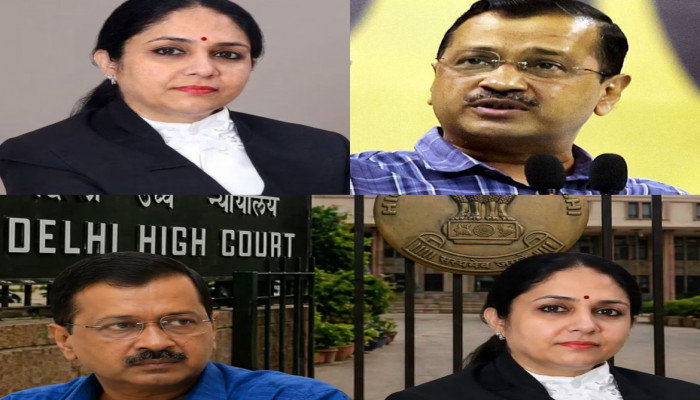
A Public Interest Litigation (PIL) has been filed in the Delhi High Court seeking contempt proceedings against Arvind Kejriwal, along with several political leaders and journalist Ravish Kumar, for allegedly circulating audio and video recordings of court proceedings. The recordings relate to Kejriwal’s arguments during a hearing where he requested the recusal of Justice Swarana Kanta Sharma in connection with the alleged liquor policy scam.
The petition was filed by Advocate Vaibhav Singh on April 15. In his plea, Singh has also asked the court to direct social media platforms to remove all recordings of the proceedings that were shared online. The case focuses on the circulation of visuals and audio clips from the courtroom, which, according to the petitioner, were shared without permission and in violation of court rules.
In the PIL, Singh claimed that Kejriwal’s move to personally argue his recusal application on April 13 “was part of some conspiracy to gain public sentiments and malign the image of this Noble Institution.” He further urged the court to order the formation of a Special Investigation Team (SIT) to investigate what he described as a conspiracy involving Kejriwal and members of his party. The alleged aim, according to the petition, was to record and circulate the proceedings to influence public opinion.
The plea also highlighted that soon after the hearing concluded, several social media accounts linked to AAP members and other political groups began sharing and resharing the recordings. These posts, Singh alleged, included “various misleading remarks appreciating Kejriwal.” The petition argues that such actions not only spread selective narratives but also violate established legal norms governing court proceedings.
Singh has based his arguments on specific rules that prohibit the recording and publication of court hearings without permission. He pointed to the High Court of Delhi Rules for Video Conferencing for Courts, 2021, as well as the Electronic Evidence and Video Conferencing Rules, 2025. According to these regulations, no individual is allowed to record or distribute court proceedings unless the court explicitly permits it.
The PIL names multiple individuals apart from Kejriwal. These include AAP leaders such as Manish Sisodia, Sanjay Singh, and Sanjeev Jha. It also includes Congress leader Digvijay Singh. Social media intermediaries have also been made parties to the case, as the petitioner seeks action not only against those who recorded the proceedings but also against platforms that hosted and spread the content.
Before filing the PIL, Singh had already raised the issue with the Delhi High Court administration. On April 15, he submitted a formal complaint to the Registrar General, Arun Bharadwaj. In his complaint, he pointed out the widespread circulation of what he described as unauthorised recordings of the hearing. Following this, he approached the court with the present PIL. The matter is expected to be taken up for hearing soon.
The issue comes at a time when the court has already dealt with similar concerns. In 2024, Singh filed another PIL against Kejriwal’s wife, Sunita Kejriwal, over the alleged unauthorised recording and sharing of trial court proceedings. In that instance, the High Court had ordered that the videos be removed from online platforms.
Meanwhile, the developments also follow a key decision by Justice Swarana Kanta Sharma earlier this week. On Monday, the judge declined to recuse herself from hearing the case. The matter involves a challenge by the CBI to the discharge of Kejriwal and 22 others in the alleged excise policy case. Kejriwal, along with five others, had requested her recusal, citing concerns about possible bias. However, the judge rejected the request and chose to continue hearing the case.
The High Court’s rules clearly state that recording or publishing court proceedings without permission is not allowed. The current PIL argues that the alleged actions of the individuals named in the petition directly violate these rules and undermine the dignity of the court. It also raises concerns about how such content, once shared online, can shape public perception of ongoing legal proceedings.
As the case moves forward, the court will examine whether the circulation of these recordings amounts to contempt and whether further action, including an investigation, is required. The outcome could have wider implications for how court proceedings are reported and shared, especially in an age where digital platforms enable rapid and widespread dissemination of information.



 Loading...please wait
Comments