



Pezeshkian’s Open Letter to Americans: Denies enmity, questions US war actions
- In Reports
- 12:47 PM, Apr 02, 2026
- Myind Staff
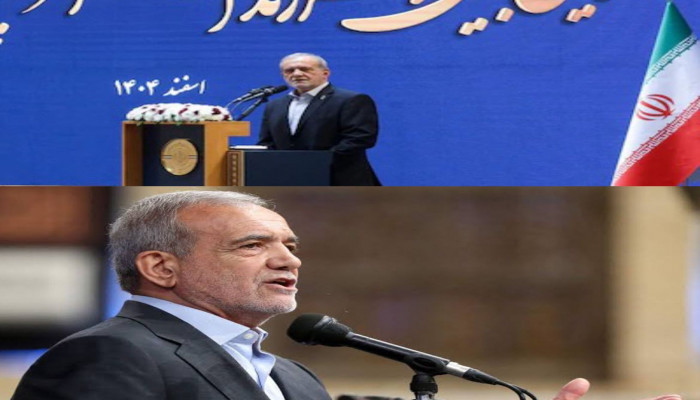
Iranian President Masoud Pezeshkian has made a rare and direct appeal to the people of the United States, saying that Iran holds “no enmity” toward ordinary Americans. In an open letter, he rejected the idea that Iran is a threat and urged people to rethink the narrative around the ongoing conflict. The message came just hours before US President Donald Trump was expected to address the nation and announce Washington’s next steps regarding Iran.
In his letter, Pezeshkian clearly separated governments from citizens. He emphasised that hostility at the political level does not reflect the feelings of the Iranian people. “The Iranian people harbour no enmity toward other nations, including the people of America,” he wrote, describing this as a deeply rooted belief rather than a temporary political stance. His words aimed to build a human connection and reduce the sense of division between the two nations.
The Iranian president also strongly challenged how Iran is portrayed in Western narratives. He said that presenting Iran as a threat does not match reality. According to him, such claims are “neither consistent with historical reality nor with present-day observable facts.” He suggested that these portrayals are misleading and prevent a fair understanding of Iran’s position and actions.
A major part of the letter focused on questioning the justification behind US military actions. Pezeshkian directly raised concerns about the reasoning for the conflict. “Was there any objective threat from Iran to justify such behaviour?” he asked. He pointed to the human cost of the conflict, especially the suffering of civilians and damage to essential infrastructure. Referring to the impact of military strikes, he wrote, “Does the massacre of innocent children or boasting about bombing a country ‘back to the stone ages’ serve any purpose other than further damaging the United States’ global standing?”
He also hinted that the United States might not be acting independently in this situation. Pezeshkian questioned whether Washington had entered the conflict “as a proxy for Israel.” This remark reflects Iran’s long-standing concerns about US alliances in the region and their influence on decision-making.
The letter also revisited historical events that have shaped Iran’s distrust toward the United States. Pezeshkian referred to the 1953 coup and the years of sanctions and confrontations. He described the coup as a key moment in damaging relations, saying, “The turning point was the intervention aimed at preventing the nationalisation of Iran’s own resources.” He added that the policies that followed only deepened mistrust among Iranians and created long-lasting resentment.
Despite these tensions, Pezeshkian insisted that Iran has not acted aggressively. “Iran has never, in its modern history, chosen the path of aggression,” he said. He maintained that Iran’s actions have been defensive and in response to threats rather than driven by expansion or hostility.
Looking at the present situation, the Iranian president described it as a critical moment for both countries and the wider world. He warned that continuing confrontation would only lead to greater costs and no real solutions. “Today, the world stands at a crossroads. Continuing along the path of confrontation is more costly and futile than ever before,” he wrote. He encouraged Americans to question the dominant narratives and consider the value of dialogue and engagement instead of conflict.
Pezeshkian also highlighted Iran’s progress despite facing sanctions. He pointed to improvements in education, technology, and healthcare. He described these achievements as “measurable, observable realities” that challenge negative portrayals of the country. By doing so, he aimed to present a more balanced image of Iran to the global audience.
In his closing remarks, Pezeshkian directly addressed the American public again. He urged them to look beyond what he described as misinformation and try to understand Iran more deeply. “Do these realities align with the distortions you are being told about Iran and its people?” he asked. His message was a call for awareness and independent thinking at a time of rising tensions.
The letter comes at a moment when relations between the two countries are strained, with both sides using strong language and showing little sign of immediate resolution. At the same time, the possibility of diplomatic efforts still exists, though it remains uncertain. Pezeshkian’s outreach stands out as an attempt to shift the conversation away from hostility and toward understanding, even as the situation continues to evolve.



 Loading...please wait
Comments