




Pentagon probes mysterious diversion of US-bound F-35 parts to China
- In Reports
- 07:43 PM, Sep 24, 2026
- Myind Staff
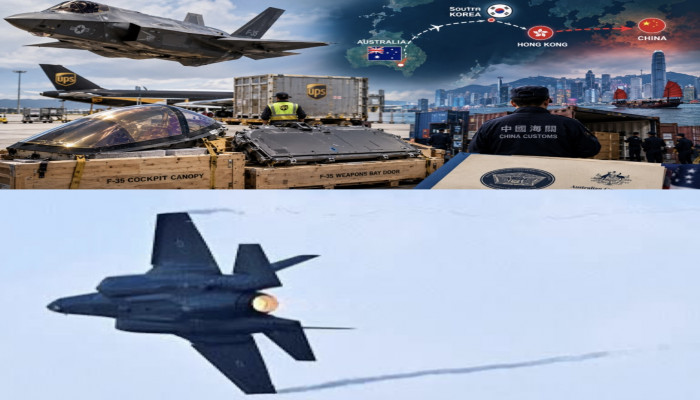
Two parts of an Australian F-35 fighter jet sent to the United States for inspection and possible repair have ended up in Hong Kong and are now in Chinese possession, triggering investigations by US and Australian authorities. The Pentagon is examining how the sensitive military components were diverted during transit.
The shipment included the F-35’s cockpit canopy and weapons-bay door. Bloomberg reported that the UPS shipment of US-bound parts in late May was stopped in South Korea before being rerouted to Hong Kong. The reason for the stop in South Korea remains unclear. Authorities are also investigating whether the diversion was accidental or deliberate.
The components have not been returned by the Chinese authorities, according to people familiar with the matter cited by Bloomberg. The parts came from an Australian F-35 and had been declared unserviceable. They were being sent to the US for inspection, possible repair or disposal. Both were supplied by F-35 manufacturer Lockheed Martin and were coated with radar-absorbing material.
The F-35 relies on specialised materials to reduce its radar signature. The presence of radar-absorbing material on the two components has raised concerns over what information could potentially be obtained from them. However, there is no indication that the parts contain classified electronic systems or other highly sensitive equipment. Australian officials have also played down the sensitivity of the shipment.
The F-35 Joint Program Office confirmed that Washington was aware of the incident. “We are actively working with US authorities and industry partners to retrieve these components, investigate the incident, and place safeguards to avoid a future occurrence," the office said. The probe is also examining the role of companies involved in transporting the parts through the international F-35 supply chain.
Australian Defence Minister Richard Marles confirmed that the parts had reached Hong Kong. Canberra is working with the US and Lockheed Martin to establish what happened. “Yeah, so we are obviously working with the United States and obviously with its prime contractor Lockheed Martin, in respect of this," Marles told reporters.
Marles said he understood that the parts were not considered sensitive. “My understanding is that there is a sense of comfort, and we’re not talking about sensitive equipment here or sensitive parts," he said. “Ultimately, though, this is an issue which is going to be managed by the United States and by Lockheed in terms of what has occurred."
The F-35 cockpit canopy forms part of the aircraft’s low-observability design. Radar-absorbing material around the canopy helps limit reflections from the cockpit area. Military aviation analyst JJ Gertler of the Congressional Research Service said physical access to an actual component could provide additional information. “It’s no secret that China has been aggressively trying to get F-35 data through electronic espionage, among other means," Gertler was quoted as saying by The Aviationist. “But even if they already had specifications or other data about the part, possessing a real one can give them even more to go on and can verify or refine whatever they already had learned."
The incident has renewed concerns over F-35 technology protection. A 2013 US Defence Science Board report said Chinese cyberattacks had accessed information from several Pentagon programmes, including the Joint Strike Fighter programme. More than 1,200 F-35s have been produced, and 19 countries have ordered the aircraft, according to the Congressional Research Service.
Politico previously reported that the missing components had prompted a congressional inquiry. The Pentagon’s investigation will examine how the shipment was diverted, what happened to the parts after reaching Hong Kong, how Chinese authorities obtained them and whether they could reveal any sensitive information.



 Loading...please wait
Comments