



Pentagon bets big on AI: Palantir’s Maven set to become backbone of of U.S. military operations
- In Reports
- 02:10 PM, Mar 21, 2026
- Myind Staff
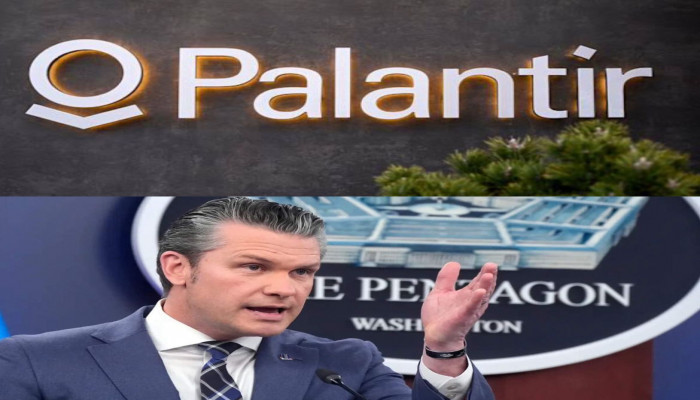
The United States Department of Defense is preparing to make a major shift in how it uses artificial intelligence in warfare. According to an internal memo, the Pentagon plans to formally adopt Palantir’s Maven Smart System as a core military programme. This move will turn the AI platform into what is called a “program of record,” which means it will receive long-term funding and be widely used across all branches of the military.
The decision is based on a March 9 letter written by Deputy Secretary of Defense Steve Feinberg to senior Pentagon officials and military commanders. In this letter, Feinberg highlighted the importance of integrating advanced AI tools into military systems. He said that embedding the Maven system would provide soldiers with “the latest tools necessary to detect, deter, and dominate our adversaries in all domains”.
The Maven Smart System is an AI-powered platform designed to process large amounts of battlefield data. It collects and analyses information from sources like drones, satellites, and other intelligence systems. Based on this data, it helps identify potential targets and supports decision-making during military operations. Over time, it has become the primary AI operating system used by the U.S. military for command and control functions.
By granting Maven the status of a program of record, the Pentagon is ensuring that the system will be deeply integrated into its long-term strategy. This designation also guarantees stable funding and speeds up its adoption across different divisions of the armed forces. The transition is expected to be completed by the end of the current fiscal year, which ends in September.
The memo also outlines key administrative changes related to the system. Oversight of Maven will be transferred from the National Geospatial-Intelligence Agency to the Pentagon’s Chief Digital and Artificial Intelligence Office within 30 days. In addition, future contracts related to the system will be handled by the U.S. Army. These changes are aimed at streamlining operations and ensuring smoother coordination.
Feinberg further stressed the urgency of investing in artificial intelligence. In his letter, he wrote, “It is imperative that we invest now and with focus to deepen the integration of artificial intelligence (AI) across the Joint Force and establish AI-enabled decision-making as the cornerstone of our strategy.” This reflects the Pentagon’s broader push to make AI a central element of modern warfare.
The Maven system has already been used in real-world operations. Reports indicate that it has supported thousands of targeted strikes, including recent military actions involving Iran. Its ability to quickly analyse data and identify targets has significantly improved the speed and efficiency of military decision-making.
For Palantir, this development marks a major success. The company has secured multiple government contracts in recent years, including a large deal with the U.S. Army. These contracts have contributed to a sharp rise in its market value, which has nearly reached $360 billion. The growing reliance on its technology shows how private tech firms are becoming central to defence operations.
However, the increasing use of AI in warfare has raised serious concerns. Experts have warned about the ethical risks involved in using AI for targeting in military operations. There are fears that such systems could reduce human oversight in critical decisions involving life and death. While Palantir has stated that humans remain in control of final decisions, the debate around accountability and transparency continues.
Another issue highlighted in discussions around Maven is its connection to external AI tools. The system has reportedly used technology from Anthropic, particularly its Claude AI model. The Pentagon has recently raised concerns about this, calling it a potential supply chain risk. This adds another layer of complexity to the adoption of advanced AI systems in defence.
Overall, the Pentagon’s decision to formalise the use of Palantir’s Maven system marks a significant step in the evolution of military technology. It shows a clear shift towards AI-driven warfare, where data and algorithms play a crucial role in decision-making. While the move promises greater efficiency and speed, it also brings challenges that will need careful handling in the years ahead.



 Loading...please wait
Comments