




Parties in Gyanvapi, Krishna Janmabhoomi, Sambhal Mosque disputes reject SC's mediation push
- In Reports
- 08:25 PM, Jul 13, 2026
- Myind Staff
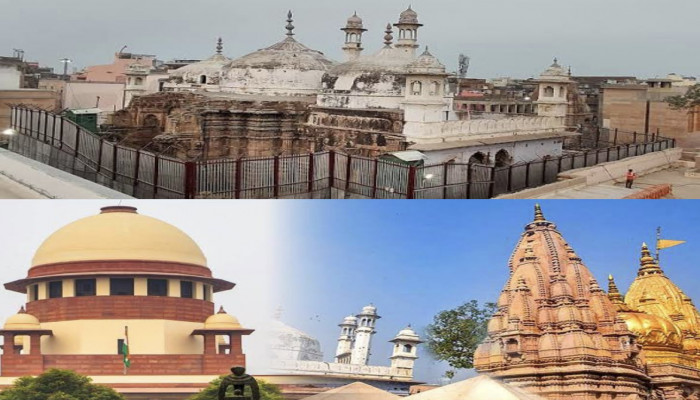
Efforts to settle three major religious site disputes in Uttar Pradesh through mediation have failed to gain support from the parties involved. The Hindu and Muslim sides in the Gyanvapi, Sri Krishna Janmabhoomi-Shahi Eidgah, and Sambhal Shahi Jama Masjid cases have made it clear that they want the courts to decide the matters instead of reaching an out-of-court settlement.
The Supreme Court recently launched the 'Supreme Court Action for Mediated Adjudication and Disputes Harmonisation Across Nation' (SAMADHAN SAMAROH). The initiative aims to encourage parties in pending cases to resolve disputes through mediation before a Special Lok Adalat, which is scheduled for August 21, 22 and 23. As part of this initiative, the court has asked parties in several cases to explore the possibility of an amicable settlement.
In the Gyanvapi case, Hindu side counsel Madan Mohan Yadav said the Supreme Court directed both parties to appear before the mediation centre of a Varanasi court on July 14 to explore a possible resolution. However, he said the Hindu side wanted the dispute to be decided only through the legal process.
"We have decided that the temple belongs to us and that the Muslim side is an encroacher. The mosque side should vacate the premises so that a grand Kashi Vishwanath temple can be built at the original Jyotirlinga site," he said.
On the other hand, Anjuman Intezamia Masjid Committee secretary Mohammad Yasin questioned the effectiveness of mediation. He said thousands of similar disputes were pending across the country and doubted whether mediation would lead to any resolution. He also said the committee was still considering whether it would participate in the mediation process.
The Gyanvapi dispute in Varanasi is an ongoing civil court case over the religious status of the Gyanvapi mosque, which stands next to the Kashi Vishwanath Temple. The Hindu side claims that Mughal Emperor Aurangzeb demolished parts of the ancient temple in the 17th century and built the mosque at the site. The Muslim side disputes this claim and maintains that the mosque existed before Aurangzeb's rule. It also says the mosque is a legitimate Waqf property.
The Sambhal Shahi Jama Masjid-Hari Har temple dispute has also seen both sides reject the idea of mediation. Mosque committee counsel Shakeel Ahmad Warsi said the issue involved religious faith and was too sensitive for a mutual settlement.
"This is a sensitive matter involving Hindus, Muslims and religious beliefs. Whether it is a temple or a mosque should be decided by the court, not through mutual settlement," Warsi told PTI.
Warsi also said the Muslim side had informed the court that anyone could seek to intervene in the case. However, such attempts should not come with mala fide intentions, as the matter relates to a religious place. Hindu side counsel Gopal Sharma said he was not aware of any proposal for mediation in the Sambhal case.
The Sambhal dispute is similar to the Gyanvapi matter. Hindu petitioners claim that the 16th-century Jama Masjid stands on the site of the ancient Hari Har Mandir. The Muslim side has rejected this claim and continues to defend the mosque's status.
The mediation effort has also failed in the Sri Krishna Janmabhoomi-Shahi Eidgah dispute in Mathura. Hindu side counsel Hareram Tripathi said mediation proceedings before the District Legal Services Authority earlier this month ended without any progress. He said no representative from the Muslim side attended the meeting.
According to Tripathi, both parties received invitations twice to take part in the conciliation process. However, the Muslim side did not attend either meeting. The mediation proceedings later closed without any settlement.
Tripathi said the Sri Krishna Janmabhoomi Trust had offered a proposal during the process. He said the trust was willing to consider facilitating land for the construction of a mosque at another location if the Muslim side gave up its claim over the disputed site.
He also said the Muslim side informed the authorities that it did not want to settle the dispute through mediation. Instead, it preferred to let the regular courts decide the matter.
The Allahabad High Court has fixed July 17 for the next hearing in the Sri Krishna Janmabhoomi-Shahi Eidgah case. The Supreme Court may also take up the matter during the Special Lok Adalat in August under its mediation initiative.
PTI tried to contact Shahi Eidgah Intezamia Committee secretary and Muslim side counsel Tanveer Ahmad for his response. However, there was no reply.
Hindu litigant Mahendra Pratap Singh said the Hindu side continued to maintain before the court that the disputed site was the birthplace of Bhagwan Krishna. He said they would continue to pursue the matter through the judicial process.
The Sri Krishna Janmabhoomi-Shahi Eidgah dispute began after the Hindu side filed a petition claiming that the mosque was built in the 17th century at the exact birthplace of Lord Krishna. The Muslim side has challenged this claim in court. With mediation efforts receiving little support in all three disputes, the legal battle will continue through the judicial process unless the parties decide otherwise in the future.



 Loading...please wait
Comments