




Parliament passes Bill granting 'Vande Mataram' the same legal protection as National Anthem
- In Reports
- 07:01 PM, Jul 30, 2026
- Myind Staff
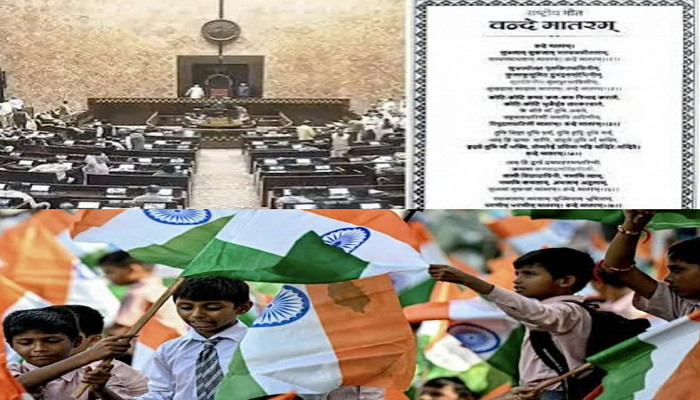
Parliament has passed the Prevention of Insults to National Honour (Amendment) Bill, 2026, giving the National Song, 'Vande Mataram,' the same legal protection as the National Anthem, 'Jana Gana Mana.' The Lok Sabha cleared the Bill after the Rajya Sabha passed it on July 29. The legislation will now be sent to the President for assent. It will become law after receiving presidential approval.
The Bill amends the Prevention of Insults to National Honour Act, 1971. The existing law punishes anyone who intentionally disrespects the National Flag, the Constitution or the National Anthem. The punishment includes imprisonment of up to three years, a fine, or both. Repeat offenders must serve a minimum prison term of one year. The amendment now extends the same legal protection to the National Song for the first time.
Under the amended law, any deliberate insult to 'Vande Mataram' or any intentional disruption during its singing will become a criminal offence. The amendment places the National Song under the same legal framework that already protects the National Anthem. The government has described the move as an effort to strengthen respect for national symbols.
The Bill was passed during the 150th anniversary year of 'Vande Mataram.' Bankim Chandra Chattopadhyay composed the song, and it later became part of his novel Anandamath. The timing of the legislation adds significance to the anniversary celebrations linked to one of India's most well-known patriotic songs.
The amendment also follows a directive issued by the Ministry of Home Affairs in January. The order instructed that whenever 'Vande Mataram' and the National Anthem are played together at official functions, all six stanzas of the National Song must be sung first. The latest legislation further strengthens the government's efforts to preserve the song's official status and importance.
Minister of State for Home Nityanand Rai introduced the Bill in the Rajya Sabha. During the discussion, he described the issue as a matter of "India's soul" and the country's cultural heritage. He traced the historical journey of 'Vande Mataram' and highlighted several important developments linked to the song.
Rai referred to former Prime Minister Jawaharlal Nehru's 1937 decision to limit the song to its first two stanzas. He also mentioned that Subhas Chandra Bose restored the complete version in 1938. He further recalled that Sardar Vallabhbhai Patel ordered the broadcast of the full song on Independence Day in 1947. Rai also referred to Rajendra Prasad's 1950 statement, which placed the National Song on the same footing as the National Anthem.
While presenting the Bill, Rai criticised the Congress over its past approach to the issue. He accused the party of "appeasement politics" and of "encouraging forces which want to break the country into pieces." He used the historical developments surrounding 'Vande Mataram' to support the government's decision to extend statutory protection to the National Song.
The debate took place amid protests by Opposition parties over the alleged use of pellet guns on students protesting against the NEET paper leak. The issue created tension in the Rajya Sabha before the Bill came up for discussion. Opposition members demanded that Union Home Minister Amit Shah should be present in the House before the debate continued.
Trinamool Congress leader Derek O'Brien and DMK leader T. Siva strongly objected to the proceedings. Both leaders handed over their rule books to Deputy Chairperson Harivansh as a mark of protest. They later walked out of the House along with Congress members after raising their objections.
Despite the Opposition's protest, the House continued with the discussion on the Bill. Most of the speakers who participated belonged to the National Democratic Alliance and its supporting parties. Members who spoke during the debate included RMD Agarwal of the BJP, M. Thambidurai of the AIADMK, Sanjay Jha of the RJD, Sanjay Singh of the AAP, and Shiv Sena leaders Sulata Deo and Jyoti Waghmare.
After the discussion concluded, the Rajya Sabha passed the Bill through a voice vote. The Lok Sabha later approved the legislation, completing the parliamentary process. The Bill will now move to the President for assent before it officially becomes law.
Once enacted, the amendment will make 'Vande Mataram' legally protected under the Prevention of Insults to National Honour Act, 1971. Any intentional insult to the National Song or deliberate disruption during its singing will attract the same legal consequences that currently apply to offences involving the National Flag, the Constitution and the National Anthem. The legislation marks the first time the National Song has received statutory protection under this law and adds a new legal safeguard for one of India's most significant national symbols.



 Loading...please wait
Comments