




Paraguay’s ousted President faces 20-year imprisonment over major bank collapse
- In Reports
- 03:32 PM, Nov 09, 2026
- Myind Staff
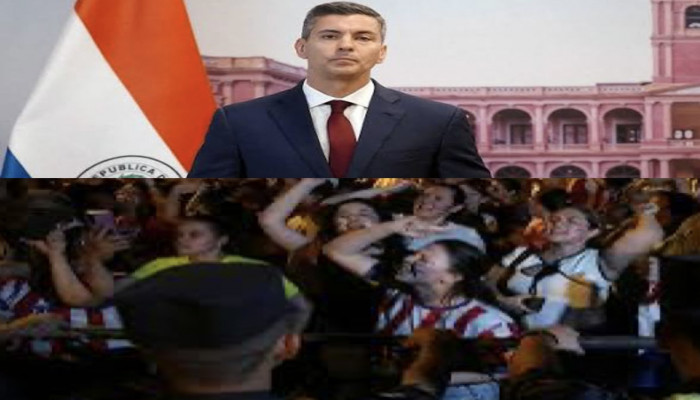
Prosecutors in Paraguay have charged former President Santiago Peña with two crimes linked to the collapse of Ueno Bank, which has put the savings of millions of customers at risk and triggered the country’s biggest political crisis in a decade.
Nancy Salomón, Paraguay’s chief prosecutor for corruption and economic crimes, announced on Saturday that Peña faces charges of breach of trust and administration for personal gain. If convicted of both offences, he could face up to 20 years in prison.
Prosecutors have also asked a judge to freeze his assets and keep him in custody during the investigation. Judge Humberto Otazu approved the request on Saturday and ordered Peña to remain at a military base to “guarantee his compliance” with the anti-corruption probe.
The crisis began on Tuesday when regulators intervened in Ueno Bank and froze the accounts of nearly 3 million customers. The move triggered widespread protests and political turmoil, leading Congress to remove Peña from office on Friday night.
Lawmakers accused the former president of using his political influence to direct hundreds of millions of dollars in public funds towards Ueno Bank while regulators ignored risky insider lending. Peña has denied all allegations.
Earlier on Saturday, prosecutors questioned Peña at the Attorney General's office in the capital, Asunción. He arrived under police escort but was not handcuffed.
Prosecutors had ordered the arrest of Peña and former Central Bank chief Carlos Carvallo on Friday as part of the investigation into the bank's collapse. Peña was taken to a military base later that day, while hundreds of protesters gathered outside his residence.
The Senate unanimously voted to remove Peña shortly before the arrest order. Vice President Pedro Alliana replaced him and began forming a new Cabinet on Saturday. The Central Bank said 1.2 million Ueno customers had received partial or full refunds. Paraguayan law guarantees deposits of up to $37,000.
Peña had submitted his resignation on Thursday, but Congress rejected it and continued with impeachment proceedings. Opposition lawmakers wanted to prevent him from leaving office with immunity.
“He must go, but not home. He must go to a maximum-security prison,” opposition Sen. Yolanda Paredes told reporters. “The public is fed up with impunity.”
In his farewell message on Friday, Peña said he hoped his departure would prevent further damage to the country.
“I do not want my presence to be a cause of greater division or instability,” he wrote. “My responsibility is to put the country above my personal fate.”
Meanwhile, thousands of protesters demanding access to their frozen savings and accountability for the bank's collapse have clashed with police, who used rubber bullets and pepper spray. Paraguay's largest teachers' union, representing more than 40,000 members, has also announced an indefinite nationwide strike from Monday to demand protection of public pension funds.
On Saturday, dozens of demonstrators gathered outside the Attorney General's office to express their anger over Peña's alleged role in the crisis. Some also demanded an investigation into new President Pedro Alliana, a close ally of Peña.



 Loading...please wait
Comments