

Pakistan’s decision to join Trump’s Gaza ‘Board of Peace’ sparks domestic political and religious backlash
- In Reports
- 06:06 PM, Jan 23, 2026
- Myind Staff
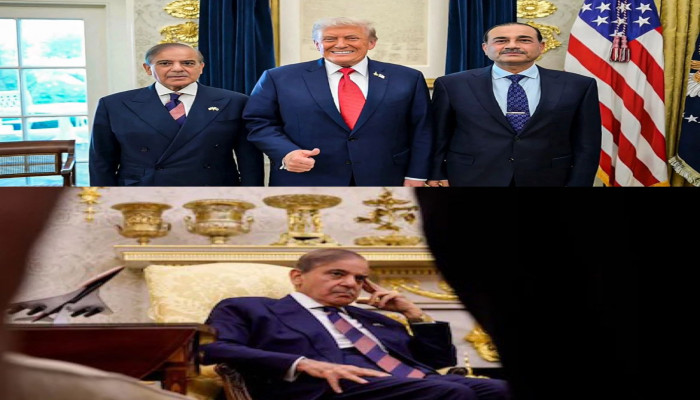
Pakistan’s decision to join US President Donald Trump’s proposed Gaza “Board of Peace” has triggered strong criticism within the country, exposing political, religious and ideological divisions. The move has created controversy across opposition parties, religious groups and scholars, making it harder for the government of Shehbaz Sharif to control the national narrative.
According to sources, opposition leaders argue that the decision was taken in a non-transparent and unilateral manner. They claim there was no parliamentary debate, no public consultation and no wider engagement with stakeholders before Pakistan agreed to join the initiative. Critics say such an important decision, with major geopolitical and moral implications, should not have been taken without involving the public and elected institutions.
Pakistan Tehreek-e-Insaf (PTI) has emerged as one of the strongest critics of the move. The party has questioned the intent and process behind the government’s decision and has argued that a step of this magnitude cannot ignore the will of Pakistan’s nearly 250 million people. PTI leaders have demanded a referendum and full scrutiny of the decision, framing it as evidence of public distrust toward the current government and the civil-military nexus.
PTI leaders have also stressed that any plan related to Gaza must not go against the wishes of Palestinians. They have rejected any framework that sidelines Palestinian agency and warned that Pakistan risks weakening its long-standing principled stance by aligning with a US-led initiative under President Trump. According to them, Pakistan’s traditional position on Palestine should not be diluted by participation in a process that may not fully reflect Palestinian aspirations.
The government, however, has defended its decision and presented participation in the Trump-led board as a humanitarian and diplomatic effort. Official sources have said that the purpose of joining the initiative is to secure a permanent ceasefire, facilitate the delivery of humanitarian aid and contribute to the reconstruction of Gaza. The government believes that engagement will allow Pakistan to advocate for Palestinian relief from within the process rather than staying outside it. Officials have described the move as a “humanitarian and diplomatic effort” aimed at helping the people of Gaza and strengthening Pakistan’s role in international discussions.
Despite these explanations, the government’s position has not convinced religious groups at home. Hardline clerics and Islamist organisations have criticised the decision and described it as a betrayal of Pakistan’s ideological foundations. They argue that Pakistan has historically emphasised Islamic solidarity and unwavering support for Palestinian rights, and that joining a Trump-led platform contradicts this tradition. Critics claim that participation in such a board legitimises a framework perceived as being aligned with pro-Israel interests and dismissive of Palestinian political aspirations.
Opposition voices from both political and religious circles have reinforced these concerns. Senator Allama Raja Nasir Abbas of Majlis Wahdat-e-Muslimeen and former information minister Shireen Mazari have publicly questioned the wisdom of the government’s decision. They have called the move morally incorrect and strategically unwise. Islamist groups and religious scholars have accused the government of legitimising a peace architecture that sidelines Palestinians and undermines their political agency.
Overall, Pakistan’s decision to join the Gaza “Board of Peace” has become a deeply divisive issue. While the government insists that participation is necessary to help Palestinians through diplomatic engagement, opposition parties and religious groups continue to question the intent, process and implications of the move. The debate has revealed sharp fault lines within Pakistan’s political and ideological landscape, highlighting the challenges faced by the government in balancing international diplomacy with domestic expectations and long-standing principles.



 Loading...please wait
Comments