




Pakistani business community raise alarm over UAE’s ‘silent visa ban’
- In Reports
- 07:33 PM, Jul 30, 2026
- Myind Staff
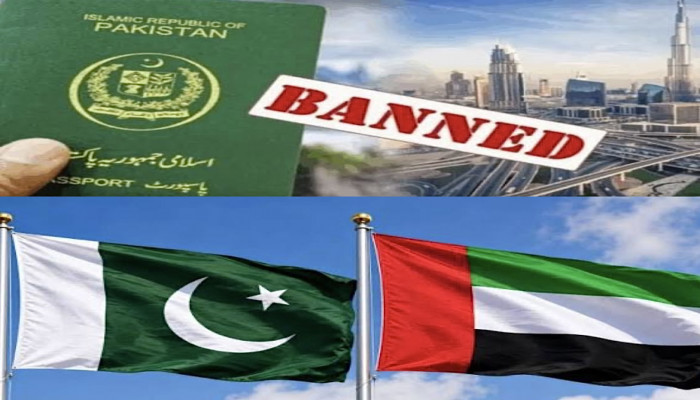
Concerns are growing within Pakistan's business community over what many traders and exporters describe as a "silent visa ban" by the United Arab Emirates (UAE). Business representatives claim that visa approvals for Pakistani citizens, particularly businessmen, investors and traders, have become increasingly difficult. They say the situation is affecting international trade, business meetings and participation in global exhibitions. While these concerns continue to spread, the UAE has denied imposing any visa ban and maintains that applications from Pakistani citizens are being processed as usual.
Several reports in Pakistan have claimed that the UAE has stopped issuing visas to Pakistani citizens across different business categories. According to these reports, traders, exporters and investors are facing repeated delays or rejections while applying for visas. Members of the business community argue that these restrictions have disrupted commercial activities and created uncertainty for companies that regularly work with UAE-based partners.
Despite these claims, UAE authorities have rejected reports of any visa ban. Officials have maintained that there are no restrictions on Pakistani nationals and that visa applications across all categories continue to move through the normal process. The UAE has not announced any official policy that limits visas for Pakistani citizens.
Pakistani business leaders, however, say their experiences do not match the UAE's official position. They describe the current situation as a serious challenge for businesses that depend on travel to the UAE for trade, investment and commercial partnerships. They argue that many applicants continue to face difficulties despite repeated assurances from UAE authorities.
Shahid Anwar, former secretary general of the Federation of Pakistan Chambers of Commerce and Industry (FPCCI), highlighted the gap between official statements and the experiences of business travellers. Speaking to The Express Tribune, he said, “Yet there appears to be a noticeable gap between the official position and the experience reported by many Pakistani business travellers."
Business representatives also claim that the issue extends beyond first-time applicants. According to Shaukat, President of the Rawalpindi Chamber of Commerce and Industry, even Pakistani entrepreneurs who have maintained strong business ties with Dubai, Sharjah and Abu Dhabi for many years are facing visa-related problems. He said these business owners have struggled to secure visas despite their long-standing commercial relationships in the UAE.
Shaukat said the visa situation has directly affected important business activities. He stated, “This has led to important business meetings being cancelled, and many exporters have missed major international exhibitions.” Business leaders believe such disruptions could affect Pakistan's export sector if the issue continues for a longer period.
Ismail Suttar, Founder and Chairman of the Salt Manufacturers Association of Pakistan, also expressed concern over the uncertainty surrounding the visa issue. He argued that the lack of clarity has created difficulties for business delegations and exporters. According to him, companies that depend on regular travel to the UAE now face challenges while planning meetings, expanding business partnerships and promoting products in international markets.
Several representatives from Pakistan's business community have also tried to seek clarification from UAE authorities. Zia ul Arfeen, a member of the Karachi Chamber of Commerce and Industry (KCCI), reportedly wrote to the UAE Consul General regarding the matter. However, he did not receive any response.
Other members of the Karachi Chamber of Commerce and Industry also approached the UAE Consul General and raised similar concerns. They warned that continued visa issues could affect participation in upcoming trade events in Dubai. Pakistani companies are preparing to attend the Gulfood exhibition, one of the region's major food trade events, to showcase their products and meet international buyers. Business representatives fear that travel-related difficulties could affect these opportunities if visa approvals remain uncertain.
Industry representatives have said the reported visa restrictions are affecting several sectors beyond exports. According to them, businesses involved in healthcare, tourism and other industries have also experienced challenges linked to travel approvals. Many companies rely on regular visits to the UAE for meetings, exhibitions and business expansion.
Aviation consultants have also reported a fall in travel demand between Pakistan and the UAE. According to them, difficulties in obtaining UAE visas, particularly visit and family visas, have discouraged many travellers from making travel plans. They believe the situation has affected passenger traffic and added further uncertainty for businesses connected to the travel industry.
The concerns hinted at rifts in the UAE-Pakistan ties. The two countries have traditionally shared close diplomatic, economic and strategic ties. However, reports suggest relations became strained after Pakistan signed a defence agreement with Saudi Arabia late last year.
Another development added to the discussion earlier this year when the UAE asked Pakistan to repay the $3.5 billion it owed Abu Dhabi. In April, Pakistan confirmed plans to repay $2 billion financial deposit to the UAE. The government described the repayment as part of routine bilateral financial arrangements rather than a response to outside pressure.
On April 4, Pakistan's Ministry of Foreign Affairs issued a statement rejecting what it described as “misleading and unfounded commentary” surrounding the repayment. The ministry stated that the funds were held with the State Bank of Pakistan under commercial arrangements designed to support the country's economic stability.
However, reports quoting government and financial sources claimed that the repayment followed a request from the UAE for the immediate return of the funds. These reports added another dimension to discussions surrounding relations between the two countries.
Despite these developments, Pakistan's Foreign Ministry stressed that relations with the UAE remain strong. The ministry described the partnership as one built on trust, strategic cooperation and shared economic interests. It stated, “Pakistan and the UAE share a longstanding, fraternal partnership built on trust and strategic cooperation across trade, investment, defence, and people-to-people ties,” it said.
The ministry also highlighted the historical relationship between the two countries. It noted the important role played by the UAE's founding leadership in strengthening bilateral cooperation over the years. Pakistan maintained that both countries continue to enjoy deep diplomatic and economic ties despite recent concerns.
Although the UAE continues to deny the existence of any visa ban, uncertainty remains among Pakistan's business community. Traders, exporters and investors say they continue to face difficulties while seeking travel approvals. If the reported visa restrictions continue, they could become another point of tension in the relationship between Pakistan and the UAE while also affecting trade, investment and business cooperation between the two countries.



 Loading...please wait
Comments