




Pakistan seeks $10 billion US financial lifeline to boost foreign reserves
- In Reports
- 12:59 PM, Jul 22, 2026
- Myind Staff
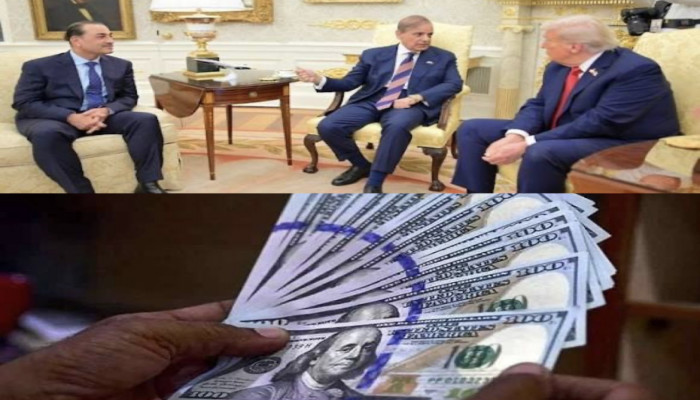
Pakistan has asked the United States for a $10 billion exchange stabilisation facility in a move that could provide major financial support to its struggling economy, according to a source familiar with the matter. If Washington approves the request, the facility could help Pakistan strengthen its foreign exchange reserves, support its currency and reduce its dependence on international lenders.
The request comes after Pakistan played a role in helping broker talks during the Iran conflict. That diplomatic engagement raised Islamabad's international profile and sparked expectations that it could strengthen its economic ties with the United States and other partners.
According to the source, Pakistan has formally requested a Bilateral Exchange Stabilisation Support Facility worth $10 billion from US Treasury Secretary Scott Bessent. The proposed arrangement would have a maturity period of up to five years. The support would help increase Pakistan's dollar reserves, ease pressure on the Pakistani rupee and provide greater financial stability while the country continues to follow the fiscal and monetary reforms agreed under its International Monetary Fund (IMF) programme.
The US Treasury declined to comment on the reported request. Pakistan's finance ministry also did not immediately respond to Reuters' request for comment outside Asia business hours.
Pakistan's Finance Minister Muhammad Aurangzeb met Bessent in Washington on Tuesday. The finance ministry later said Aurangzeb had discussed the country's economic vulnerability due to regional geopolitical developments. However, the official statement did not mention the reported request for the exchange stabilisation facility.
The ministry said, "Senator Aurangzeb sought greater U.S. support for Pakistan’s road to market, underpinned by improved access to international capital markets, higher foreign exchange reserves, and enhanced sovereign credit ratings." It added that both countries reaffirmed their commitment to expanding economic cooperation, encouraging more US investment and advancing strategic projects.
Pakistan remains under a $7 billion IMF programme that requires the government to continue tax increases, spending restraint and structural reforms. These measures have helped stabilise the economy, though they have also placed pressure on the country's finances and public spending.
Exchange stabilisation facilities are uncommon financial arrangements offered by the US Treasury through the Exchange Stabilisation Fund. These facilities provide dollar support, guarantees or swap arrangements to help countries strengthen foreign exchange reserves and stabilise their currencies. They differ from the permanent dollar swap lines maintained by the US Federal Reserve with a small group of major central banks.
The most recent example came in 2025, when Argentina received a new exchange stabilisation package. Before that, Uruguay received similar support in 2002. Mexico also continues to maintain a long-standing swap arrangement with the United States that dates back to the 1940s and is currently valued at $9 billion.
Pakistan has relied heavily on external financial support in recent years. The country narrowly avoided a sovereign default in 2023 after securing a $3 billion IMF standby agreement. It later obtained a $7 billion Extended Fund Facility along with a separate $1.3 billion loan aimed at improving resilience against climate change and natural disasters.
Despite these programmes, Pakistan still depends on official financing, loan rollovers and financial deposits from countries such as China and Saudi Arabia. This dependence leaves the country vulnerable whenever bilateral support changes or IMF funding gets delayed. That weakness became clear in April when Pakistan repaid around $3.5 billion to the United Arab Emirates. The repayment amounted to nearly one-fifth of its foreign exchange reserves. Saudi Arabia then provided fresh financial support worth $3 billion.
Pakistan's central bank said in January that it expects foreign exchange reserves to rise to nearly $20 billion by the end of 2026, close to the country's record level reached in 2021.
If the United States approves the proposed facility, it would offer more than financial assistance. It would also send a strong political signal about Washington's confidence in Pakistan's economy. The additional dollar support would strengthen reserves, reduce pressure on the rupee and lower Pakistan's reliance on IMF disbursements and emergency financial assistance.
Ratings agency Fitch said in April that Pakistan's commitment to its IMF programme has improved the country's funding capacity. It also noted that stronger foreign exchange reserves provide protection against economic shocks linked to tensions in the Middle East.
However, Fitch also warned that serious challenges remain. The agency said rising energy costs and possible supply disruptions could sharply reduce Pakistan's foreign exchange reserves if such pressures continue.
Pakistan has also struggled to attract large foreign investments. Investors remain cautious due to repeated external financial crises, policy uncertainty, security concerns, restrictions on profit repatriation in the past and the country's narrow export base. Pakistan's sovereign credit rating also remains deep in speculative-grade territory, making international borrowing expensive and limiting access to global financial markets.
In recent months, Pakistan has worked to strengthen economic ties with the Trump administration through cooperation in sectors such as cryptocurrency, mining and real estate. The country signed a stablecoin agreement for cross-border payments with an affiliate of World Liberty Financial, the main crypto business of President Donald Trump's family.
Pakistan has also pursued a memorandum of understanding with the US government to redevelop the Roosevelt Hotel in New York, which is owned by Pakistan International Airlines. At the same time, Islamabad has encouraged American investment in major mining projects, including the Reko Diq copper and gold project. The US Export-Import Bank has already announced $1.25 billion in financing for the project, highlighting growing economic engagement between the two countries.



 Loading...please wait
Comments