




Pakistan restricts entry of essential supplies to POK to quell protests
- In Reports
- 01:04 PM, Jun 25, 2026
- Myind Staff
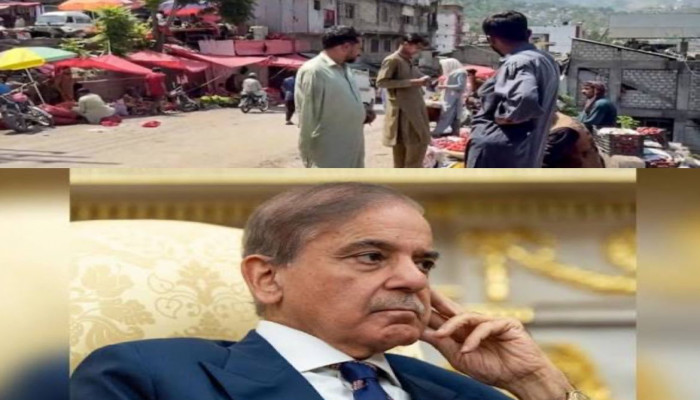
Pakistan-occupied Kashmir (POK) is facing a growing humanitarian crisis as food, fuel and medicine shortages worsen amid an ongoing anti-government protest movement. While Islamabad denies imposing any restrictions on supplies entering the region, residents, truck drivers and opposition leaders have accused Pakistani authorities of blocking the movement of essential goods. Reports by BBC Urdu, Dawn and AFP suggest that the situation across the territory has become increasingly difficult for ordinary people.
The unrest began over a dispute involving 12 seats in the POK legislative assembly reserved for refugees from Indian-administered Kashmir. Local groups have alleged that Islamabad uses these seats to influence elections and install governments that support its interests. As protests gained momentum, Pakistan declared the Joint Awami Action Committee (JAAC), which is leading the movement, a terrorist organisation and launched a crackdown on its supporters. According to reports, at least 58 people have been killed in clashes linked to the unrest.
The protests and shutdowns have disrupted daily life across the region. Transport services have been affected and businesses have closed after the movement of goods has slowed significantly. While the JAAC's strikes and road blockades have contributed to the disruption, many residents claim that Pakistani authorities have further worsened the situation by restricting the entry of essential supplies into the territory.
Several areas of POK are now experiencing serious shortages. According to AFP, protests, sit-ins and strikes have paralysed life in many towns. Mobile internet services have also reportedly been disrupted in several locations.
In Muzaffarabad, the regional capital, residents are struggling to obtain basic necessities. Sixty-four-year-old Muhammad Masqeen told AFP that he was unable to find medicines as most pharmacies remain closed. "I have been searching for medicine everywhere, but I cannot find it. Even big stores are closed," Masqeen told the news agency.
Many shops have also run out of stock due to supply chain disruption. Another resident, Sabar Hussain, told AFP that people had been facing hardships for more than a week as markets remained closed and food supplies had become scarce.
Fuel shortages have added to the crisis. Dawn reported that petrol pumps across the districts of Poonch and Muzaffarabad remained shut, forcing many motorists to purchase fuel from the black market. BBC Urdu reported similar shortages in areas including Rawalakot, Bagh and the remote Neelum Valley.
Residents say obtaining basic food items has become a major challenge. Alif Din, a resident of Neelum district, told BBC Urdu, "I have been depositing money at the depot for 15 days but have not received flour yet. I go to the depot every day, but I am not given flour." He also said that flour available in local markets had become much more expensive.
People living in Abbaspur and Rawalakot told BBC Urdu that food and medicine stocks stored by families were running low. Grocery stores and pharmacies have remained closed for nearly two weeks, leaving residents increasingly worried.
Although the JAAC's strikes have contributed to the shortages, reports suggest that Pakistani authorities may also be playing a role. Many businesses have refused to reopen despite government orders. Those that have resumed operations are struggling because transport routes remain disrupted.
As shortages deepen, many residents have started travelling to nearby areas in Pakistan to buy food, fuel and medicines. Dawn reported that people from Muzaffarabad were crossing into Khyber Pakhtunkhwa to purchase essential items. BBC Urdu stated that residents from Poonch, Rawalakot, Bagh and Neelum Valley had travelled to Rawalpindi and Islamabad to buy flour, rice, sugar, lentils, medicines and petrol.
However, several residents claim they are being stopped from bringing these supplies back into POK. According to BBC Urdu, vehicles carrying food, medicines and fuel have faced restrictions at checkpoints and roadblocks.
A resident identified as Naveed told the outlet that police stopped him near Azad Pattan and refused to let him go unless he discarded the items bought in Rawalpindi. "I begged the police a lot to let me take food and drinks home for God's sake because the situation in my house has now reached the point of starvation. My wife is also pregnant," Naveed told BBC Urdu. He added, "But they [police] did not care and said that if you throw away the food and drinks and medicines with your own hands, you are allowed to go; otherwise, go back."
Commercial supply chains have also reportedly been affected. BBC Urdu reported that trucks carrying flour, rice, lentils, vegetables and other essential goods were being stopped near Azad Pattan and Phagwari. Several truck drivers claimed that Punjab Police personnel were preventing them from entering POK. As a result, many trucks remained stranded for days, and perishable goods were spoiled even before reaching their destinations.
Social media videos have also shown long lines of trucks reportedly waiting to enter the region through different routes, including Mirpur. The POK chapter of Pakistan Tehreek-e-Insaf (PTI) accused authorities of blocking essential supplies. In a post on X, the party claimed that travellers were being stopped and denied access to food, drinking water and medicines. It described the situation as the "worst example of Pharaonic oppression".
Pakistani officials have rejected these allegations. Police officials, including the POK police chief, and local administrators from Poonch, Muzaffarabad and Neelum Valley told BBC Urdu that no vehicles carrying essential supplies had been stopped and that food deliveries were continuing as normal.
However, a report published by Dawn cited an anonymous official who said Islamabad had adopted several measures to control the JAAC-led protests centred in Rawalakot. One of these measures reportedly involved disrupting the flow of food and other supplies to protesters in an attempt to end the sit-in without using force. It remains unclear whether this strategy was aimed only at protesters or had a wider impact on the general population.
What is evident is that Pakistani authorities have acknowledged using supply restrictions as part of their efforts to weaken the protest movement. Whether these actions are targeted only at demonstrators or are affecting civilians across POK remains a matter of debate.
Meanwhile, the protest movement continues to grow. Demonstrations have spread across several towns and villages, while a large sit-in at Rawalakot's Eidgah Ground has attracted significant public support. Reports suggest that more than 70,000 people have joined the protest camp over the past two weeks.
JAAC leaders have also warned that they may intensify the agitation by organising a march of more than 100,000 people from Rawalakot to Muzaffarabad. As tensions continue to rise, it remains uncertain whether restricting supplies will weaken the movement or further increase public anger against Islamabad.



 Loading...please wait
Comments