




Pakistan reshapes military command, puts nuclear assets under new strategic force led by Asim Munir
- In Reports
- 10:30 PM, Jul 25, 2026
- Myind Staff
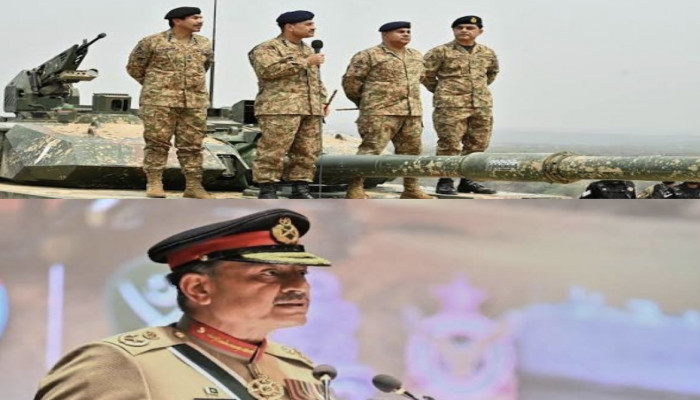
In a major military overhaul in decades, Pakistan has created the National Strategic Command (NSC). The new body has been established under recent legislative amendments and now takes operational control of the country's strategic assets and nuclear arsenal. The move marks a major change in Pakistan's defence structure. It brings key strategic capabilities under a single military command and centralises authority within the armed forces.
The restructuring changes the traditional command system that was earlier led through the civilian-controlled National Command Authority (NCA). Under the new arrangement, the NSC assumes operational responsibility for Pakistan's strategic assets. The National Command Authority will continue to exist, but the Prime Minister's role will remain limited to receiving information instead of exercising operational control. The latest framework shifts decision-making to the military hierarchy.
Field Marshal Syed Asim Munir is leading the restructuring in his dual role as Chief of Defence Forces (CDF) and Chief of the Army Staff (COAS). The new command structure places overall operational authority under his leadership. The overhaul reflects a major reorganisation of Pakistan's military establishment and introduces a more centralised chain of command.
As part of the restructuring, Lieutenant General Syed Aamer Raza has received a promotion to the rank of four-star General. He previously served as the Chief of the General Staff. He has now become the first Commander of the National Strategic Command. His appointment marks the formal beginning of the new strategic command system and places him in charge of overseeing Pakistan's strategic military operations under the revised framework.
The National Strategic Command will function with support from the Strategic Plans Division (SPD). The SPD will continue to play an important role in managing the country's strategic programmes. Under the new arrangement, the NSC will bring together the management of Pakistan's nuclear stockpiles, missile development programmes and strategic delivery systems under one unified command. The new structure aims to improve coordination across these critical areas.
The operational model of the NSC closely follows the organisational framework of China's People's Liberation Army. Reports indicate that the new structure draws heavily from the operational concepts used by the PLA Rocket Force. This reflects Pakistan's effort to develop a command system that integrates strategic planning, missile forces and nuclear capabilities through a single operational structure. The model also signals closer defence cooperation and institutional alignment with Beijing.
The restructuring seeks to establish a joint operational command that combines the capabilities of the Army, Navy, Air Force, Rocket Force and Strategic Command. The new framework is expected to strengthen Pakistan's strategic deterrence along its eastern border. It also aims to deepen defence-industrial cooperation and technological integration with China. The unified command structure is designed to improve coordination among different military branches while increasing operational efficiency.
The military overhaul has also affected the internal functioning of Pakistan's armed forces. The restructuring has interrupted the normal career progression of senior officers across different services. Promotion boards for senior officer ranks have remained on hold for more than 15 months as the military continues to reorganise its command structure. The delay reflects the scale of the ongoing changes within the armed forces.
The Pakistan Army has also suspended its routine Formation Commanders' Conferences since 2024. These meetings have traditionally served as an important platform for reviewing military operations and strategic planning. Their suspension indicates a shift towards greater centralisation of decision-making within the top military leadership. Senior leadership now exercises greater control over strategic decisions under the revised command structure.
The command reshuffle has also reduced the traditional autonomy of regional Corps Commanders. Operational authority now rests more directly with the Office of the Chief of Defence Forces. The realignment streamlines military decision-making under a central command while reducing the independent operational role previously held by senior regional commanders.
Pakistan's latest military reforms represent one of the most significant structural changes to its defence establishment in recent decades. The creation of the National Strategic Command places the country's strategic assets under a unified military framework and strengthens centralised control over nuclear forces, missile programmes and strategic operations. The restructuring also signals Pakistan's effort to modernise its military command system while expanding defence cooperation and strategic alignment with China.



 Loading...please wait
Comments