




Pakistan rejects Trump’s push to join Abraham Accords
- In Reports
- 01:27 PM, May 26, 2026
- Myind Staff
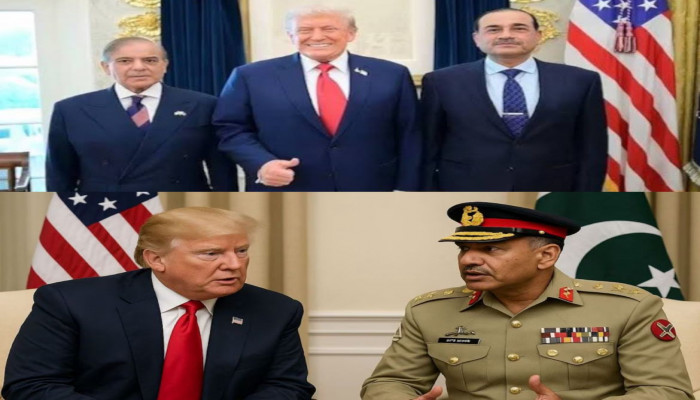
Pakistan has firmly rejected suggestions that it could join the Abraham Accords as part of a broader peace arrangement involving Iran and the United States. Pakistan’s defence minister Khawaja Muhammad Asif, said the proposal was not acceptable to Islamabad and stressed that recognising Israel would go against the country’s long-standing ideological position.
According to Pakistani news channel Samaa TV, Asif made the remarks during an interview when he was asked about reports of pressure from US President Donald Trump regarding the Abraham Accords. The minister dismissed the possibility of Pakistan becoming part of such an arrangement.
“Personally, I don’t think we should join any such accord that clashes with our fundamental ideologies,” Asif said during the interview.
The Pakistani minister also raised concerns about any possible engagement with Israel. Questioning the idea of diplomatic ties, he said, “How could Pakistan sit down with those people whose word cannot be trusted even for a single day?”
When asked whether Pakistan’s government had been approached by the US State Department on the issue, Asif replied, “We have a very clear stance that this is not acceptable to us.”
He further highlighted Pakistan’s strict position on Israel by saying that Pakistan is the only country whose passports do not even include Israel’s name.
A video clip of the interview has widely circulated on social media platforms. However, the authenticity of the clip could not be independently verified.
The Abraham Accords were first introduced in 2020 during Trump’s earlier term as US President. The agreements were aimed at normalising diplomatic, economic and security ties between Israel and several Arab nations. The United Arab Emirates and Bahrain were the first countries to sign the accords. They were later joined by Morocco and Sudan in the same year.
Trump recently renewed his push for wider participation in the accords. On Monday, he urged Pakistan and several West Asian countries, including Saudi Arabia, Qatar, Turkey and Jordan, to formally recognise Israel. He linked the proposal to a larger diplomatic effort aimed at easing tensions between the United States and Iran.
In a post on Truth Social, Trump said it should be “mandatory” for countries to become part of the Abraham Accords. His comments are expected to face resistance from countries like Pakistan, which has consistently opposed recognising Israel.
Trump’s statement came after discussions with leaders from Saudi Arabia, the United Arab Emirates, Qatar, Pakistan, Turkey, Egypt, Jordan and Bahrain. He argued that wider acceptance of the Abraham Accords could help create stability in the Middle East.
“It may be possible that one or two have a reason for not doing so, and that will be accepted, but most should be ready, willing, and able to make this Settlement with Iran a far more Historic Event than it would otherwise be,” Trump wrote.
He also claimed that broader participation could bring “true Power, Strength, and Peace to the Middle East for the first time in 5,000 years.”
Pakistan, however, has maintained for decades that it will not recognise Israel until a separate Palestinian state is established. The country’s position goes back to its founder Muhammad Ali Jinnah, who rejected the United Nations’ partition plan for Palestine in 1947–48.
Pakistan’s foreign minister Ishaq Dar had also dismissed the possibility of joining the Abraham Accords earlier this year. Repeating Islamabad’s official stand, he had said, “We are not ready to recognise Israel until the two-state solution to the Palestine conflict is accepted. There is no change in our stated policy on the Palestine issue. Let it be clear to everyone that our seven-decades-long policy remains unchanged.”
Dar’s remarks had come after Pakistan army chief Asim Munir visited the White House a few months ago, which had triggered speculation about possible changes in Pakistan’s foreign policy.
In January this year, Pakistan also clarified its stand after becoming one of the prominent members of Trump’s Board of Peace initiative for a Gaza ceasefire. At the time, Pakistan’s Foreign Office spokesman Tahir Andrabi rejected suggestions that the move was linked to the Abraham Accords.
“It is a misconception that joining the Board of Peace is in any way connected to any Abraham Accords or any side draft to this issue. Pakistan’s position remains unchanged and we will not become a party to the Abraham Accord,” Andrabi had said.
Pakistan’s repeated statements indicate that the country is not willing to reconsider its policy on Israel despite diplomatic pressure from Washington. Islamabad continues to insist that recognition of Israel can happen only after a two-state solution for Palestine is accepted.



 Loading...please wait
Comments