




Pakistan officially defends Hafiz Saeed, rejects India's Pahalgam terror investigation
- In Reports
- 08:30 PM, Jul 16, 2026
- Myind Staff
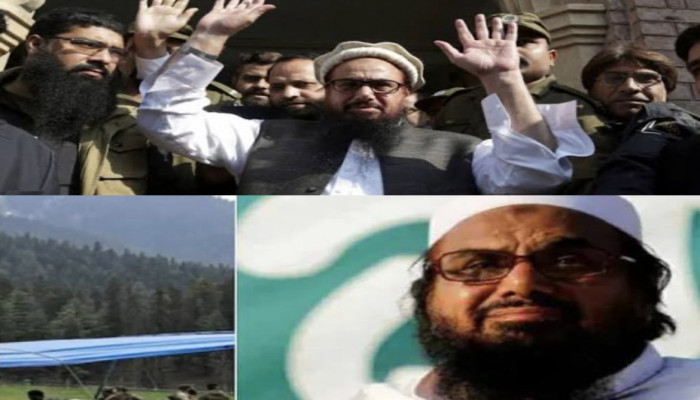
Pakistan has officially defended UN-designated terrorist Hafiz Saeed and rejected India's investigation into the April 22 Pahalgam terror attack. Pakistan's Ministry of Foreign Affairs (MOFA) dismissed the National Investigation Agency's (NIA) latest chargesheet against the Lashkar-e-Taiba (LeT) founder. The move has widened tensions between the two countries over cross-border terrorism.
The development came only days after CNN-News18 exclusively reported that the NIA was preparing to file a chargesheet against Hafiz Saeed. The agency also planned to seek his declaration as a proclaimed offender in the Pahalgam terror case. A day later, the NIA secured a non-bailable warrant (NBW) against Saeed. The action marked another step in India's legal efforts against the LeT chief, who continues to remain in Pakistan.
Pakistan's Foreign Ministry has now openly challenged India's findings. During its weekly media briefing, MOFA spokesperson Tahir Andrabi rejected the NIA investigation and defended those named in the chargesheet.
Andrabi described the NIA chargesheet as "a clear afterthought" and alleged that it was part of India's "continuing policy of using sham legal processes to target the Kashmiri political leadership." He also claimed that reopening a case linked to events dating back nearly three decades showed that India's investigative and judicial institutions were serving a political purpose.
The spokesperson also objected to the inclusion of deceased Hurriyat leaders in the chargesheet. He called it proof of what Pakistan described as a politically motivated exercise. Pakistan further said that no legal action taken by India could change what it called the "internationally recognised disputed status" of Jammu and Kashmir.
Pakistan also rejected India's findings that linked Pakistan-based terror infrastructure to the Pahalgam attack. During the same briefing, Andrabi said Pakistan "categorically rejects India's baseless and politically motivated attempts to link Pakistan with the Pahalgam attacks" and claimed India had failed to present credible evidence. He repeated Islamabad's demand for an independent and transparent investigation. He also accused New Delhi of using the issue for domestic political purposes.
Top intelligence sources, however, said Pakistan's latest diplomatic stand aims to protect the narrative surrounding The Resistance Front (TRF). Investigators have identified the outfit as a proxy of Lashkar-e-Taiba. The sources said the international understanding has changed significantly. TRF is now widely recognised as a legal alias of Hafiz Saeed's LeT. This has weakened Pakistan's long-standing position that the group operates independently.
According to the investigation, the NIA has collected several layers of evidence linking the attack to Pakistan-based handlers. Investigators have obtained GoPro footage that the terrorists allegedly recorded during the attack. They have also recovered encrypted WhatsApp messages and social media communications. The agency says it traced GPS coordinates of the Baisaran meadow that Pakistan-based LeT handler Sajid Jatt allegedly received directly from the attackers.
Investigators have also mapped cross-border drone drops that allegedly delivered M4 carbines and AK-47 rifles used in the attack, intelligence sources said. The agency believes this evidence strengthens the case against the Pakistan-based handlers and their network.
Officials also noted that Pakistan's Foreign Ministry dismissed the entire investigation without responding to the digital, financial and physical evidence presented by Indian investigators. They said Pakistan relied on political arguments while rejecting the findings of India's federal anti-terror agency instead of addressing the evidence cited in the investigation.
The latest diplomatic exchange marks a sharp escalation between the two countries. Pakistan's government has publicly defended UN-sanctioned terrorist, while rejecting India's conclusions in one of the deadliest terror attacks in Jammu and Kashmir in recent years. The episode has further widened differences between New Delhi and Islamabad over accountability for cross-border terrorism and the role of Pakistan-based terror networks.



 Loading...please wait
Comments