




Pakistan Defence Minister Khwaja Asif warns India of war over Indus River waters
- In Reports
- 01:08 PM, Jun 22, 2026
- Myind Staff
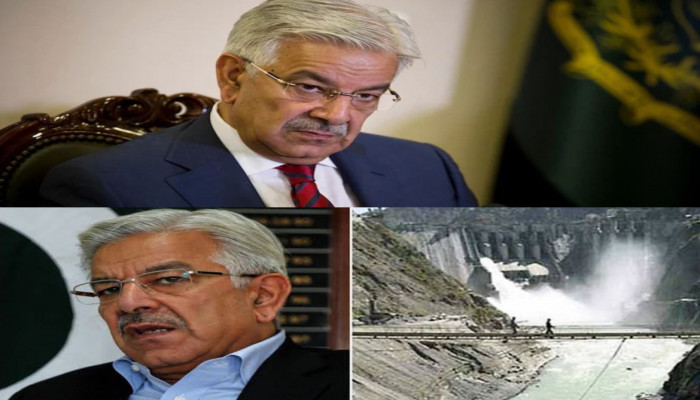
Pakistan Defence Minister Khawaja Asif has warned that Pakistan could take military action against India if it believes its access to water from the Indus river system is under threat. His remarks have further increased tensions between the two countries as the dispute over the suspended Indus Waters Treaty continues to grow.
Speaking to ARY News on Sunday, Asif said water security is directly linked to Pakistan's national security. He stressed that Pakistan would not remain silent if it felt that its water supply was being endangered. Referring to the issue, he said, "The moment we feel that our national security — and water is part of our national security — is being threatened, we will go to war against India. Definitely."
The defence minister also indicated that Pakistan could respond if there were signs that India was taking rapid steps to reduce or change the flow of water under the river-sharing agreement. His comments come at a time when Pakistan is already dealing with a severe water shortage, making the issue even more sensitive for the country.
The controversy resurfaced after remarks by India's Jal Shakti Minister, CR Patil, on the future of Indus waters went viral. In the video, Patil suggested that the flow of the Indus River waters to Pakistan could be completely stopped by June 2028. The statement triggered strong reactions in Pakistan and added to concerns over the future of the water-sharing arrangement.
Relations between India and Pakistan have remained strained since India suspended the 1960 Indus Waters Treaty after the terrorist attack in Pahalgam, Jammu and Kashmir, in April 2025. The attack claimed the lives of 26 people and led to a major diplomatic fallout between the two neighbours.
India blamed Pakistan-backed terrorists for carrying out the attack. Following the incident, New Delhi decided to place the World Bank-brokered Indus Waters Treaty in abeyance. The Indian government stated that the treaty would remain suspended until Pakistan takes credible and irreversible action against cross-border terrorism.
The Indus Waters Treaty, signed in 1960, has long been regarded as one of the most important agreements between India and Pakistan. It governs the sharing of water from the Indus river system. Under the treaty, nearly 80 per cent of the basin's waters are allocated to Pakistan. These waters are crucial for the country's agriculture, irrigation network and overall economy.
Pakistan has repeatedly opposed India's decision to suspend the treaty. Islamabad argues that any disruption in water flow could affect millions of people who depend on the Indus river system for farming, drinking water and daily livelihood. Pakistani officials have continued to raise concerns about the consequences of any changes to the existing arrangement.
The issue has also been raised at the international level. Last week, Pakistan's Deputy Prime Minister Ishaq Dar appealed to the United Nations Security Council to intervene in the matter. He accused India of violating the Indus Waters Treaty and called for international attention to the growing dispute.
Pakistan has also expressed concern over what it claims are India's future plans regarding river management. Earlier this month, Islamabad alleged that India intends to build a river-linking project that would divert water from the Chenab River. Pakistani authorities described the proposal as a serious violation of the Indus Waters Treaty and other international commitments.
The disagreement comes at a difficult time for Pakistan, which is already facing increasing water scarcity and climate-related challenges. Experts have often highlighted the country's dependence on the Indus river system and the risks posed by declining water availability. These concerns have made the treaty dispute even more significant for Pakistan's leadership.
As tensions continue to rise, the Indus water issue has emerged as another major flashpoint between the two nuclear-armed neighbours. With both sides maintaining firm positions, the dispute remains a serious concern for regional stability. The latest warning from Pakistan's defence minister has further intensified the debate over water security and the future of the Indus Waters Treaty.



 Loading...please wait
Comments