



Pakistan claims defence orders rising after India conflict, says IMF bailout not needed
- In Reports
- 05:40 PM, Jan 08, 2026
- Myind Staff
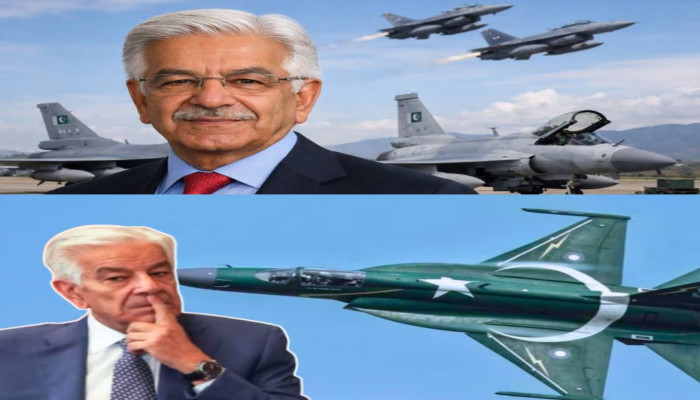
Pakistan’s Defence Minister Khawaja Asif has claimed that the country may soon no longer need financial assistance from the International Monetary Fund (IMF), stating that Pakistan’s defence exports have seen a sharp rise following a military confrontation with India last year. His remarks come at a time when Pakistan continues to struggle with a severe economic crisis and remains under an IMF bailout programme.
Speaking in an interview with Karachi-based Geo TV, Asif said that Pakistan’s military aircraft had proven their capability during the four-day military clash with India in May 2025. According to him, this has led to a surge in international defence orders. “Our aircraft have been tested, and we are receiving so many orders that Pakistan may not need the IMF in six months,” he said. Asif further claimed that global attention has shifted towards Pakistan’s defence strength, adding that the recent conflict played a key role in boosting confidence in the country’s military products.
Pakistan has been under financial stress for years and is currently operating under a $7 billion IMF programme, which is its 24th bailout. This programme followed a $3 billion emergency package in 2023 that helped the country avoid a sovereign default. Notably, Pakistan was able to secure IMF assistance only after Saudi Arabia and other Gulf nations provided emergency funding and agreed to roll over deposits.
Despite these economic challenges, the defence minister painted a picture of a rapidly improving situation driven by arms exports. He argued that the growing demand for Pakistan’s defence equipment could significantly improve the country’s financial condition.
A Reuters report also highlighted Pakistan’s ongoing discussions with Saudi Arabia. According to the report, both countries are in talks to convert around $2 billion worth of Saudi loans into a deal involving JF-17 fighter jets. This potential agreement could mark a major boost for Pakistan’s defence industry.
Aamir Masood, a retired Air Marshal and defence analyst, told Reuters that Pakistan is either in discussions with or has already finalised defence deals with six countries. These deals reportedly include the supply of JF-17 fighter jets, electronic systems, and weapons systems designed for these aircraft. Masood explained that the JF-17’s appeal has increased because “it is tested and has been used in combat.” He also pointed out that the aircraft is cost-effective, making it attractive to several countries.
Pakistan has stated that JF-17 fighter jets were deployed during the May 2025 conflict with India, which has been described as the heaviest fighting between the two neighbours in decades. Officials believe this combat usage has improved the aircraft’s credibility in the global arms market.
However, while the defence minister spoke confidently about Pakistan’s growing weapons industry and its potential to change the country’s economic future, the situation on the ground remains far more challenging. Pakistan continues to rely heavily on international financial support, and its economic recovery remains uncertain.
In recent months, Pakistan has increased its defence outreach as part of its efforts to expand arms exports and generate revenue from its domestic defence manufacturing sector. Last month, Islamabad reportedly signed a weapons deal worth over $4 billion with Libya’s eastern-based Libyan National Army. Officials described it as one of Pakistan’s largest-ever arms deals. The agreement includes the sale of JF-17 fighter jets as well as training aircraft.
Pakistan has also held discussions with Bangladesh regarding the possible sale of JF-17 fighter jets, signalling its intention to expand its arms export market beyond South Asia and the Middle East.
India has strongly rejected Pakistan’s claims about the outcome of the May 2025 conflict. During Operation Sindoor, India targeted key Pakistani military installations, including radars, command-and-control centres, aircraft hangars, and China-made JF-17 fighter jets. Indian Air Force Chief Air Chief Marshal Amar Preet Singh stated that four to five Pakistani fighter aircraft were destroyed during the operation. He firmly dismissed Pakistan’s claims that it had shot down Indian jets.
While Pakistan’s leadership continues to project confidence in its defence exports and economic prospects, the contrast between official statements and the country’s ongoing dependence on IMF support highlights the challenges Islamabad still faces.



 Loading...please wait
Comments